Antminer S23 Hydro: What the BM1373CC Chip Means for Fleet Operators in 2026
The Antminer S23 line shipped in January 2026 and re-set the top-of-line efficiency reference for Bitcoin mining. The S23 Hydro (580 Th/s, 5,510 W, 9.5 J/TH) and the higher-density S23 Hydro 3U (1,160 Th/s, 11,020 W, 9.5 J/TH) currently sit at the top of every efficiency comparison in the industry. The chip that makes them possible — the BM1373CC — extends Bitmain's advanced-node silicon roadmap and gives fleet operators a genuine new-generation decision to make, six months after the S21 XP line established itself as the reference volume deployment.
This guide is the operator-level monograph on the BM1373CC and what it means for fleet decisions in 2026. We cover the chip's context relative to the BM1370 (S21 XP) and BM1368 (S21), the S23 line-up specifications, the upgrade-versus-hold decision framework, the parts economics for early S23 deployments, and the fleet-planning implications for operators budgeting capital allocation into 2027.
The BM1373CC in context
Bitmain's advanced-node silicon roadmap over the past five years has moved from the BM1398 (7 nm, S19 family, ~29 J/TH) to the BM1366 (5 nm, S19 XP / S19K Pro, ~21 J/TH) to the BM1368 (5 nm, S21 family, 17.5 J/TH) to the BM1370 (3 nm, S21 XP family, 13.5 J/TH air / 12 J/TH hydro) and now to the BM1373CC (S23 family, 11 J/TH air / 9.5 J/TH hydro). Each generation has delivered meaningful efficiency gains, with the diminishing-returns curve that everyone in advanced semiconductor manufacturing has come to expect.
The BM1373CC's step down to 9.5 J/TH on the hydro variant is a smaller absolute efficiency improvement than the BM1370 delivered over BM1368, but it comes at an operating point where every fractional J/TH matters more, because the network hashrate has grown and the per-terahash revenue is smaller than it was during earlier generation transitions. For operators with expensive power, the S23 Hydro's efficiency edge over the S21 XP Hydro clears more marginal deployments than the S21 XP Hydro's edge over the S21 Hydro did in 2024.
The BM1373CC inherits the BGA package family, signal chain architecture, and EEPROM workflow of prior Bitmain generations, which means it slots into the existing repair ecosystem without a fundamental workflow re-engineering. The specific tooling, test fixtures, and HEX file library are generation-specific ; the underlying diagnostic logic is the same.
The S23 line-up in mid-2026
| Model | Hashrate | Power | Efficiency | Cooling | Release |
|---|---|---|---|---|---|
| Antminer S23 (318 Th) | 318 Th/s | 3,498 W | 11 J/TH | Air | January 2026 |
| Antminer S23 Hyd (580 Th) | 580 Th/s | 5,510 W | 9.5 J/TH | Hydro | January 2026 |
| Antminer S23 Immersion (442 Th) | 442 Th/s | 5,304 W | 12 J/TH | Immersion-ready | January 2026 |
| Antminer S23 Hyd 3U (1.16 Ph) | 1,160 Th/s | 11,020 W | 9.5 J/TH | Hydro (3U rack) | January 2026 |
| Antminer S23e Hyd 2U (865 Th) | 865 Th/s | 8,650 W | 10 J/TH | Hydro (2U rack) | April 2026 |
Specifications verified via ASIC Miner Value, accessed August 2026. All figures are Bitmain-published rated hashrate at rated efficiency.
Two patterns from the line-up matter for fleet planners. First, the hydro variants concentrate the efficiency advantage — the S23 air-cooled at 11 J/TH is a meaningful step down from the S21 XP's 13.5 J/TH, but it does not match the S23 Hydro's 9.5 J/TH. Operators wanting the full BM1373CC efficiency edge deploy the hydro or hydro-rack variants. Second, the 3U rack format on the 1.16 Ph unit signals Bitmain's continued push into rack-density deployments for large-scale operators, where floor-space economics matter alongside the per-machine efficiency.
The upgrade-versus-hold decision framework
Every fleet operator with an existing S19-class, S21-class, or S21 XP-class fleet is now asking the same question : should we start rotating to S23, or hold on our existing hardware and let the S23 line mature further before committing?
From S19 or S19 XP hardware
Straightforward upgrade case. The efficiency delta from S19 (~29 J/TH) or S19 XP (~21 J/TH) to S23 Hydro (9.5 J/TH) is large enough that the upgrade pays back within one to two years at most power costs, and the older silicon is at the point of the useful-life curve where reliability declines faster. The typical fleet-level answer is a phased upgrade rather than a full swap : rotate the highest-runtime S19-class units to S23 first, hold the newer S19 XP-class units on a longer replacement horizon.
From S21 or S21 Pro hardware
Wait unless power is at the high end. The efficiency delta from S21 (17.5 J/TH) to S23 (11 J/TH air) or S23 Hydro (9.5 J/TH) is meaningful but not dramatic. The S21 secondary market remains active, and the sunk-capital case for holding through 2026–2027 is strong at moderate power costs. Operators paying above roughly $0.08/kWh see the S23 upgrade case improve materially ; operators at $0.05/kWh or below can hold S21 hardware profitably through the useful life.
From S21 XP or S21 XP Hydro hardware
Hold through 2026, revisit late 2026 or into 2027. The BM1370 hardware is at the beginning of its useful life curve for most 2024–2025 deployments, and the efficiency step down from 12 J/TH (S21 XP Hydro) to 9.5 J/TH (S23 Hydro) does not clear the incremental capital cost within twelve months for most fleets. The exception is operators with the most expensive power and the highest-value operating windows, where every fractional J/TH improvement matters materially.
New-capacity deployment in 2026
Genuine decision. New capital allocated to mining in mid-2026 sits between two viable choices : the S21 XP line (BM1370, deep parts market, mature repair ecosystem, mainstream volume workhorse) or the S23 line (BM1373CC, top-of-line efficiency, tighter parts supply, earliest-generation-repair positioning). The choice depends on the operator's power cost, capital availability, tolerance for early-generation supply constraints, and multi-year fleet planning horizon.
Parts economics for early S23 deployments
The BM1373CC hardware has been in the field for approximately six months at the point of this article, and the parts economics reflect that early-generation reality.
Chip supply is tight. BM1373CC replacement chips for repair use are in constrained supply through mid-2026, with wafer allocation from the manufacturer prioritising new-unit production over parts channel supply. Operators running early S23 deployments hold a proportionally larger standing stock of BM1373CC chips than they would for BM1370 or BM1368 hardware at equivalent fleet size, because the lead time to restock is longer and the failure-rate baseline is still maturing. LYS's NP-008 fiche covers the BM1373CC chip specifically ; message us for current availability and lead times.
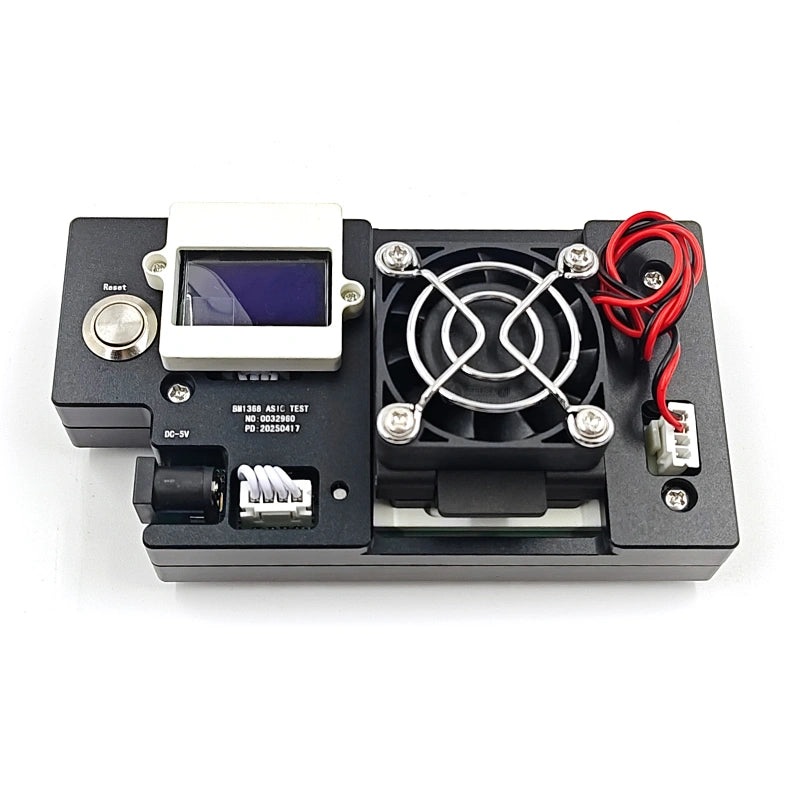
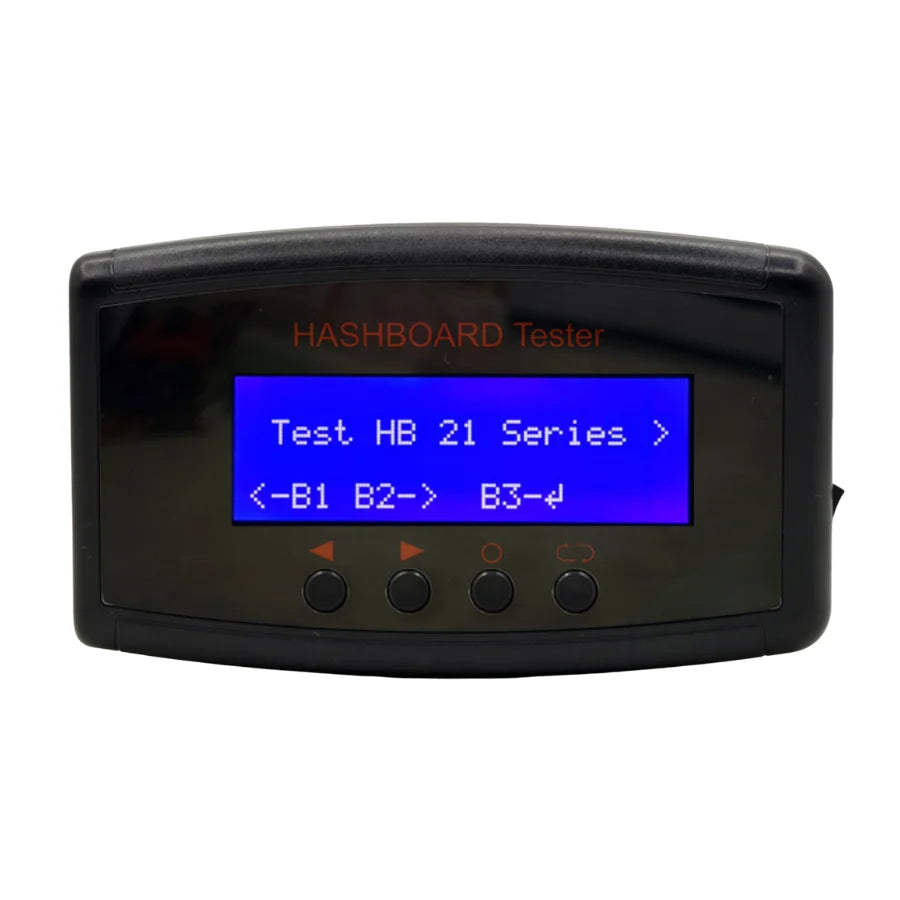
Test fixtures are generation-specific. S23 hashboards require a BM1373CC-calibrated PT2 fixture for function testing under load. The prior BM1370 fixtures do not substitute — the frequency and voltage profile the fixture applies is generation-specific. Shops adding S23 to their repair capability commit to the fixture investment before the fleet reaches the size where in-house repair economics justify it.
Control boards. The S23 Hydro line uses the C89 Hydro control board family with updated firmware for the BM1373CC signal chain. LYS's NP-009 fiche covers the C59/C89 Hydro control board with 8-in-1 firmware compatible across multiple hydro generations. The control board itself carries across S21 Hydro and S23 Hydro deployments with the appropriate firmware revision, which simplifies the standing-stock decision for operators running mixed S21 Hydro / S23 Hydro fleets.
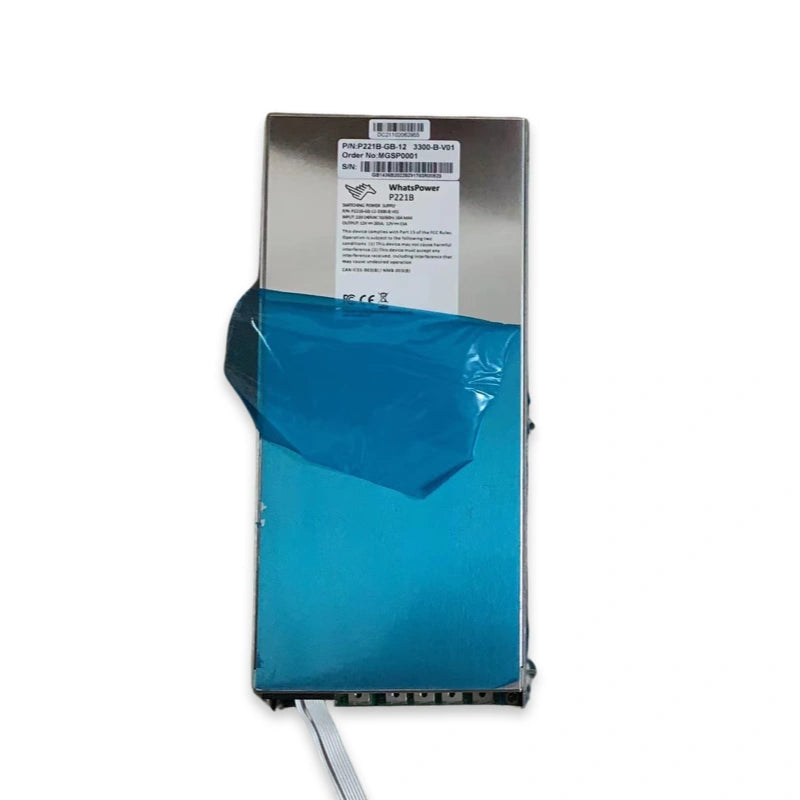
PSU stock. The S23 Hydro uses a hydro-specific PSU package sized to the elevated output requirement, distinct from the APW17 family that ships with S21 XP. Operators standardising standing-stock across their hydro fleet plan for the PSU differential and hold generation-matched spares.
Thermal materials. The S23 hashboard footprint differs from the S21 XP footprint, and the stencil for thermal grease application on the S23 line is generation-specific. LYS is expanding the stencil catalogue to cover the S23 family through 2026.
Fleet-planning implications through 2027
The BM1373CC's arrival changes the fleet-planning conversation in three specific ways for operators budgeting capital allocation into 2027.
First, the two-generation split is now real. For the first time since the S19 → S21 transition, operators have two genuinely viable current-generation choices (BM1370 mainstream volume, BM1373CC top-of-line efficiency) rather than one dominant generation. This complicates standardisation decisions and simplifies them at the same time : operators no longer need to gamble on which generation will be the workhorse — both will be — but they need to decide which fits their power-cost profile and site geography.
Second, the hydro deployment case has strengthened. Both the BM1370 and BM1373CC hydro variants deliver efficiency edges that air-cooled variants cannot match at any reasonable cooling investment. Combined with the extreme-heat operating realities in Middle East and tropical deployments (see our Middle East mining hub and tropical survival guides), the fleet-level answer for new capacity in warm-climate regions is increasingly hydro-cooling by default.
Third, the parts standing-stock complexity increases. Operators running mixed fleets across BM1368, BM1370, and BM1373CC generations hold three generation-matched chip inventories, three test fixture families, and three sets of generation-specific stencils. The standing-stock budget framework from our 12-month standing stock budget template extends naturally, but the annual line item grows in absolute terms as the generation count in the fleet increases.
The S23 decision matrix
| Operator profile | S23 fit | Reasoning |
|---|---|---|
| Existing S19-class fleet, moderate-to-high power cost | Strong fit — phased upgrade to S23 or S23 Hydro | Large efficiency delta ; rotation ROI clears within 12-24 months |
| Existing S19 XP / S19K Pro fleet | Consider phased rotation on highest-runtime units | Meaningful efficiency delta ; secondary-market S19 XP still healthy |
| Existing S21 / S21 Pro fleet, low power cost | Hold, revisit late 2026 | Sunk-capital case strong ; S23 delta doesn't clear at low kWh |
| Existing S21 / S21 Pro fleet, high power cost | Consider partial rotation | S23 delta clears where power is expensive |
| Existing S21 XP / S21 XP Hydro fleet | Hold through 2026 | BM1370 hardware at start of useful life ; delta doesn't clear yet |
| New capacity, low power cost, deep parts market preference | S21 XP or S21 XP Hydro | Mainstream volume workhorse ; deepest parts market |
| New capacity, high power cost, tolerance for early-gen supply constraints | S23 or S23 Hydro | Top-of-line efficiency ; power savings clear parts risk over multi-year horizon |
| Middle East / tropical deployment, new capacity | S23 Hydro strongly preferred | Efficiency edge compounds in extreme-heat environments where cooling investment is already committed |
| Rack-density-constrained deployment | S23 Hyd 3U (1.16 Ph) | Highest hashrate density per rack unit in volume production |
FAQ
Is the BM1373CC really 3 nm or a further shrink?
The BM1373CC represents Bitmain's continued advanced-node roadmap. Public product documentation and industry press describe the S23 series as extending the 3 nm-class silicon lineage established by the BM1370, with process refinements that deliver the additional efficiency gain. Definitive process-node disclosure by Bitmain for the BM1373CC specifically is not consistently detailed in all product materials ; operators evaluating the S23 focus on the achieved efficiency figures (9.5 J/TH hydro, 11 J/TH air) rather than the process-node label.
What does the "CC" suffix in BM1373CC mean?
Bitmain uses letter suffixes on chip part numbers to differentiate silicon binning revisions within the same base part number. The "CC" bin represents the specific silicon revision Bitmain sourced for the S23 Hydro deployment ; other suffixes (A, B, etc.) may exist for related products. Operators sourcing replacement chips should match the exact suffix to the board being repaired, as the calibration profile stored in the EEPROM is bin-specific.
Can I use my existing S21 XP repair tooling for S23 hashboards?
Partially. The BGA rework station, oscilloscope, multimeter, and antistatic setup all carry over. The PT2 test fixture does not — S23 hashboards need a BM1373CC-calibrated fixture. The HEX file library needs an S23-generation update. The stencil for thermal grease application is generation-specific. Shops adding S23 to their capability plan for the incremental tooling and inventory alongside the S23 fleet growth.
How does S23 Hydro compare with the Whatsminer M65S+?
On efficiency, the S23 Hydro leads (9.5 J/TH vs approximately 17.5 J/TH on the Whatsminer M65S+ hydro). On raw output per chassis, the S23 Hydro 3U at 1.16 Ph exceeds the M65S+ hydro line meaningfully. The Whatsminer hydro line remains the operator choice for fleets standardised on the MicroBT tooling ecosystem ; our S21 vs M60 buyer's guide covers the family-level decision framework, and the S23 Hydro versus M65S+ comparison follows the same logic at the top-of-line specification tier.
When will BM1373CC chip supply loosen up?
Based on Bitmain's historical pattern with prior generations (BM1368 supply loosened approximately 12–18 months after S21 launch ; BM1370 supply is still improving), we expect BM1373CC parts channel supply to expand meaningfully through late 2026 and into 2027 as Bitmain's wafer allocation shifts from new-unit priority to parts availability. Operators planning S23 deployments in mid-2026 should build the standing-stock buffer against current supply reality rather than assume future improvement.
Related reading
For the prior-generation silicon that remains the mainstream volume workhorse, see our BM1370 deep dive. For the parts standing-stock framework that extends to BM1373CC deployments, see our 12-month standing stock budget template. For the fleet-family decision that shapes the Bitmain vs Whatsminer question, see our S21 vs M60 buyer's guide. For the extreme-heat operational context that makes S23 Hydro particularly compelling in Gulf and tropical deployments, see our Middle East mining hub and tropical mining survival guide. For the sourcing companion that covers the parts inventory for advanced-node Bitmain silicon, see our hashboard repair parts sourcing guide.
Source your S23 fleet and BM1373CC parts package
Tell us your fleet plan (upgrade from prior generation, new deployment, mixed portfolio), your target site climate, and your rack format preference. We will quote S23 units alongside a BM1373CC-specific parts package with the standing-stock adjustments the early-generation supply reality requires.
Email : contact@lys-sz.com
Direct from our warehouses in Shenzhen. Worldwide shipping. DDP available for buyers in the US and the EU. Latam, SE Asia, Middle East, CIS, Africa quoted case by case.