Demand Response and Cycling Economics: Should Your Antminer Fleet Get Paid to Shut Down?
For most of Bitcoin mining's first decade, the operator's question was simple : how many machines can I keep running, for how many hours per year, at what electricity rate. The Texas summer of 2022, and every Texas summer since, broke that question into a more interesting one. How much am I paid not to run, when do I sit out, and what does cycling on and off cost my hardware?
Demand response — being available to cycle off when the grid is stressed in exchange for capacity payments and ancillary services revenue — has become a material revenue line for the largest US-listed mining operators. Riot Platforms publicly disclosed approximately $31.7 million in combined power and demand-response credits in a single month (August 2023), with the bulk of that figure tied to the Texas ERCOT grid. Marathon, Argo, and several private operators run smaller-scale versions of the same playbook. The economic effect is that the mining operation behaves as a flexible, grid-stabilising load that earns revenue both for the energy it consumes when prices are low and for its willingness to step aside when prices spike.
What this article does is the part the press releases skip : how the cycling-for-revenue math actually shapes hardware life, the parts budget, and the standing-stock decisions on a real operating bench. If you operate on a grid where curtailment payments are a real number — ERCOT, parts of the Nordic and German ancillary markets, several Latin American spot markets — this is the operating handbook.
The two revenue streams: 4CP and ancillary services
Demand response in the US is dominated by two related but distinct mechanisms. The Texas 4 Coincident Peak (4CP) program is the headline. Every year, ERCOT calculates each large industrial load's average demand during the four highest-demand 15-minute intervals of June, July, August, and September. The lower your demand during those four intervals, the lower your transmission cost allocation for the entire following year. Mining operators with curtailable load sign up to reduce or eliminate their consumption during the predicted 4CP windows, and the payback is delivered through their transmission and distribution charges for twelve months.
The second stream is the ancillary services market. ERCOT pays large loads to be available to drop consumption on short notice — minutes or even seconds — in exchange for a capacity payment plus per-event compensation. Responsive Reserve Service (RRS) and ERCOT Contingency Reserve Service (ECRS) are the two programs miners commonly participate in. The capacity payments accrue regardless of whether the operator is actually called to curtail ; the per-event payments stack on top when an actual deployment occurs.
The two streams together produced the Riot $31.7M August 2023 figure, with smaller proportionate amounts for Marathon and other Texas-based operators across the same window. In a normal summer, the combined revenue per MW of curtailable load can be a meaningful share of base-case mining margin — and in a stressed summer with multiple high-temperature heatwaves, it can be the difference between a profitable quarter and a loss-making one.
Where else demand response economics matter outside Texas
The Texas ERCOT structure is the most public, but it is not the only one. The Nordic countries (Sweden, Finland, Norway, Denmark) run an integrated ancillary services market through Nord Pool with frequency containment reserves (FCR) and frequency restoration reserves (FRR) that pay flexible industrial loads on a similar logic. Germany's regelleistung market has similar mechanics. Several Latin American grids — Brazil, Chile, parts of Mexico — have developed early-stage demand response programs that are open to large industrial loads, including mining, with terms that are still maturing as the markets do.
The structural feature these grids share is that they have rising shares of variable renewable generation (wind and solar) and need flexible demand to balance the variability. That feature is permanent. Demand response as a mining revenue line is not a Texas phenomenon — it is a renewable-grid phenomenon, and as renewables grow worldwide, the addressable demand response opportunity grows with them.
The hardware cost of cycling: what actually wears out faster
Every cycle on and cycle off is a stress event for the hardware. The dollar value of the demand response credit has to clear the marginal depreciation that cycling imposes on the fleet. The fleet operators who run sustainable demand response strategies are the ones who have modelled the wear correctly, and the operators who blow up their parts budget in year two are the ones who modelled it as zero.
PSU input filter capacitors and rectifier diodes
The dominant wear failure on heavy-cycling fleets is on the power supply input side. The Bitmain APW12, APW17, and APW11 families all use electrolytic input filter capacitors that absorb the inrush current spike at every power-on event. Each spike degrades the capacitor's electrolyte microscopically. On a base-load fleet that powers on once per quarter, the input capacitors live their full design life. On a fleet that cycles three or four times per day, the same capacitors reach end of life in 18 to 24 months instead of 4 to 5 years.
The fix is operational, not exotic : operators running heavy demand-response cycling typically refresh the PSU input filter capacitors on a 24-month preventive schedule rather than waiting for failure. The cost per PSU is small, and the alternative — waiting for the input filter to fail under load and take the PSU and possibly the hashboard down with it — is meaningfully larger.
Chip thermal cycling and BGA solder fatigue
The second wear failure is silicon-side. Every power-on event raises the chip junction temperature from ambient to operating temperature, and every power-off event reverses the cycle. The differential expansion between the silicon die, the BGA solder balls, and the PCB substrate accumulates micro-cracks at the solder joints. On a base-load fleet, the cycle is infrequent enough that the solder joints reach the chip's natural retirement age before they fatigue out. On a heavy-cycling fleet, BGA solder fatigue becomes a measurable failure mode, particularly on the older generations where the chip count per board is high and the per-chip thermal mass is small.
The practical implication is that a heavy-cycling fleet on, say, BM1398 silicon (S19 / S19 Pro / S19j Pro) will see higher chip-level failure rates than a base-load reference fleet on the same silicon. The newer BM1368 and BM1370 generations are more thermally robust per cycle, but they are not immune. Operators who run heavy demand response on S21-class hardware budget for a higher annualised chip replacement rate than they would on a base-load deployment.
Fan bearings
Antminer cooling fans cycle every time the unit powers up and down. The bearings see thermal expansion, lubricant migration, and starting current. Fans are the most-failed component on every Antminer generation under any operating profile ; on a cycling fleet they fail faster. The economic response is preventive : operators on heavy-cycling profiles replace fans on a calendar schedule rather than a failure schedule, typically every 12 to 18 months, and they keep a standing stock of replacement fans on the bench.
The cycling-economics decision matrix
| Fleet profile | Cycling cadence | Annualised parts budget delta vs base-load | Demand response revenue range | Net signal |
|---|---|---|---|---|
| Base-load only, no DR participation | Quarterly downtime for maintenance | Baseline | Zero | Reference |
| Light 4CP participation, no ancillary | ~10–20 events / year | +5–10% | Modest, mostly via transmission cost reduction | Almost always positive |
| Active 4CP plus ancillary services | 50–100+ events / year | +15–25% | Material — see Riot Aug 2023 disclosure | Positive at scale, sensitive to fleet generation |
| Aggressive ancillary on older hardware (S17, S19 standard) | 200+ events / year | +30–50% | Material on the revenue side, but… | Often net negative once depreciation catches up |
| Aggressive ancillary on S21-class hardware | 200+ events / year | +20–35% | Strong revenue | Positive — newer silicon clears the depreciation |
The pattern in the matrix is consistent : the demand response revenue line is real and meaningful, but it is not free. The fleets that benefit most are the ones running newer hardware that handles thermal cycling well and the ones budgeting parts and preventive maintenance against the cycling cadence rather than against a base-load assumption.
The standing-stock playbook for cycling fleets
Operators running active demand response participation hold a different standing parts stock than base-load operators of the same fleet size. The shopping list is concentrated on the components that cycling wears out fastest.
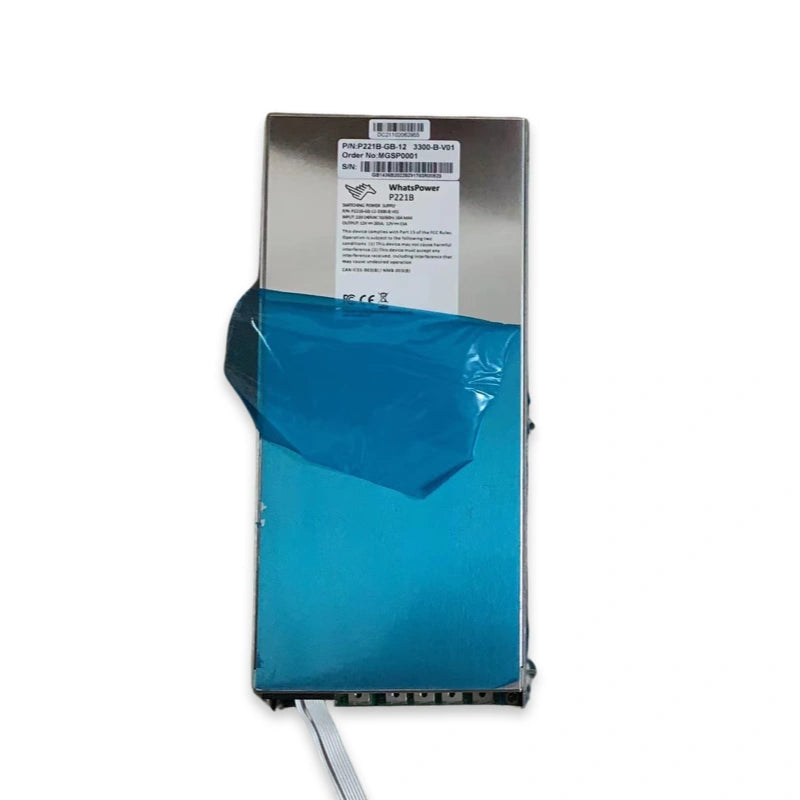
The PSU side gets the largest addition. A fleet of 100 cycling Antminers running on APW12 or APW17 PSUs typically holds at least a small reel of replacement input filter capacitors, a few spare PSUs as direct-swap rotation stock, and a stock of high-flow PSU fans. The cost of this stock is small compared with the marginal cost of an unplanned PSU failure during a high-revenue ancillary event.
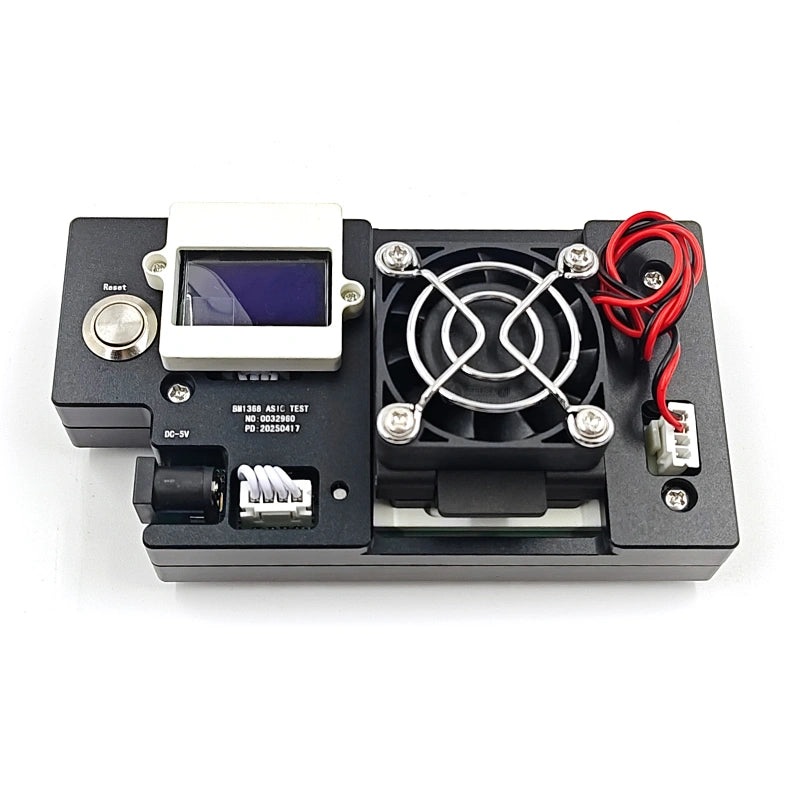
The chip side gets a modest increase. Heavy-cycling fleets typically hold an additional tray of replacement BGA chips for their dominant generation — BM1398 for S19 class, BM1366 for S19 XP and S19K Pro, BM1368 for S21 family, BM1370 for S21 XP and Hydro. The marginal carrying cost is small ; the marginal speed-to-repair benefit during a peak-revenue window is large.
Thermal grease and stencil stock get an increase too. A board that has been cycled aggressively needs a re-paste sooner than a base-load board, and the stencil per generation (S21+, S21 XP, S21 Hydro) is the operational bottleneck for that operation. The companion piece on hashboard repair parts sourcing walks through the bill of materials for each replacement scenario.
The operational implications nobody puts in the press releases
Three operational realities follow from running active demand response participation that the financial disclosures do not capture.
First, fleet generation matters more than scale. A 5,000-machine fleet on S19 standard hardware running aggressive ancillary cycling will accumulate hardware wear faster than a 1,000-machine fleet on S21 XP hardware doing the same cycling cadence. Generation hygiene — retiring older silicon to base-load sites and reserving cycling participation for newer silicon — is the single most consequential operational decision for a multi-site demand response operator.
Second, control-board firmware matters. The cycling event itself is mediated by the control board — startup sequence, hashboard initialisation, fan profile during ramp-up — and a control board that handles 200 cycles per year cleanly is a different piece of hardware from one that handles 200 cycles per year barely. Operators participating in ancillary services with second-by-second response requirements typically standardise their fleet on a known-good firmware revision and update on a controlled cadence rather than chasing every release.
Third, the freight-and-parts logistics shift. A base-load fleet has weeks to receive a replacement part. A cycling fleet that misses a high-revenue ancillary event because a board is on the bench waiting for a chip has just paid for a much more expensive failure mode. The standing-stock and express-freight discipline matters more on cycling fleets — and the related piece on the hidden variable in mining ROI covers the freight-and-stock math for fleet operators of every size.
What this means for fleet operators outside the listed-company headlines
Most mining operators are not Riot or Marathon. They do not have a dedicated grid services team, a portfolio of behind-the-meter contracts, or a treasury that can absorb a bad cycling year. They do, however, frequently sit behind a meter that is connected to a grid with at least some flexibility revenue available.
The practical playbook for a 50- to 500-machine operator who wants to enter the demand response conversation goes like this. Start by knowing what programs are available in your grid — ERCOT 4CP if you are in Texas, the Nordic FCR/FRR ladder if you are in the EU North, the ancillary auctions in your local market elsewhere. Sign up for participation through a third-party demand response aggregator if direct enrollment is not available to loads your size — most aggregators take a fee but handle the dispatch logic and reporting. Choose the cycling cadence that fits your fleet generation : light 4CP only on older hardware, full ancillary participation on newer hardware. Budget parts and preventive maintenance against the cycling cadence rather than the base-load assumption. Hold the standing stock against the highest-revenue cycling events so you do not lose them to a parts-shipment delay.
The dollar opportunity is real. The discipline required is also real. The fleets that capture demand response revenue sustainably over multiple years are the ones that have made the second part as serious as the first.
FAQ
Is the $31.7 million Riot Aug 2023 figure typical or an outlier?
It was the high water mark for a single month within a high-revenue summer. The structural revenue level varies by grid stress and operator scale, but the order of magnitude — eight figures per quarter for the largest US operators — is consistent through the 2023 and 2024 ERCOT seasons. Smaller operators participating in the same programs receive proportionate compensation.
Does demand response participation void Bitmain warranty?
It does not directly. Bitmain warranty terms reference normal operating conditions and exclude damage from misuse, but cycling-on-and-off within the unit's design parameters falls within normal use. What can void warranty is custom firmware run on top of stock firmware to optimise cycling response — see the upstream warranty rules in our companion piece on hashboard repair parts sourcing for the firmware-versus-warranty matrix.
Can older Antminer generations participate in ancillary services at all?
Technically yes. Economically, it depends. Older generations (S17, S19 standard) accumulate wear faster per cycle, and the marginal hardware depreciation can exceed the marginal revenue at heavy cycling cadences. The operator decision tree usually places older generations on base-load deployments and reserves cycling participation for S19 XP, S19K Pro, S21, S21 XP, and S21 Hydro hardware.
What is the right preventive maintenance cadence for a cycling fleet?
Heavier than the base-load reference. A typical cycling-fleet preventive schedule includes quarterly dust-and-grease cycles (versus annual for base-load), fan replacement every 12 to 18 months (versus 24 to 36 months for base-load), PSU input filter refresh every 24 months (versus 4 to 5 years for base-load), and a quarterly PSU output voltage audit on the bench to catch sag before it produces a hashboard event.
How does demand response interact with thermal site choice?
It compounds. Heavy-cycling fleets in tropical climates absorb both the humidity-driven failure baseline and the cycling-driven wear. The right operational answer is more aggressive preventive maintenance plus a larger standing parts stock plus the climate-control investments that base-load tropical fleets often skip. The stranded energy map piece covers the climate-and-site dimension in more depth.
Related reading
For the energy-side context of where demand response markets exist and grow, see our stranded energy map for 2026. For the parts-sourcing companion that becomes more important on cycling fleets, see our Antminer hashboard repair spare parts sourcing guide. For the ROI model that captures cycling wear as a variable rather than a constant, see the hidden variable in mining ROI. For the regional cost stack that determines whether demand response is available to your fleet at all, see real mining cost by region in 2026.
Source your cycling-ready parts package
Tell us your fleet generation, your cycling cadence, and your grid program participation. We will quote a parts package that matches the cycling wear profile, plus the standing stock you need to keep next to your bench during peak-revenue ancillary windows.
Email : contact@lys-sz.com
Direct from our warehouses in Shenzhen. Worldwide shipping. DDP available for buyers in the US and the EU. Latam, SE Asia, Middle East, CIS, Africa quoted case by case.