The Stranded Energy Map: Where Bitcoin Actually Plugs In, and What It Means for Hardware Choices in 2026
The standard "Bitcoin mining is wasted energy" argument has lived a long time in headlines, and it has a long time to go. The standard rebuttal — that mining works as a buyer of last resort for energy that nobody else can use — is, with a few exceptions, broadly true. What sits underneath both is a question that almost no public-facing analysis answers in a useful way: where exactly does it plug in, who runs those sites, and what does the hardware living there actually have to survive?
This article is the operator-level answer. We map the eight categories of stranded energy the Bitcoin network actually consumes in 2026, walk through the sites that matter most outside the US, and then turn to the part of the conversation that hosting-pitch blogs leave out: the implications for hardware choice, parts stock, freight, and the ongoing maintenance bill that any operator running near these sites has to pay.
The numbers that anchor the conversation
Two figures from the Cambridge Centre for Alternative Finance's 2025 Digital Mining Industry Report frame everything that follows. Bitcoin's annualised electricity consumption is estimated at approximately 138 TWh. The share of that consumption coming from sustainable energy sources is approximately 52.4%, up from 37.6% in the CCAF's prior comparable estimate. That share has been rising consistently as the network's locational mix has shifted toward hydroelectric, wind, solar, and stranded-gas sites.
For comparison: AI data centre electricity demand is projected to reach roughly 40% of all data centre electricity consumption by the end of 2026, a curve that is steepening as inference and training clusters scale. Bitcoin's footprint is no longer the headline number it was three years ago. What it now is, on its own terms, is the most location-mobile heavy-electric load on the planet — capable of relocating within months when local economics or regulation change, capable of cycling on and off in seconds when the grid asks, capable of running anywhere from a sealed-off Bhutanese valley to a North Dakota oil field.
The reason is mechanical, not ideological. Power is roughly 70% to 80% of an ASIC mining operation's opex. Any meaningful reduction in electricity cost goes straight to margin. Mining migrates to the cheapest, most stranded power on the planet because there is no other variable that pays back the move as quickly.
The eight categories of stranded energy Bitcoin captures today
1. Volcanic geothermal
El Salvador's Volcano Energy project, announced in stages from 2021 onward and operationally disclosed by President Nayib Bukele's office through 2024, is the most-cited example. The first-phase facility is targeted at approximately 102 MW drawn from the Conchagua volcano's geothermal resource, with state-disclosed Bitcoin holdings accumulated from mining and treasury purchases reported in the multi-thousand-coin range. Kenya's Olkaria geothermal complex and Iceland's Hellisheidi field host smaller-scale mining tenants on a similar logic: geothermal heat is base-load, weather-independent, and locally stranded by transmission limits.
2. Oil-field flare gas
Crusoe Energy, founded in 2018, runs modular generators on oil-well flare gas across the Bakken and Permian basins, converting methane that would otherwise be flared into electricity that powers on-site mining containers. Crusoe's pilot collaboration with ExxonMobil in North Dakota, reported by Bloomberg in 2022 and extended through 2024–2025 disclosures, is the most-cited reference for the model. The flare-gas category is one of the few where the climate case is unambiguous in any reasonable accounting: methane has a much higher near-term warming potential than CO₂, and combusting it via a generator beats venting or partial-combustion flaring by a wide margin.
The UK has its own version. KryptoByte Limited, profiled in Forbes in March 2026 and backed by contractual agreements with a UK onshore natural gas operator, deploys on-site generation to capture stranded gas streams that would otherwise be flared, vented, or shut in. The model is smaller than Crusoe's in absolute terms but it is the European blueprint for the next decade as North Sea and onshore gas assets reach their end-of-life curve.
3. Hydroelectric surplus
Paraguay's Itaipú dam, jointly operated with Brazil, has a nameplate capacity of approximately 14 GW and consistently produces electricity that exceeds Paraguay's domestic demand. Mining operators have moved into the spare capacity, paying tariffs that are competitive with the best US states while leaving the local grid largely untouched. Bhutan offers the cleanest sovereign example: the kingdom's Druk Holding & Investments runs state-backed mining built around the country's installed hydro capacity, and the resulting Bitcoin treasury position — disclosed in Forbes's April 2024 reporting at the high-hundreds-of-millions of dollars range — has become one of the most public success cases for hydro-backed sovereign mining.
Sichuan and Yunnan provinces in China hosted the largest pre-2021 wet-season mining cluster on the planet, anchored to monsoon-period hydro surplus. After the 2021 mainland ban, that capacity scattered to the US, Kazakhstan, and elsewhere — but the seasonal hydro surplus underneath is unchanged, and quieter on-the-ground mining activity has persisted in waves. The Nordic countries (Sweden, Norway, Iceland, Finland) run a different version: year-round base-load hydro plus cold ambient temperatures that simplify cooling.
4. Wind curtailment
The Texas ERCOT grid produces more wind power than its transmission network can always deliver, and the surplus is routinely curtailed — turbines feathered or directly curtailed for hours at a time when wholesale prices go negative. Mining operators on the ERCOT grid soak up that curtailment by design, running through negative-price windows and pulling back when prices spike. Inner Mongolia and Patagonia run smaller variants of the same model on national grids that face similar transmission bottlenecks.
5. Solar curtailment
The California "duck curve" — a deep midday dip in net load as utility-scale solar floods the grid — produces curtailment events totalling thousands of GWh annually in good years. Atacama desert solar projects in Chile and large-scale Australian PV installations both produce surplus that local grids cannot evacuate. Solar curtailment is harder for mining to capture economically because the surplus is intermittent and short-duration, but the sites where solar can be paired with battery storage or co-located gas peakers are increasingly attractive.
6. Stranded natural gas
Distinct from oil-field flare gas — which is associated gas produced as a by-product of oil extraction — pure-gas stranded plays exist wherever a gas field is too small or too remote to justify a pipeline. The UK KryptoByte model fits here. Russia's pre-2025 stranded-gas mining operations, particularly in Krasnoyarsk and Irkutsk, fit here as well, although the regulatory environment after the 2025 mining restrictions has reshaped that landscape substantially. Uzbekistan and parts of Kazakhstan run on a similar stranded-gas-plus-hydro mix.
7. Demand response and grid balancing
This is the category that does not look like stranded energy at first but functions economically as a close cousin. ERCOT's 4 Coincident Peak (4CP) program and its broader ancillary services market pay large industrial loads to be available to shut down or reduce consumption when the grid is stressed. Riot Platforms publicly disclosed power and demand response credits of approximately $31.7 million in August 2023 alone, the bulk of which was tied to ERCOT curtailment events during the Texas summer peak. Marathon, Argo, and others run similar programs on smaller scales. The economic effect is that the mining operation behaves as a grid-stabilising buyer that can be turned off in seconds — paid both for the energy it consumes when prices are low and for its willingness to step aside when prices spike.
8. Speculative: orbital and ultra-remote
This category is, for the moment, more interesting than it is operational. Concepts for satellite-based Bitcoin mining powered by endless solar exposure have been publicly floated, and at least one experimental launch has been proposed for 2026. The economics do not yet survive serious scrutiny — solar panel mass, thermal dissipation in vacuum, signal relay back to terrestrial pools — but the conceptual point holds: any place where energy is abundant and stranded is, at some future price point, a candidate. We include it because the buyer-of-last-resort thesis is structurally correct, and the long tail of "where" is genuinely long.
Quantified snapshot: where the network actually sits in 2026
| Category | Representative locations | Approx. installed mining MW (indicative) | Climate / site profile |
|---|---|---|---|
| Volcanic geothermal | El Salvador, Kenya, Iceland | Low hundreds MW | Humidity, sulphur, base-load |
| Oil-field flare gas | Bakken, Permian, US Gulf, UK onshore | Few hundred MW, growing | Dust, extreme heat, remote |
| Hydroelectric surplus | Paraguay (Itaipú), Bhutan, Nordics, Sichuan seasonal | Multi-GW combined | Variable: tropical, Himalayan, cold |
| Wind curtailment | Texas ERCOT, Inner Mongolia, Patagonia | GW-scale on ERCOT alone | On-off cycling, dust, heat |
| Solar curtailment | California, Atacama, Australia | Sub-GW, growing | Intermittent, hot, dust |
| Stranded natural gas | UK, Uzbekistan, Kazakhstan, Russia pre-2025 | Hundreds MW | Variable, remote |
| Demand response (4CP, ancillary) | Texas ERCOT, parts of EU grid services | Overlaps above | Frequent cycling |
| Orbital / speculative | Concept stage | Negligible to zero | Vacuum, thermal vacuum-side |
Two caveats. First, the MW figures are indicative ranges rather than precise installed-capacity numbers, because mining capacity disclosures vary by jurisdiction and many sites are not publicly mapped. Second, the same operator can sit across two or three of these categories at once — a Texas ERCOT site is wind-curtailment-soaked and demand-response-eligible at the same time.
The non-US case studies hosting-pitch blogs leave out
Bhutan: the sovereign hydro model
Druk Holding & Investments, the sovereign wealth arm of the Kingdom of Bhutan, operates state-backed Bitcoin mining built around Bhutan's installed hydroelectric capacity. The kingdom's hydro fleet — well above 2 GW installed and growing — provides base-load power at a cost the open market cannot easily compete with. The treasury accumulation, disclosed in Forbes's April 2024 reporting and corroborated by on-chain wallet research throughout 2024 and 2025, is one of the largest publicly observable sovereign Bitcoin positions on record. The implication for operators elsewhere is straightforward: when a government with cheap stranded power decides to mine for the treasury, the marginal cost economics are unbeatable.
Paraguay: Itaipú surplus and the Latin American repeat case
Paraguay's mining sector has grown around the Itaipú dam's structural surplus. The country's domestic demand consistently undershoots the dam's share of generation, leaving large blocks of cheap hydroelectric power available to industrial customers. Mining operators — both local and international — have moved in. The dynamic is not unique to Paraguay: any country with a national hydro asset that exceeds domestic load is structurally a mining destination at some price point, and the same pattern is playing out at smaller scale in parts of Ecuador, Colombia, and Brazil.
Ethiopia: state-backed buildout
Ethiopia's mining buildout, accelerated through 2024 and 2025 around the Grand Ethiopian Renaissance Dam and surrounding hydro capacity, has been described by industry coverage as one of the fastest-growing single-country deployments of the cycle. The economic case is the same as Bhutan's at a much larger geographic scale: cheap state-backed hydro, a government interested in monetising surplus, and a mining sector willing to pay tariffs that are still attractive on a global basis.
Iceland: the original geothermal cluster
Iceland hosted some of the earliest large-scale industrial Bitcoin mining anywhere in the world, anchored to abundant geothermal and hydroelectric generation. The local political and operational climate has shifted since the early Genesis Mining and Bitfury build-outs, and Iceland is no longer the dominant cluster it was around 2018, but it remains a meaningful host with a long operational track record.
The UK and continental Europe: late but growing
European mining is a small fraction of the global hashrate, in part because European industrial electricity is among the most expensive in the world. The exceptions — stranded-gas pilots (KryptoByte), Nordic hydro, sporadic flare-gas projects — are the wedge through which European operators are entering the conversation. The economic case for European mining is narrower than for the US or Latam, and the operations that survive will be the ones that can demonstrate stranded or otherwise-wasted energy as their input.
The hardware dimension every hosting-pitch blog leaves out
What is missing from the energy-side narrative is the hardware side of the same equation. Every category of stranded energy site comes with its own physical environment, and every physical environment shortens or lengthens the mean time between failures on the ASIC fleet living there.
Volcanic geothermal sites deal with high ambient humidity and trace sulphur compounds in the air. Both shorten the life of exposed electronics — copper traces oxidise faster, connector contacts corrode, capacitor leads tarnish. Operators on geothermal sites budget for more frequent fan replacements, more aggressive desiccant management, and a higher annual hashboard failure rate than temperate-climate baselines suggest.
Oil-field flare-gas sites deal with the opposite environment: dry, dusty, extreme summer heat in the basin, often hundreds of miles from the nearest urban infrastructure. The dominant failure modes are thermal — heatsink fouling from dust, chip junction temperature creep, fan bearing failures — and the freight-to-repair cycle is long enough that operators need to keep a meaningful standing parts stock on-site rather than ship every failed board out.
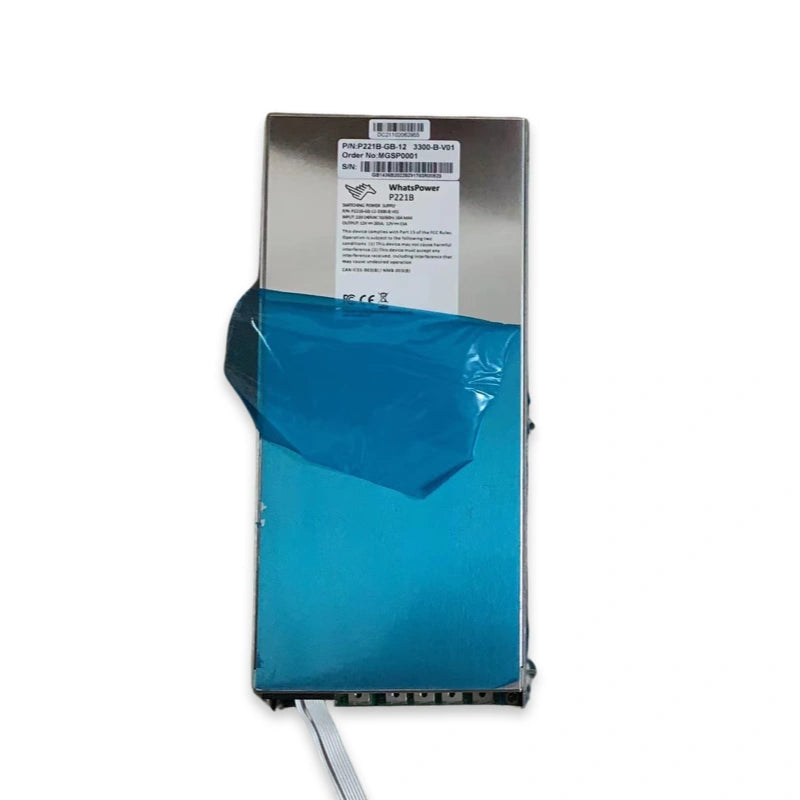
Wind and solar curtailment sites impose a different stress: frequent on-off cycling. Every cycle is a thermal event for the silicon, a current event for the PSU input filter capacitors, and a wear event for the fan bearings. The economic upside of cycling is real (cheap curtailed energy plus demand-response credits) but the hardware side absorbs measurable depreciation. Operators on heavy-cycling sites typically run a more aggressive preventive PSU refresh schedule than operators on base-load sites.
Tropical hydro sites — Paraguay, Bhutan's lower valleys, Ethiopia's wet season, Sichuan in monsoon — face humidity-driven corrosion and condensation risk during thermal cycling. The standard operator response is industrial-grade desiccant packaging on every parts shipment, dehumidifier capacity on every mining room, and quarterly thermal-grease refresh cycles rather than annual ones.
Cold-climate hydro sites — Nordic countries, Bhutan upper valleys, parts of Canada — face the opposite problem: condensation on cold start, brittleness in some plastic components, and the seasonal cycle of heating and cooling that tropical sites avoid. The trade-off is broadly favourable — cold ambient extends silicon life — but the cold-start condensation event is a real failure mode that warm-climate operators do not encounter.
What this means for parts, freight, and standing stock
Stranded-energy sites are stranded for a reason. The infrastructure that would make them easy to operate — paved roads, broadband, multi-carrier freight coverage, local repair shops — is by definition not there. This compounds the hardware bill in three specific ways.
Freight from Shenzhen takes longer. Express courier service to a Bakken oil-field site or a Bhutanese valley involves a final-mile leg that adds days to a city-pair quote. We have published the regional logistics map in our earlier real cost of Bitcoin mining by region piece — the practical takeaway here is that stranded sites magnify the freight delta versus an urban deployment.
Standing stock matters more. A site that is three days from any parts shipment runs differently from a site that is six hours from a regional repair shop. Operators on remote stranded sites typically hold a larger standing stock of the highest-failure-rate components — chips, regulators, fans, thermal materials — than urban operators would, because the cost of being parts-short for a week on a 50-machine site is meaningfully larger than the carrying cost of the stock itself. Our companion piece on Antminer hashboard repair parts sourcing walks through the bill of materials for the most common repair operations.
Local repair capacity is often nil. A volcano-side site in Central America, a high-Andean wind site, or a remote oil-field deployment may have no local technician with the skills to do a BGA chip replacement under magnification. The operator is then choosing between two models: send failed boards back to a central repair bench (their own or a contracted shop), or send a travelling technician to the site on a maintenance cycle. Both work. Both require parts pre-positioned for whatever the cycle produces. The economic framing for fleet operators on this kind of site is covered in our hidden variable in mining ROI piece.
Demand response economics for the operator on the ground
Demand response — being paid to be available to cycle off — is the most direct interaction between the energy side and the hardware side of mining. The ERCOT 4CP program and the broader ancillary services market produced material credit revenue for the largest Texas operators through 2023, 2024, and 2025. Riot Platforms' August 2023 disclosure of approximately $31.7 million in combined power and demand-response credits was the headline figure, but smaller operators with the right behind-the-meter contract structure participated as well.
The trade-off on the hardware side is straightforward. Every cycle-off and cycle-back-on event is a thermal cycle for every chip on every hashboard, a current spike on every PSU input filter, and a stress event for every fan bearing. The dollar value of the demand-response credit has to clear the marginal depreciation it produces. For most modern Antminer and Whatsminer generations on stock firmware in a temperate climate, the math has been clearing comfortably. For older generations being cycled aggressively, the math has been less generous, and several operators visible in public disclosures have rotated their older fleet to base-load sites and reserved the cycle-eligible behaviour for newer hardware.
The operator implication is that demand-response participation is a hardware-spec question as much as it is an energy-contract question. Sites built to cycle should be staffed with hardware that handles cycling, and the parts and maintenance budget should reflect the cycling cadence rather than a base-load assumption.
What this means for the buyer choosing their next miner
Most operators reading this article are not going to build a volcanic site or sign a Druk Holding-style sovereign mining contract. The point of the map is different. The point is that the price of your next Antminer or Whatsminer is set by the global mining margin curve, and that curve is shaped by where the cheap power actually is. Understanding the stranded-energy map is the cheapest way to know whether the price you are being quoted reflects a healthy market or a stressed one.
It also reframes the parts conversation. The reason we have spent five Friday blogs in a row on parts, ROI variables, and regional cost stacks is that the operators who survive the next two cycles are the ones who have planned for the maintenance bill, not just the electricity bill. Sites on the stranded-energy map cluster around extreme physical environments. The hardware living at those sites has a tougher job than the hardware living in a Hong Kong mall data hall. The parts list is bigger, the freight is harder, and the standing stock is heavier.
The buyer-of-last-resort thesis is the right thesis. The narrower question — what does a miner running on volcano steam, Bakken flare gas, Paraguayan hydro, or Texas wind curtailment actually need to keep running — is the one we exist to answer.
FAQ
Is the 52.4% sustainable energy figure for Bitcoin mining reliable?
The figure comes from the Cambridge Centre for Alternative Finance's 2025 Digital Mining Industry Report and represents the share of mining electricity drawn from sources classified as sustainable (renewables plus nuclear). It is up from approximately 37.6% in CCAF's prior comparable estimate. The methodology is published and the report is publicly available; the figure is one of the more carefully sourced numbers in the energy-side conversation.
Are stranded-gas mining operations actually carbon-positive or are they just less bad?
For flare gas specifically — methane that would otherwise be vented or partially combusted on-site — using the gas to generate electricity for mining is straightforwardly carbon-positive versus the counterfactual. Methane has a higher near-term global warming potential than CO₂, and combusting it via a generator beats flaring or venting by a wide margin. For pure stranded gas (a small field with no pipeline), the comparison is closer and depends on the marginal grid mix where the resulting Bitcoin is sold.
What about the impact on local electricity prices around mining sites?
The empirical answer varies by jurisdiction. Mining operations using stranded power have minimal-to-zero impact on local retail prices because the power they consume was not being delivered to retail customers in the first place. Mining operations competing for grid-delivered industrial electricity can raise prices at the margin in tight markets, which is one of the recurring policy frictions visible in regions like Kazakhstan and parts of upstate New York.
Does cycling on demand-response programs really shorten ASIC life?
Yes, measurably, though within a manageable range. Each on-off cycle is a thermal event for the silicon and a current event for the PSU. Aggressive cycling can reduce expected hashboard life by a meaningful percentage versus a base-load reference, depending on cycle frequency and depth. Operators participating in demand response typically reflect this in their preventive parts budget rather than treating it as an emergency cost when a board fails.
Is satellite mining a real thing or is it a press release?
It is, as of mid-2026, much closer to press release than to operational reality. Concepts exist. Test launches have been announced. The economic and thermal engineering case for orbital mining is not yet credible at scale. We mention it because the underlying logic — mining migrating wherever energy is structurally abundant — eventually reaches the long tail of "where", and orbital is one of the candidates on that long tail.
Related reading
For the regional cost decomposition that pairs with this energy map, see our real cost of Bitcoin mining by region in 2026. For the parts-sourcing companion that determines what survives at extreme sites, see our Antminer hashboard repair spare parts sourcing guide. For the ROI framing that puts cycling, parts, and freight into the same model, see the hidden variable in mining ROI. For the regulatory dimension on stranded-energy jurisdictions, see can a government kill Bitcoin mining. For the SE Asia frontier on stranded gas and hydro specifically, see Indonesia and SE Asia mining frontier.
Source your hardware for the site you actually have
Tell us where your fleet is, what the local conditions look like, and what you have been seeing. We will quote a parts package and a preventive maintenance bundle that fits your site — humidity-resistant, dust-tolerant, cycling-ready, climate-honest.
Email : contact@lys-sz.com
Direct from our warehouses in Shenzhen. Worldwide shipping. DDP available for buyers in the US and the EU. Latam, SE Asia, Middle East, CIS, Africa quoted case by case with local-currency invoices and Spanish, Russian, or Chinese documentation on request.