Antminer S21 vs Whatsminer M60: The Generation-Wide Buyer's Guide for 2026
Two ASIC families dominate the conversation in 2026. Bitmain's Antminer S21 line — S21, S21 Pro, S21+, S21 XP, S21 Hydro — has become the reference fleet for North American and European operators. Whatsminer's M60 line — M60S, M60S+, M63S+, M65S+ — has become the reference fleet for operators wanting alternative silicon, hydroelectric and immersion-cooled options, and a different repair ecosystem. The two families look interchangeable in the marketing materials. They are not interchangeable on the bench, and they are not interchangeable on the parts shelf.
This guide is for the operator about to commit a six- or seven-figure capital allocation to one of these two families and looking for the comparison nobody publishes in plain language. We walk through the silicon, the efficiency, the PSU and control-board ecosystems, the repair economics, the used-market depth, the field failure profile, and the parts availability on each side. We close with the decision matrix : who should buy S21, who should buy M60, and who should run a mixed fleet on purpose.
Silicon: what is actually inside each box
The Antminer S21 family runs on Bitmain's BM1368 ASIC silicon, with the newest S21 XP and S21 XP Hydro generations transitioning to BM1370. Both are BGA-packaged chips manufactured on advanced process nodes — 5 nm for BM1368, 3 nm for BM1370. The signal chain on a standard S21 hashboard runs 108 chips. The S21 XP runs 108 chips at higher per-chip frequency and voltage on better silicon. The S21 Hydro runs the same chip count with liquid cooling to push higher sustained clock speeds.
The Whatsminer M60 family runs on MicroBT's own silicon line, with the M60S generation using the latest M-series chip and M63S+ / M65S+ extending the same generation into higher-density and hydro-cooled variants. MicroBT's chip is designed in-house, and unlike Bitmain's chips it is not used in any non-Whatsminer product. The signal chain layout, voltage tree, and EEPROM architecture differ from Bitmain's reference, which has direct consequences for repair tooling.
| Model | Silicon | Rated hashrate | Rated efficiency | Wall power | Cooling |
|---|---|---|---|---|---|
| Antminer S21 | BM1368 (5 nm) | 200 TH/s | 17.5 J/TH | ~3.5 kW | Air |
| Antminer S21 Pro | BM1368 (5 nm) | 234 TH/s | 15 J/TH | ~3.5 kW | Air |
| Antminer S21+ | BM1368 (5 nm) | 235 TH/s | 16.5 J/TH | ~3.9 kW | Air |
| Antminer S21 XP | BM1370 (3 nm) | 270 TH/s | 13.5 J/TH | ~3.65 kW | Air |
| Antminer S21 Hydro | BM1368 (5 nm) | 335 TH/s | 16 J/TH | ~5.4 kW | Hydro |
| Antminer S21 XP Hydro | BM1370 (3 nm) | 473 TH/s | 12 J/TH | ~5.7 kW | Hydro |
| Whatsminer M60S | MicroBT M-series | ~186 TH/s | ~18.5 J/TH | ~3.4 kW | Air |
| Whatsminer M63S+ | MicroBT M-series | ~390 TH/s | ~17.5 J/TH | ~6.8 kW | Hydro |
| Whatsminer M65S+ | MicroBT M-series | ~390 TH/s | ~17.5 J/TH | ~6.8 kW | Hydro (immersion-ready) |
Two patterns stand out from the table. First, Bitmain has the efficiency edge at the very top of each line — the S21 XP at 13.5 J/TH and the S21 XP Hydro at 12 J/TH are currently the most efficient air-cooled and hydro-cooled products in volume production. Second, Whatsminer leads on raw output density per machine in the hydro range — the M63S+ and M65S+ produce more hashrate per chassis than equivalent Bitmain hydro units, at the cost of slightly worse efficiency.
PSU and control-board ecosystems
The S21 family runs on the Bitmain APW17 PSU for air-cooled units, with the S21 Hydro using a dedicated higher-output PSU package matched to the unit's hydro thermal envelope. The APW17 inherits the LLC resonant topology and PFC stage from the APW12 family but adds higher output capacity to feed the S21 XP and S21 XP+ load. Sub-versions of the APW17 differ in connector layout and microcontroller revision ; operators stocking spares need to match the sub-version to the unit, not just the family.
The S21 control-board side runs Bitmain's C-series family — C49, C53, C56, C59, C89 — with the C89 Hydro consolidating eight Hydro models on a single 8-in-1 firmware. The control-board firmware ecosystem is Bitmain stock by default, with custom firmware options (Braiins OS+, LuxOS, VNish) available at the cost of warranty.
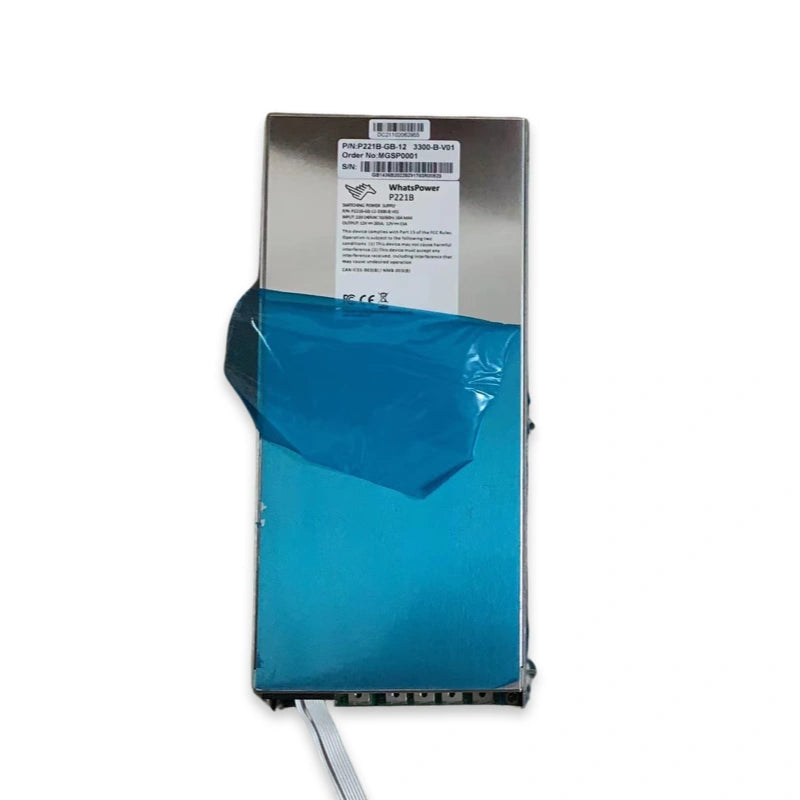
The M60 family runs on the MicroBT Whatspower PSU line — the P21, P221, P222 air-cooled families for M60S, and the P566Z / P564Z 10 kW PSU for M63S+ / M65S+ hydro. The Whatspower part numbers follow a different convention from the Bitmain APW family : the P-number encodes the model series, the connector type, the voltage rating, and the wattage, which makes PSU substitution within the Whatsminer ecosystem more flexible than within the Bitmain ecosystem.
The M60 control-board side runs MicroBT's CB2 / CB4 / CB6 family, with H3 / H6 / H616 SoCs depending on the sub-generation. The firmware is Whatsminer's native stack, with a smaller third-party firmware ecosystem than Bitmain's. Operators standardising their fleet firmware face a different choice on the M60 side : MicroBT's stock firmware is generally well-tuned out of the box, but the customisation surface for autotuning, underclocking, and demand-response cycling is less mature than the Bitmain side.
Repair ecosystem: parts availability and tooling
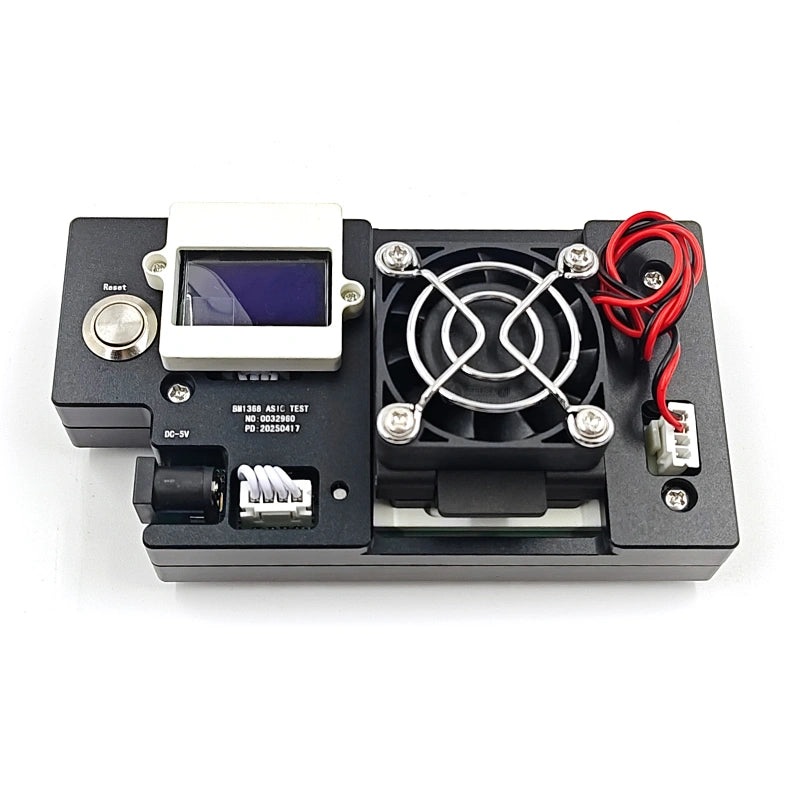
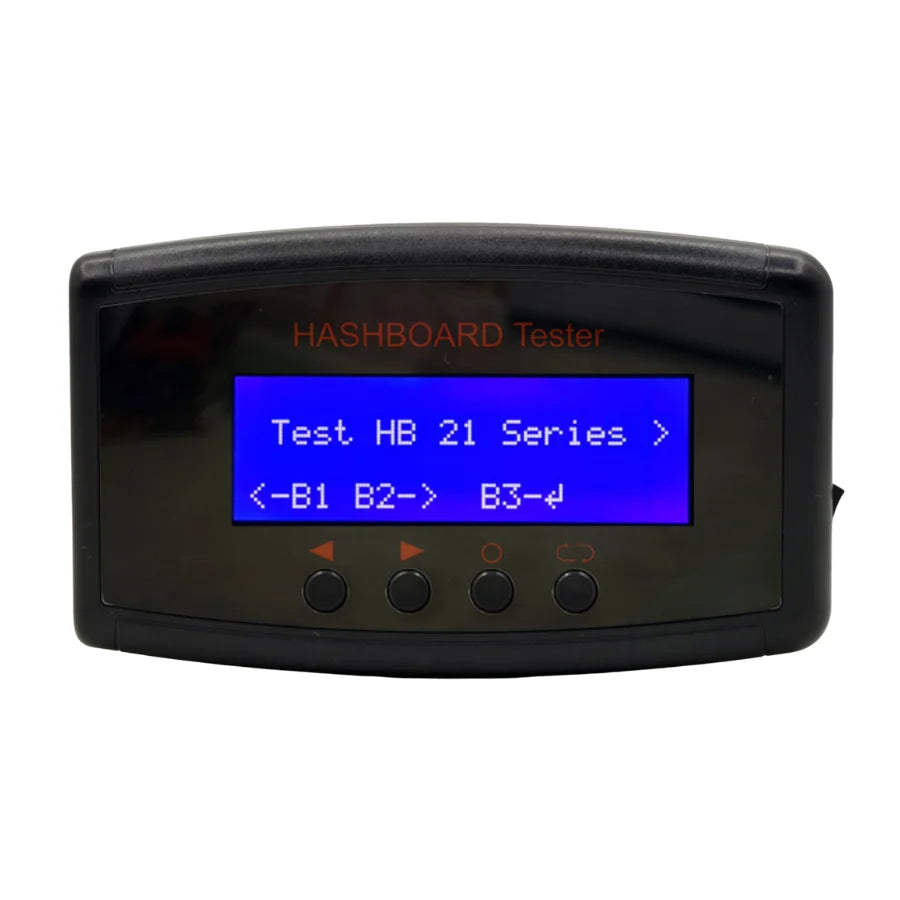
The S21 repair ecosystem has the deeper market. BM1368 and BM1370 chips are widely available in tray quantities, the PIC16F1704 EEPROM and PICkit3 programming workflow is well documented, and the test fixtures for PT1 and PT2 testing are produced in volume by multiple manufacturers. The stencil and thermal grease ecosystem for the S21+, S21 XP, and S21 Hydro is mature — we carry generation-matched stencils as separate SKUs and the application workflow is documented in our companion guide on S21 series thermal paste and stencil application.
The M60 repair ecosystem is narrower but improving. The MicroBT chip is available through a smaller supplier network than Bitmain's silicon, and the test fixtures are more specialised. The control-board diagnostic tooling for CB2 / CB4 / CB6 boards is well-developed — we cover the identification and replacement workflow in our Whatsminer control board identification and replacement guide. The standing-stock decision for an M60 fleet is more concentrated than for an S21 fleet : because the parts network is narrower, operators tend to hold more stock per machine than they would for an equivalent S21 deployment.
Field failure profile
Field experience across both families over the 2024 and 2025 operating seasons shows three patterns.
Bitmain S21 family failure clusters are dominated by the voltage tree on domains 11 and 12 — the MP2019 boost circuit area — and by fan bearings on units running heavy ambient conditions. Chip-level failures on the BM1368 are well documented as a single-chip-at-a-time event rather than a cascading failure, which makes the repair workflow simpler. The S21 XP and S21 XP Hydro generations are still maturing in the field, with the BM1370 silicon showing strong early reliability but a smaller statistical base than the BM1368.
Whatsminer M60 family failure clusters concentrate on the hashboard power input and the control-board firmware. The MicroBT chip itself has been reliable in the field but the control-board firmware updates have been more frequent than Bitmain's, which makes fleet firmware-management discipline more important on M60 deployments. Hydro-variant M63S+ and M65S+ failures concentrate on the cooling loop hardware and seals — the chip silicon and PSU side have been comparatively stable.
For both families, fans are the most-failed component, climate is the dominant failure driver, and preventive maintenance discipline is the single most consequential operational variable. The field-failure data does not strongly favour one family over the other on a per-machine basis ; it favours operators who maintain hardware against operators who do not.
Used-market depth and resale value
The used market for both families is active and visible. The S21 family has greater secondary-market depth simply because Bitmain has shipped more units globally over the relevant production window, which means the time-to-sell for a used S21 is typically shorter than for an equivalent M60. The price differential between new and used reflects roughly a 20 to 35 percent discount in the first year of use, narrowing thereafter as the secondary market thickens.
The M60 used market is thinner but the depreciation curve is more variable. Hydro-variant M63S+ and M65S+ have held value better than air-cooled M60S units because the hydro market is supply-constrained and the units are difficult to replicate without significant infrastructure investment.
For an operator planning a fleet exit strategy in three to five years, the secondary-market depth favours the S21 family. For an operator planning a long-hold or a fleet-rotation strategy where used inventory turns at lower volume, the M60 family is competitive.
The decision matrix
| Operator profile | Recommended family | Reasoning |
|---|---|---|
| US / EU operator, air-cooled, base-load | S21 / S21 XP | Best efficiency, deep parts market, mature repair ecosystem |
| US / EU operator, hydro at scale | S21 XP Hydro or M63S+ | S21 XP Hydro leads on efficiency; M63S+ leads on raw output per chassis |
| Operator with existing Bitmain fleet | S21 family | Tooling, firmware, parts overlap with installed base |
| Operator with existing Whatsminer fleet | M60 family | Tooling, firmware, parts overlap with installed base |
| Latam / SE Asia / CIS operator | Either, with parts logistics decisive | Regional repair shop coverage and freight lanes from Shenzhen are the real variables — covered in our regional cost piece |
| Tropical / immersion-cooled deployment | M65S+ (immersion-ready) or S21 XP Hydro | Both families have immersion-compatible products; M65S+ is purpose-built |
| Demand-response-active fleet | S21 / S21 XP (newer silicon) | Newer silicon handles cycling wear better — see cycling economics piece |
| Mixed-portfolio diversified operator | Both, by site | Spreading silicon risk across two manufacturers reduces supply-chain concentration |
Mixed fleets: when running both families is the right choice
Some large operators intentionally run both Antminer and Whatsminer hardware in different proportions across their sites. The reasoning is not random : it reflects three legitimate operational considerations.
Supply chain diversification. A fleet wholly dependent on one manufacturer is exposed to that manufacturer's production schedule, pricing decisions, and regional shipping disruptions. A fleet split across two manufacturers absorbs the volatility on both sides without committing fully to either.
Site-specific optimisation. Some sites favour the S21 XP's efficiency edge. Other sites with high power-density constraints favour the M63S+'s raw output per chassis. An operator with multiple sites can match each site to the hardware that best fits its constraints rather than standardising on one family.
Repair-skill cross-training. A repair team that maintains both families develops a broader skill base than a single-family team. The two repair workflows share roughly 70% of their tooling and 50% of their parts logic ; the remaining differences are educational rather than catastrophic.
The trade-off for a mixed fleet is parts standing stock complexity. An operator running both families holds two PSU spare inventories, two chip inventories, two firmware management procedures, and two test fixture sets. The marginal cost of this duplication is meaningful but not prohibitive at fleet sizes above roughly 100 machines per family.
FAQ
Which family has better efficiency in 2026?
Bitmain leads at the very top of the line. The S21 XP at 13.5 J/TH and S21 XP Hydro at 12 J/TH are the most efficient air-cooled and hydro-cooled products in volume production. Whatsminer's M60 / M63S+ / M65S+ run slightly less efficiently per terahash but produce more raw hashrate per chassis in the hydro range.
Which family is easier to repair?
The S21 family has the deeper parts market and the more mature repair tooling ecosystem in 2026, which translates into faster turnaround on chip-level repairs and broader test-fixture availability. The M60 family is more concentrated — fewer suppliers, more specialised tooling — but the workflow is well-documented for operators who commit to it.
Can I run a mixed fleet without doubling my parts inventory?
Partially. The repair operations themselves share roughly 70% of their tooling — BGA rework stations, oscilloscopes, multimeters, antistatic equipment — across both families. The parts inventories are largely separate : Bitmain chips and Whatsminer chips do not substitute, PSU families do not substitute, and test fixtures are generation-matched. The marginal inventory increase for a second-family addition is typically 60 to 80 percent of the first-family inventory, not 100%.
Does the price differential between the two families justify the parts complexity?
It depends on fleet size and operational sophistication. At sub-50-machine fleet sizes, single-family standardisation is typically the right answer because the parts-inventory marginal cost of a second family is harder to amortise. At 100-machine-plus fleet sizes, the supply-chain diversification benefit and the site-specific optimisation flexibility start to pay back the parts complexity.
Which family handles tropical climates better?
Neither family is purpose-built for tropical conditions — both are engineered around temperate-climate ambient assumptions. In field experience, the differential failure rate between the two families in tropical deployments is smaller than the differential failure rate between well-maintained and poorly-maintained fleets within either family. Climate-control investment and preventive-maintenance discipline matter more than family choice. The real cost of mining by region piece covers the climate dimension in more depth.
Related reading
For the S21-specific repair parts list, see our Antminer hashboard repair parts sourcing guide. For the M60 control-board workflow, see our Whatsminer control board identification and replacement guide. For the cycling-economics dimension that affects fleet generation choice, see demand response and cycling economics. For the regional cost stack that often decides which family fits which site, see real mining cost by region in 2026. For the head-to-head comparison on parts and repair economics, see Whatsminer vs Antminer: parts availability and repair economics.
Source your fleet — Antminer, Whatsminer, or both
Tell us the model and quantity you are considering, the climate of your site, and your existing fleet footprint. We will quote new and refurbished units, plus the parts package that matches the generation you choose.
Email : contact@lys-sz.com
Direct from our warehouses in Shenzhen. Worldwide shipping. DDP available for buyers in the US and the EU. Latam, SE Asia, Middle East, CIS, Africa quoted case by case.