Last reviewed: May 2026 — companion piece to our Incoterms decision guide for mining parts from China. Incoterms decide who pays customs; this guide decides how the goods get to your door.
The freight-mode choice is one of those decisions that looks simple in a quote tool — air or sea, fast or slow, cheap or expensive — and turns out to be more nuanced once you actually run the numbers on a real order. A single failed hashboard sitting in a warehouse waiting for a chip costs more in downtime than the difference between air and sea freight several times over. A pallet of stencils or fans, on the other hand, is exactly the kind of thing you'd never want to pay air-cargo rates on. The right mode depends on the weight, the volume, the urgency, the destination, and a handful of less-obvious factors like humidity sensitivity and customs broker availability at your end.
This guide walks the four freight modes that actually matter for mining-parts buyers — air express, air cargo, sea LCL and sea FCL — with a cost-by-volume decision matrix, transit time table, the hidden costs that catch first-time LCL shippers off guard, climate considerations for tropical and humid destinations, and three real-world scenarios for the three most common buyer profiles.
The Four Freight Modes Mining-Parts Buyers Actually Use
Air Express (DHL, FedEx, UPS Express)
The default mode for any order under ~30 kg in dimensional weight. Door-to-door, integrated tracking, customs brokerage included by the courier, 8–14 days transit time from Shenzhen to most major destinations. The premium price reflects the integrated service — the courier handles every step from pickup to delivery — but the per-kilogram cost is the highest of the four modes. Best for: single replacement parts, urgent repairs, low-volume restocks.
Air Cargo (consolidated air freight)
For orders in the ~30–500 kg range that don't fit cleanly into express parcels and aren't urgent enough to justify express rates per kilogram. Air cargo ships on the same aircraft as express but uses consolidated freight handling: pickup is from a freight forwarder's warehouse rather than your door, customs clearance is handled by a separate broker rather than integrated with the courier, transit time is typically 10–18 days, and per-kilogram cost is 30–60% lower than air express. Best for: 1–3 pallet orders where 2 weeks transit is acceptable but 30+ days sea freight is not.
Sea LCL (Less than Container Load)
For orders too big to justify air cargo but too small to fill a 20-foot container. Your goods share container space with other shippers' cargo on the same vessel. Transit time depends on the route — typically 25–45 days port-to-port plus 5–15 days for inland transport on either end. Per-kilogram cost is dramatically lower than any air mode, but the operational overhead is higher: you (or your broker) deal with the CFS warehouse on both ends, deconsolidation fees, demurrage if your pickup is delayed, and the documentation chain that goes with sea freight (bill of lading, packing list, certificate of origin, sometimes a phyto or fumigation certificate).
Sea FCL (Full Container Load — 20-foot or 40-foot)
For orders that genuinely fill a container — typically 15+ pallets or 20+ cubic meters. The container is yours exclusively; no deconsolidation, no shared CFS fees. Transit time is the same as LCL on the port-to-port leg but faster on the inland legs because there's no warehouse hand-off. Per-kilogram cost is the lowest of any mode and the fixed container price doesn't change whether the container is 60% or 95% full — which means the closer you get to filling it, the better the unit economics. Best for: fleet conversion kits, multi-supplier consolidated shipments, container-farm builds.
Cost-by-Volume Decision Matrix
| Order Profile | Typical Weight / Volume | Recommended Mode | Why |
|---|---|---|---|
| Single repair part (one chip, one fan) | Under 1 kg / under 0.005 m³ | Air Express | No realistic alternative — too small for any consolidation mode |
| Small repair kit / multi-part order | 1–10 kg / 0.01–0.05 m³ | Air Express | Fastest, integrated brokerage, sub-2-week delivery |
| Workshop restock / 10-miner repair kit | 10–50 kg / 0.05–0.3 m³ | Air Express or Air Cargo (compare quotes) | Threshold zone — air cargo wins on per-kg if 2 extra weeks acceptable |
| 50–100 miner restock / 1 pallet | 50–300 kg / 0.3–1 m³ | Air Cargo | Express premium not justified at this volume |
| Multi-pallet fleet restock | 300–1500 kg / 1–4 m³ | Sea LCL (with broker) | Per-kg cost dramatically lower; transit time acceptable if planned |
| Container-farm conversion / 100+ miner kit | 1500+ kg / 5+ m³ | Sea LCL or Sea FCL | FCL economics kick in past ~15 m³; below that, LCL still wins |
| Full container of mixed supplier consolidation | 20+ m³ | Sea FCL | Container is yours; no CFS fees; cheapest per-kg of any mode |
| Urgent emergency replacement (any size) | Any | Air Express, premium service | Downtime cost dominates freight cost when fleet is offline |
Transit Time Reference
| Destination Region | Air Express (door-to-door) | Air Cargo (door-to-door) | Sea LCL (port-to-door) | Sea FCL (port-to-door) |
|---|---|---|---|---|
| USA (East/West Coast) | 8–14 days | 10–18 days | 35–50 days | 30–45 days |
| European Union | 8–14 days | 10–18 days | 35–50 days | 30–45 days |
| UK | 8–14 days | 10–18 days | 35–50 days | 30–45 days |
| LATAM (Mexico, Brazil, Colombia, Argentina, Chile) | 14–25 days | 18–28 days | 40–60 days | 35–55 days |
| Middle East (UAE, Saudi Arabia, Kazakhstan) | 10–18 days | 12–22 days | 30–45 days | 25–40 days |
| SE Asia (Indonesia, Thailand, Vietnam, Philippines, Malaysia, Singapore) | 5–12 days | 7–15 days | 18–30 days | 15–25 days |
| Australia / NZ | 10–18 days | 14–24 days | 30–45 days | 25–40 days |
| Africa, CIS, rest of world | Per quote | Per quote | Per quote | Per quote |
Times above are typical and assume normal customs clearance with no holds. Add 1–5 business days at customs if shipping under DAP and the broker doesn't pre-clear; subtract a few days if shipping under DDP where customs has been pre-arranged.
The LCL Hidden Costs Nobody Mentions in the Quote
The single biggest mistake first-time LCL shippers make is taking the per-cubic-meter rate at face value and being surprised by the all-in cost on arrival. LCL freight quotes typically cover port-to-port ocean freight only — sometimes with origin charges included, sometimes not. The destination-side charges that get added separately and can match or exceed the ocean freight itself:
- CFS (Container Freight Station) fee: the warehouse on each end that consolidates and deconsolidates LCL cargo charges per cubic meter (USD 20–60/m³ origin + USD 30–80/m³ destination is typical, varies dramatically by port).
- Documentation fee: bill of lading processing, manifest fees, EDI fees. Typically USD 50–150 per shipment.
- Destination handling charge (DHC): THC equivalent on arrival, USD 80–200 per shipment.
- Customs clearance fee: if your broker isn't included in the LCL quote, the destination-side broker charges USD 80–250 for entry processing.
- Demurrage / detention: if you don't pick up your goods within the free period (typically 3–7 days at destination CFS), per-day storage fees start. These can be USD 30–150/day for LCL.
- Last-mile delivery: port to your door. Often quoted separately on LCL. Local trucking rates apply.
The honest LCL math: take the all-in published rate and add 25–50% for destination charges if you don't see them itemized. Or better, ask the freight forwarder for a "delivered to your door" quote that includes everything explicitly. We do that as standard practice — request a quote and you'll see the full chain itemized, not just port-to-port.
Climate Considerations — Why Sea Freight Isn't Always the Cheap Choice
Sea freight containers are not climate-controlled. They sit on a deck or in a hold for weeks, going through extreme humidity, condensation, and temperature swings as the vessel transits different climate zones. For mining parts — and especially for hashboards, ASIC chips, control boards, and any unsealed electronics — this matters more than first-time shippers realize.
- Humidity-induced corrosion on uncoated connector pins, copper traces and exposed solder joints. Hashboards shipped LCL through tropical routes (especially Suez or Panama transits) can arrive with visible oxidation on pin headers if packaging is not properly desiccant-protected.
- Condensation on cold-soaked components when a container is opened in a warm humid destination. The metal substrates inside a sea container can be 10–15°C below ambient; when warm humid air rushes in, condensation forms on every surface. For ASIC chips, this means water on BGA contacts.
- Salt-air exposure on routes that include extended deck transit in salt-spray conditions. Less common for mining parts (most are inside boxes inside containers), but real.
The mitigations: properly sealed packaging with desiccants for every box, double-bagged moisture-sensitive components, container loading that keeps electronics in the interior (not against container walls where temperature swings are largest), and avoiding LCL routing through extreme-humidity transshipment hubs when possible.
For high-value or moisture-sensitive shipments — ASIC chips, hashboard testers, control boards — air freight removes the entire humidity/condensation risk. The per-kilogram cost premium is sometimes worth it just for the risk reduction on high-value items, independent of speed.
Three Real-World Scenarios
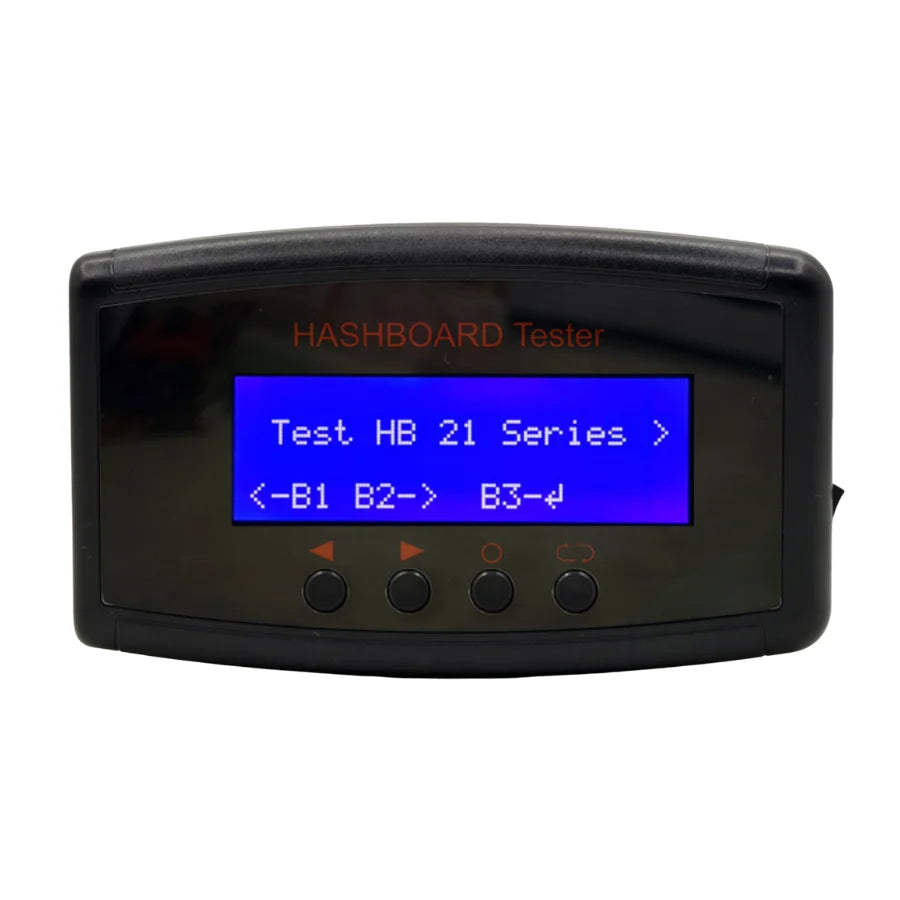
Scenario 1 — Single Hashboard Tester Replacement
A repair shop's K9 multifunctional tester has failed. They need a replacement in their hands as fast as possible because every day without a tester is a day of held-back repair bench output. Order weight: ~3 kg.
Best mode: Air Express via DHL/FedEx/UPS. Door-to-door, 8–14 days to US/EU. Per-kilogram premium vs sea is irrelevant at this volume; downtime cost dominates. Under DDP to US or EU, no customs surprises on arrival.
Scenario 2 — 50-Miner Repair Restock
A fleet operator is restocking spare parts for a 50-miner site — fans, capacitors, chips, a handful of replacement PSUs, a hashboard test fixture. Total weight: ~80 kg, ~0.4 m³, 2 pallet-equivalent.
Best mode: Air Cargo. At this volume, air express becomes uneconomic per kilogram. Sea LCL would work but the operator can't predict failures that far in advance — 5-week transit on consumables would force overstocking. Air cargo at 10–18 days gives a workable balance. Worth requesting both an air cargo and an LCL quote at this threshold to compare directly.
Scenario 3 — Container Farm Conversion Kit
A new container-farm operator is converting 200 miners from air-cooled to immersion. They need: 200 immersion-conversion kits (fan simulators + oil-resistant power cords + water-cooling plates per miner), plus a Lian Li 12kW cooling kit, plus a stocking inventory of immersion PSUs and CB6 V7 control boards. Total: ~6 pallets, ~12 m³, ~1500 kg.
Best mode: Sea LCL or Sea FCL — compare quotes. At 12 m³ the LCL rate is competitive; if the operator is willing to wait for a few more cubic meters of complementary parts to round out the order, sea FCL becomes the cheaper per-kilogram option and removes the LCL CFS overhead. For a container farm, the 5–8 week sea transit is acceptable because the conversion is being planned out months ahead.
The LYS Freight Desk
For air express orders to USA and the European Union, DDP shipping via DHL, FedEx and UPS is the primary lane — checkout-included, 8–14 days transit, no customs surprises. For air cargo, sea LCL and sea FCL, freight is quoted per shipment based on weight, volume, destination port and any special handling requirements (desiccant packaging, double-walled cartons for moisture-sensitive components, etc.). Direct freight lanes are active to LATAM (Mexico, Brazil, Colombia, Argentina, Chile, Peru, Venezuela), the Middle East (UAE, Saudi Arabia, Kazakhstan) and Southeast Asia (Indonesia, Thailand, Vietnam, Philippines, Malaysia, Singapore).
For any shipment above one pallet — or any destination outside the standard DDP lanes — request a freight-rated bulk quote with your weight, volume estimate and destination port. We return mode-by-mode options (Air Express vs Air Cargo vs Sea LCL vs Sea FCL where applicable), all-in delivered cost, and transit time for each.
Forward Reference: Indonesia and SE Asia
SE Asia is the freight destination where the modes really diverge. Indonesia, Thailand, Vietnam and the Philippines have the shortest sea-freight transit from Shenzhen of any region we ship to — 18–30 days LCL, 15–25 days FCL — which makes sea freight unusually competitive against air on this corridor. Next week's post covers Indonesia and SE Asia mining as a regional opportunity, including the freight lanes that make this region different from other emerging markets.
Frequently Asked Questions
What's the cheapest way to ship mining parts from China?
Sea FCL is the cheapest per kilogram, but only economic if you can fill (or come close to filling) a 20-foot container — typically 15+ cubic meters of parts. For most fleet operators that doesn't happen in a single restock; sea LCL is the practical sweet spot for orders between 1 and 15 cubic meters. Below 1 cubic meter, air cargo wins on total cost when transit time is added to the picture. Below 30 kg, air express is the only realistic option.
How long does sea freight take from China to the US?
Typically 30–50 days port-to-door for LCL and FCL, depending on whether the shipment goes through East Coast or West Coast ports and any inland trucking required. West Coast ports (Los Angeles, Long Beach, Oakland) are faster on the ocean leg; East Coast ports (New York, Savannah, Houston) are faster for buyers on those coasts because no transcontinental trucking is needed.
Should I ship ASIC chips by sea freight?
Generally not recommended unless packaging is properly desiccant-protected. ASIC chips are moisture-sensitive and the humidity/condensation cycle of a multi-week sea container transit creates real risk of moisture damage to BGA contacts. For high-value or critical chip shipments, the air freight premium is usually worth the risk reduction.
What's "LCL CFS" and why does it cost extra?
CFS stands for Container Freight Station — the bonded warehouse on each end of an LCL shipment where freight from multiple shippers is consolidated into and deconsolidated from a shared container. CFS fees pay for the labor and warehouse space required to handle this consolidation. Typical range: USD 20–60/m³ origin + USD 30–80/m³ destination. These are separate from the ocean freight quote and are often the line item LCL shippers miss when comparing quotes.
Can I ship mixed cargo (mining parts plus other goods) in one container?
Yes, sea FCL with multi-supplier consolidation is a common pattern for operators who source from multiple Shenzhen suppliers simultaneously. A freight forwarder collects from each supplier under EXW or FCA terms, consolidates into one container at their warehouse, and ships under one bill of lading to your destination. Removes per-shipment customs paperwork and per-shipment CFS fees. Best suited to buyers with a dedicated freight forwarder relationship.
How do I know whether to ship air express or air cargo at the 10–50 kg threshold?
Request quotes for both and compare delivered cost plus transit time. Air express is faster and includes integrated customs brokerage (a real value if you're shipping DDP). Air cargo is cheaper per kilogram but requires you to handle (or your broker to handle) the customs side. At ~30 kg the per-kilogram premium of express vs cargo is usually small in absolute terms; above 50 kg the gap widens fast. Run the math on each specific order rather than relying on a rule of thumb.
Is sea freight cheaper than air for a 100 kg shipment?
Sea freight is cheaper per kilogram for almost any volume above ~30 kg in absolute terms, but the difference at 100 kg is often smaller than buyers expect once destination CFS fees, brokerage and last-mile delivery are added back in. Sea is a clear winner above ~300 kg. Between 50 and 300 kg, air cargo and sea LCL are close enough that the transit-time consideration usually decides the choice.
The LYS Technical Team is based in Shenzhen, China, where we operate a dedicated ASIC mining hardware repair workshop, parts supply operation, and a freight desk that ships to mining operators in over 40 countries. DDP air freight is the primary lane for USA and European Union customers via DHL, FedEx and UPS; direct air and sea freight lanes are active to LATAM, Middle East and Southeast Asia on quoted basis.
Get the Right Freight Mode for Your Order
Express works for parts. Air cargo works for restocks. Sea works for fleets. The decision depends on weight, volume, urgency and destination — and the best way to compare is to get quotes for the modes that apply.
→ Request a Freight-Rated Bulk Quote (mode options compared)
→ Read the full LYS Shipping Policy
→ Read the companion Incoterms guide (DDP vs DAP vs EXW)
→ Browse Antminer Repair Parts
→ Browse Whatsminer Repair Parts
For freight quotes, custom shipping arrangements, or help choosing the right mode for an unusual order, email contact@lys-sz.com or via WhatsApp.
Worldwide shipping from our Shenzhen warehouse.