Your weekly roundup of what's moving in Bitcoin mining — hardware, hashrate, and the business of running miners. Every Friday from the LYS Technical Team in Shenzhen.
1. Bitcoin 2026 Wrap-Up: Strategic Reserve Announcement Teased, BITCOIN Act Rebranded as ARMA
The biggest Bitcoin event of the year wrapped up Wednesday at The Venetian in Las Vegas. Bitcoin 2026 drew over 40,000 attendees and more than 500 speakers across three days (April 27–29), and the headline policy story came from White House crypto adviser Patrick Witt, executive director of the President's Council of Advisors for Digital Assets.
Witt told the Bitcoin 2026 audience on Monday that the Trump administration plans to unveil a major update on the Strategic Bitcoin Reserve "within the next few weeks." For the past year, federal departments have been cataloguing and pooling Bitcoin from separate forfeiture sources into a single custody structure. According to Witt, that internal accounting work is what enabled the upcoming reveal.
On the legislative side, Rep. Nick Begich announced that the BITCOIN Act — Sen. Cynthia Lummis's flagship bill that would acquire up to 1 million BTC over five years through budget-neutral strategies — is being rebranded as the American Reserves Modernization Act, or ARMA. Lawmakers are reportedly targeting the late 2026 National Defense Authorization Act markup as the realistic vehicle for codification. If reserve language clears that process, the holdings would become a permanent national asset backed by statute rather than executive order.
Bitcoin's price reflected the typical conference rally-and-retreat pattern: BTC climbed above $79,000 on opening day before settling back into the $76,700–$77,500 range by Tuesday. Polymarket data still shows only a 23% chance of the US formally establishing the reserve before 2027.
What it means for operators: A statutory Strategic Bitcoin Reserve would create a long-term demand floor for newly mined BTC — but the timeline is years, not weeks. The near-term takeaway is that US policy continues to lean pro-mining at the federal level, even as the tariff math (see story 5) makes domestic deployment economically harder. Stay focused on what you can control: fleet uptime and repair economics. Keep your test fixtures warm.
2. American Bitcoin Energizes 11,298 ASICs — A Public Miner Doubling Down on Mining
While the largest public miners have been pivoting capital toward AI infrastructure, American Bitcoin (NASDAQ: ABTC) — majority-owned by Hut 8 and co-founded by Eric Trump — is going the other way. On April 22, the company completed energization of approximately 11,298 ASIC miners at its Drumheller, Alberta site, adding ~3.05 EH/s to the operational fleet.
The post-deployment numbers: ~25.0 EH/s operational hashrate across ~58,999 active machines, with the full owned fleet now totaling ~28.1 EH/s across 89,242 units. The newly deployed machines run at roughly 13.5 J/TH, lifting the operational fleet's average efficiency to ~14.1 J/TH. Approximately 30,243 owned units remain non-operational, leaving room for further deployment.
The market liked the move. ABTC shares jumped over 12% on the announcement and have gained roughly 49% over the past month. The company holds more than 7,000 BTC in treasury (worth ~$552M at current prices) and reported mining Bitcoin at a 53% discount to spot prices in Q4 2025.
For comparison: public miners including MARA, CleanSpark, Riot, Cango, Core Scientific, and Bitdeer collectively sold around 32,000 BTC in Q1 2026 — more than the total sold across all of 2025. American Bitcoin sat that selling wave out and instead expanded production capacity.
What it means for operators: Pure-play mining isn't dead — it's just bifurcating. Operators who can hit sub-15 J/TH average fleet efficiency at low power costs are still scaling. Operators stuck above 25 J/TH on aging fleets are the ones being squeezed out. If your fleet sits between those numbers, the lever you have is repair: a $40 chip replacement or fan swap on an S19j Pro can keep a 29 J/TH machine running profitably at $36 hashprice. ASIC chips and components remain the cheapest path to fleet efficiency improvement.
3. Hashprice Climbs to $36.46/PH/s — Best Mining Conditions of 2026, but May 2 Adjustment Looms
Hashprice — the daily revenue per petahash of computing power — hit $36.46 per PH/s on April 23, the highest reading of 2026. The recovery is significant: hashprice spent most of Q1 in the $23–$30 range, well below the commonly cited $35/PH/s breakeven for many operators.
At $36.46, all 14 of the top-ranked Bitcoin ASIC miners tracked by hashrateindex.com are generating positive daily returns at $0.04/kWh power costs. Bitmain's Antminer S23 Hydro 3U leads daily earnings at $31.62/day. The Whatsminer M7D sits at $14.23/day. Even MicroBT's relatively inefficient M79 (15.76 J/TH) is profitable at $19.55/day under current conditions.
The next difficulty adjustment is expected around May 2, and the picture has shifted in the past week. Earlier projections pointed to an upward adjustment after fast block intervals, but block times have since slowed to roughly 10.32 minutes (above the 10-minute target). Current CoinWarz estimates suggest a small decrease from 135.59T to approximately 131.43T — about a 3% drop. If that holds, hashprice gets another small tailwind into the second week of May.
The current network hashrate sits at approximately 989.51 EH/s, just below the 1 ZH/s threshold the network first crossed in September 2025. Difficulty fell 2.43% on April 17 (to 135.59T), following a much larger 7.76% drop on March 21 (to 133.79T) — those back-to-back cuts are what cleared the way for the hashprice recovery.
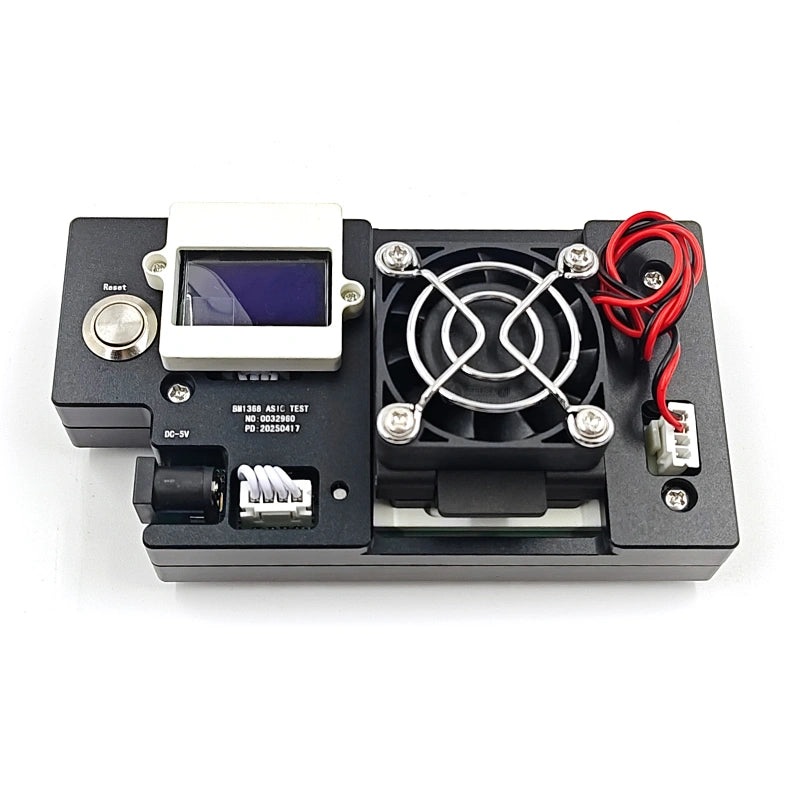
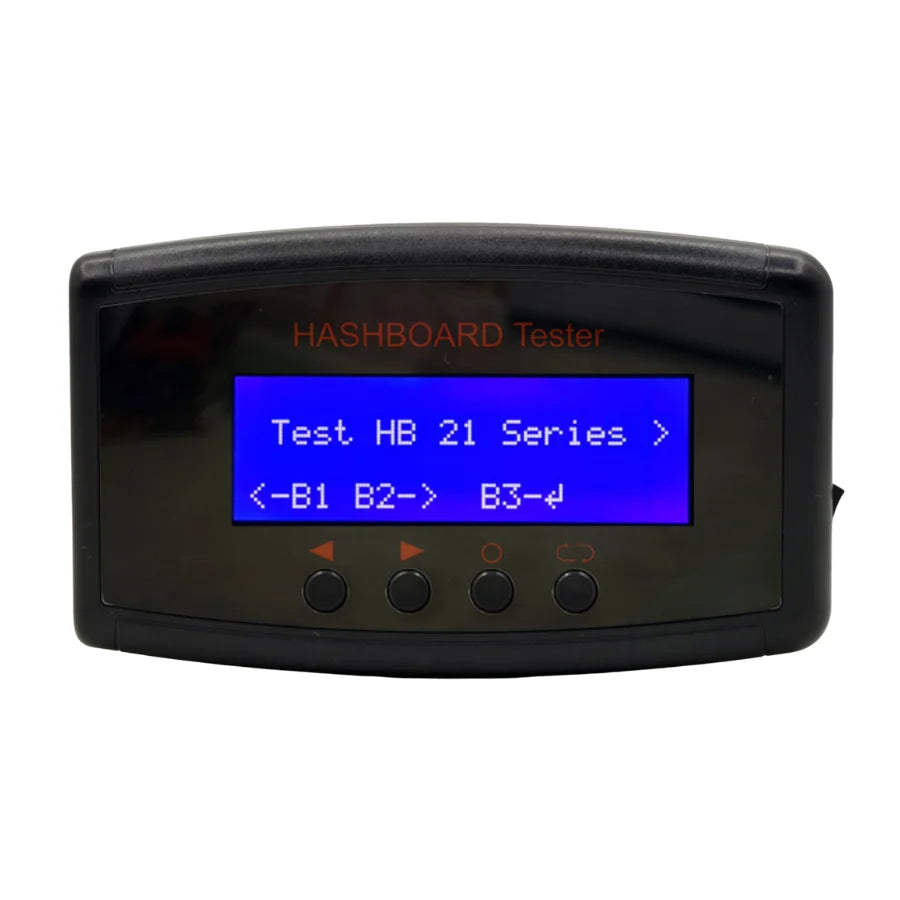
What it means for operators: If you mothballed machines during the Q1 squeeze, this is the window. Hashprice at $36 + a likely difficulty cut on May 2 is the friendliest combination operators have seen all year. A hashboard that needs a $40 chip replacement or a $30 fan swap is now an easy decision — payback is days, not months. Pull the dormant units from the rack, run them through a hashboard test fixture, fix what's fixable, and get them back online before conditions shift again.
4. Bitdeer SEALMINER A4 Series: 9.45 J/TH Efficiency Record Sets a New Bar
Bitdeer Technologies (NASDAQ: BTDR) is now shipping its SEALMINER A4 series — the most efficient SHA-256 ASICs on the market. The flagship A4 Ultra Hydro hits 886 TH/s at 9.45 J/TH, a record figure powered by Bitdeer's proprietary SEAL04 chips. The series also includes the A4 Pro Hydro (680 TH/s, 10.9 J/TH) and the A4 Pro Air (336 TH/s, 10.9 J/TH).
The 9.45 J/TH figure represents a 24% reduction in energy per hash compared to Bitdeer's previous A3 series (12.5 J/TH). For context, S19-era machines typically operate above 30 J/TH — meaning the A4 series produces the same hashrate at roughly one-third the electricity cost.
The strategic significance is bigger than the spec sheet. For most of the past decade, the SHA-256 ASIC market was effectively a duopoly: Bitmain (~82% market share) and MicroBT, with Canaan as a distant third. Bitdeer — which spun off from Bitmain in 2021 and went public via SPAC in 2023 — is now a credible third option, with vertically integrated chip design and manufacturing. The A4 series competes directly with Bitmain's Antminer S23 Hydro 3U (1.16 PH/s at 9.5 J/TH) on efficiency, though at a lower per-unit hashrate.
Bitdeer has not disclosed pricing or shipment volumes publicly. Note that the company specifies performance may vary by ±5% on power efficiency and ±10% on hashrate and power consumption, so real-world fleet results will likely lag the headline number slightly.
What it means for operators: The efficiency frontier just moved to sub-10 J/TH. If you're still running S19 generation hardware (~30 J/TH), each new A4 or S23 Hydro deployed by competitors widens the efficiency gap by another 3x. The economic case for replacement gets stronger with every difficulty adjustment — but so does the case for repair-and-extend on machines you already own. The math: a $40 chip replacement on an S19j Pro running at 29.5 J/TH gives you another 12–18 months of profitable operation at current hashprice. A new A4 Ultra Hydro is significantly more capital, plus tariffs, plus deployment time. Both strategies have a place. Antminer parts and Whatsminer parts are both stocked.
5. The Tariff Squeeze in Numbers — JPMorgan Pegs Average BTC Production Cost at $77,000
The full picture of the current operating environment came into focus this week. JPMorgan estimates the average industry BTC production cost at $77,000 — uncomfortably close to spot. The most efficient operators (sub-$0.05/kWh power, latest-gen ASICs) produce BTC for $34,000–$43,000. Everyone else is underwater on a marginal basis or already heading there.
The tariff impact on US miners remains punishing. The Section 232 proclamations that took effect April 6 layered 50% steel/aluminum/copper duties (25% on derivative products) on top of the existing 21.6% reciprocal duty on ASIC miners from Southeast Asia. A flagship $6,400 Antminer S21 XP now carries roughly $1,600 in metals-related duties alone — combined tariff burden approaching 47%. Mining containers (the steel structures with aluminum ventilation and copper wiring) have jumped $10,000–$25,000 per unit.
The geographic consequence is starting to show. JPMorgan and other analysts are flagging hashrate migration toward Russia, Ethiopia, and the UAE — jurisdictions where hardware acquisition isn't tariff-burdened. Ethiopia in particular has emerged as the most attractive new destination, with hydro power at $0.048–$0.053/kWh — among the world's lowest. The US still controls roughly 38% of global hashrate, but that share is widely expected to compress over the next 2–3 hardware upgrade cycles.
Industry consolidation is accelerating in parallel. By end of year, an estimated 85% of global hashrate will be controlled by just 12 publicly traded entities or sovereign-wealth-fund-backed operators.
| Metric | Current Value | Context |
|---|---|---|
| Network Hashrate | ~989.51 EH/s | Near 1 ZH/s threshold |
| Difficulty | 135.59T | May 2 adjustment expected ~131.43T (-3%) |
| Hashprice | $36.46/PH/s/day | 2026 high; up from $23 Q1 low |
| Industry Avg BTC Production Cost | ~$77,000/BTC | JPMorgan estimate |
| Most Efficient Operators | $34K–$43K/BTC | Sub-$0.05/kWh + latest-gen ASICs |
| US Tariff Burden on Hardware | ~47% | Section 232 + 21.6% ASIC duty |
| BTC Spot Price (post-conference) | ~$76,700–$77,500 | Hit $79K on April 27 |
| Best Available Efficiency | 9.45 J/TH (Bitdeer A4 Ultra Hydro) | vs. ~30 J/TH for S19 era |
What it means for operators: The macro factors — tariffs, hashrate growth, BTC price, conference policy noise — are outside your control. The operators surviving this cycle are doing the same thing every cycle: controlling power costs, maintaining fleet efficiency, and keeping repair economics tight. New hardware at 47% tariff premium plus deployment lead time vs. $40 in parts to revive a dormant machine you already own — the math hasn't changed, even if the numbers move week to week.
The LYS Technical Team is based in Shenzhen, China, where we operate a dedicated ASIC mining hardware repair workshop and parts supply operation. We ship spare parts, repair components, and diagnostic tooling to mining operators in over 40 countries. Every article we publish is written and reviewed by working repair technicians who service Antminer, Whatsminer, and Avalon hardware daily.
Keep Your Fleet Running
Hashprice at a 2026 high. Difficulty likely dropping again on May 2. Tariffs still pushing new-hardware economics underwater for US deployments. The combination favors operators who can revive and extend existing fleets — fast.
→ Test Fixtures & Diagnostic Tools
For bulk parts pricing or fleet-specific repair kits, contact us at contact@lys-sz.com or via WhatsApp.