Five years ago, immersion cooling for Bitcoin mining was a fringe setup — the domain of a handful of well-capitalized operators with engineering teams and research budgets. In 2026, it's rapidly becoming mainstream infrastructure. Industry data shows immersion cooling adoption has grown roughly 50% since 2023, and the trajectory is accelerating as post-halving economics squeeze operators toward higher-efficiency setups.
The question for most mid-sized operators in 2026 isn't whether immersion cooling works — it clearly does — but whether the upgrade math makes sense for their specific situation. This article breaks down the trade-offs honestly, covers the hashrate and lifespan gains that are actually defensible, and walks through the parts and modifications required if you decide to convert existing hardware.
What Immersion Cooling Actually Does
Immersion cooling submerges ASIC miners in a dielectric (non-conductive) fluid — typically a specialized mineral oil for single-phase systems, or an engineered synthetic fluid for two-phase systems. Heat generated by the hashboards, chips, PSUs, and control boards transfers directly into the fluid, which is then circulated through a heat exchanger and returned to the tank.
The physics advantage is straightforward: liquids have dramatically higher thermal conductivity than air. A fluid in direct contact with a chip package can extract heat orders of magnitude faster than forced air moving across the same surface. That single property — direct contact heat transfer — is the basis for every operational benefit immersion cooling delivers.
The Hashrate and Lifespan Gains
Overclocking Headroom
On air cooling, safe overclocking margins are narrow. Most operators are limited to 5–10% above stock power settings before thermal throttling or chip degradation become serious risks. Push harder and you trade hashrate gains for dramatically reduced hardware lifespan.
Immersion cooling rewrites those limits. Reports from operators running single-phase immersion systems consistently cite safe overclocking in the 25–40% power increase range, with real-world hashrate gains of 25–55% compared to the same hardware running on air. In practical terms, a well-implemented immersion setup has been shown to push an Antminer S19 Pro from its 110 TH/s stock rating to 150–200 TH/s sustained — a gain that would destroy the same machine on air within months.
Hardware Lifespan
This is where the economics get compelling. Air-cooled miners in demanding environments — high ambient temperature, dusty facilities, 24/7 operation — typically reach end-of-life between 18 and 24 months. The failure modes are predictable: chip degradation from thermal cycling, fan bearing failure, capacitor aging accelerated by heat, and PSU wear from continuous high-load operation.
Immersion-cooled miners routinely exceed five years of productive operation. Industry estimates place the lifespan extension at 4–5 years beyond equivalent air-cooled hardware — effectively doubling or tripling the useful operational window. This is a direct consequence of keeping chip junction temperatures consistently low and eliminating the mechanical failure points (fans) that contribute to a large percentage of air-cooled machine downtime.
Energy and Efficiency
Because immersion systems eliminate the need for internal fans and dramatically reduce facility-level HVAC load, total energy consumption per terahash drops meaningfully. Industry analyses place the reduction in cooling-related energy costs at 20–50% depending on facility design. For a mid-sized farm, that translates into electricity savings that compound month over month — a 30% reduction in cooling energy on a 1 MW facility is a very large number by year's end.
Beyond the direct energy savings, immersion setups run at lower effective J/TH because the chips aren't throttling under thermal stress. A machine nominally rated at 21.5 J/TH may actually operate at effective efficiencies closer to its spec sheet when thermal headroom is abundant — something that rarely happens on aging air-cooled hardware with degraded thermal interface material and tired fans.
The Honest Trade-Offs
Immersion cooling is not a universal win. The trade-offs need to be understood before any upgrade decision:
Capital expenditure. Immersion tanks, pumps, heat exchangers, dielectric fluid, and the facility modifications required to support them represent a significant upfront investment. For a small operator running a handful of machines, the capital outlay often doesn't pencil out against the operational savings within a reasonable payback window.
Facility requirements. Immersion systems need more robust floor loading (the fluid is heavy), plumbing for the cooling loop, and — critically — proper heat rejection infrastructure outside the building. You're not just buying tanks; you're building a dedicated thermal management system.
Dielectric fluid cost and handling. Quality immersion fluid is expensive, requires careful handling, and needs periodic filtration or replacement over the life of the system. Spills are a non-trivial cleanup.
Warranty and serviceability. Most manufacturer warranties on ASIC hardware don't cover immersion use unless the machine is explicitly rated for it. Converting a warranted machine usually voids coverage. Serviceability also changes: any repair requires pulling the machine from fluid, degreasing it, diagnosing, repairing, and re-immersing — a slower and messier workflow than swapping an air-cooled unit on a rack.
Not every miner converts well. Older machines with exposed components not designed for fluid immersion may develop issues over time. Newer hardware and models explicitly designed with hydro or immersion variants (the Whatsminer M36/M56/M66 hydro series, Antminer Hydro variants, S21 Hydro) are much better candidates than retrofitting a consumer-grade S19.
What You Actually Need to Convert Hardware to Immersion
For operators who decide the math works, converting existing air-cooled ASIC hardware to run in an immersion setup requires specific modifications — not all of them obvious until you've done it once.
Fan Simulators
The most common conversion requirement. ASIC miner control boards expect to receive RPM signal feedback from their cooling fans; without that feedback, the machine throws fan errors and refuses to hash. In an immersion setup, there are no physical fans — the fluid is doing the cooling. The solution is a fan simulator (sometimes called a spoofer or emulator), which feeds the control board the RPM signal it expects to see.
We carry fan simulators for the full range of common platforms:
- Antminer S21 / S21 Pro / T21 / S21 XP fan speed simulator
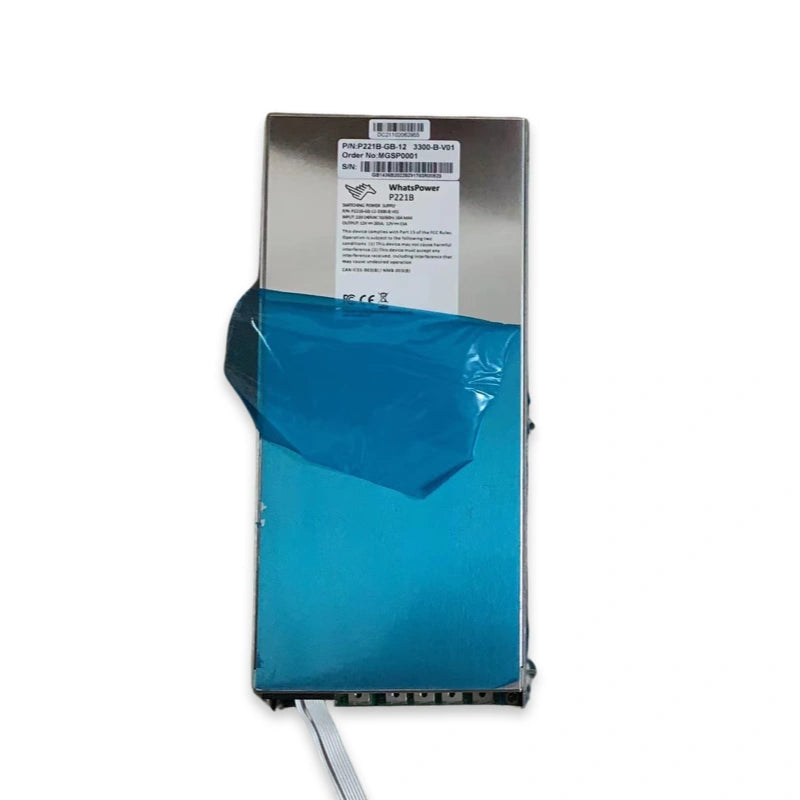
- Whatsminer PSU 4-pin fan simulator (P21, P221, P222 series)
- Avalon PSU 2-in-1 fan simulator
Browse the full fan simulator collection to match your specific hardware.
Immersion-Ready Control Boards
On some platforms, the standard air-cooled control board can be used as-is with a fan simulator. On others — particularly Whatsminer M36, M56, and M66 hydro/immersion variants — a dedicated immersion-spec control board is required. We stock the Whatsminer immersion cooling control board specifically for these conversions.
Modified PSUs
PSUs designed for air cooling have internal fans that serve both to cool their own components and, in some designs, to provide airflow that the miner's firmware expects to see. For immersion use, you typically need either PSU-specific fan simulators or PSUs rated for immersion operation. Ignoring this step leads to PSU shutdowns and miner failures that are initially difficult to diagnose.
Thermal Interface Material Considerations
One detail that's easy to overlook: some thermal interface materials that work well in air-cooled setups degrade or dissolve when submerged in certain dielectric fluids. Before converting a machine, verify that the factory thermal paste is compatible with your chosen fluid, and be prepared to re-TIM the board with an immersion-compatible product if not.
Who Should Upgrade, Who Shouldn't
Good candidates for immersion upgrade:
- Mid-to-large operators (50+ machines) with a long-term planning horizon
- Facilities in hot climates where air cooling struggles year-round
- Operators with access to cheap electricity but expensive cooling overhead
- Anyone running modern hardware (S21 series, M56/M66 series) that benefits substantially from overclock headroom
- New facility builds where immersion infrastructure can be designed in from day one
Poor candidates:
- Small operators running fewer than 10–20 machines (the capital math is difficult)
- Facilities in mild climates with already-low cooling costs
- Operators running older S19-generation hardware that's already mid-to-late in its useful life
- Anyone whose facility can't support the floor loading and plumbing requirements
The 2026 Outlook
Immersion cooling is transitioning from "advanced option" to "competitive baseline" for serious mining operations. As ASIC efficiency continues to improve and operators search for every last margin point in a post-halving environment, the operators who run the highest-efficiency hardware at the highest sustained hashrates will have structural advantages over those who don't.
For most mid-sized operators, the question isn't whether to evaluate immersion cooling — it's when. Running the numbers for your specific facility, electricity costs, hardware mix, and growth plans is the right starting point. If the payback period fits your horizon, the technology is proven enough in 2026 to move on it confidently.
Parts for Your Immersion Conversion
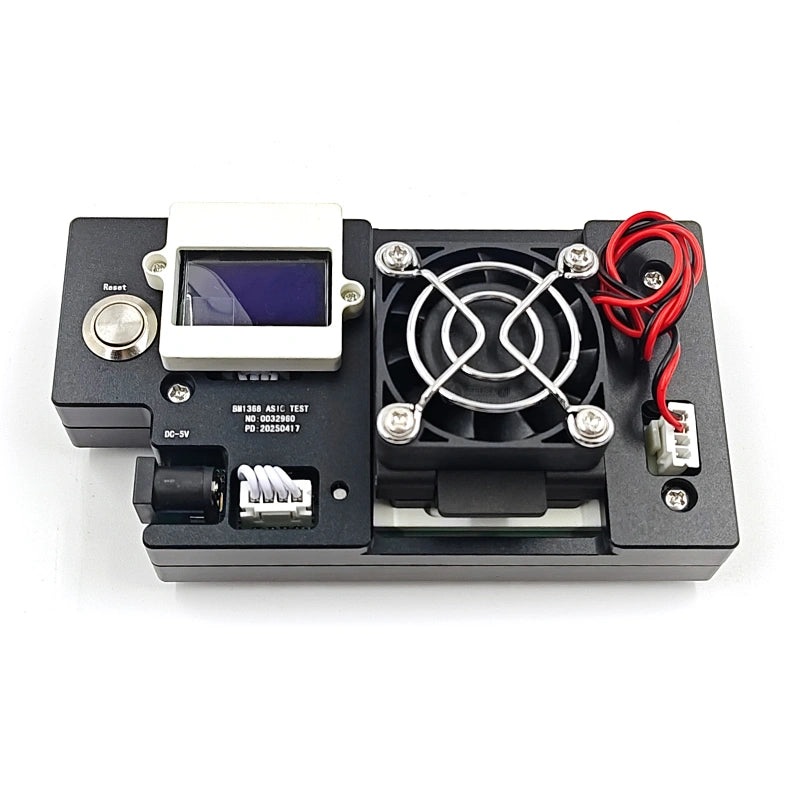
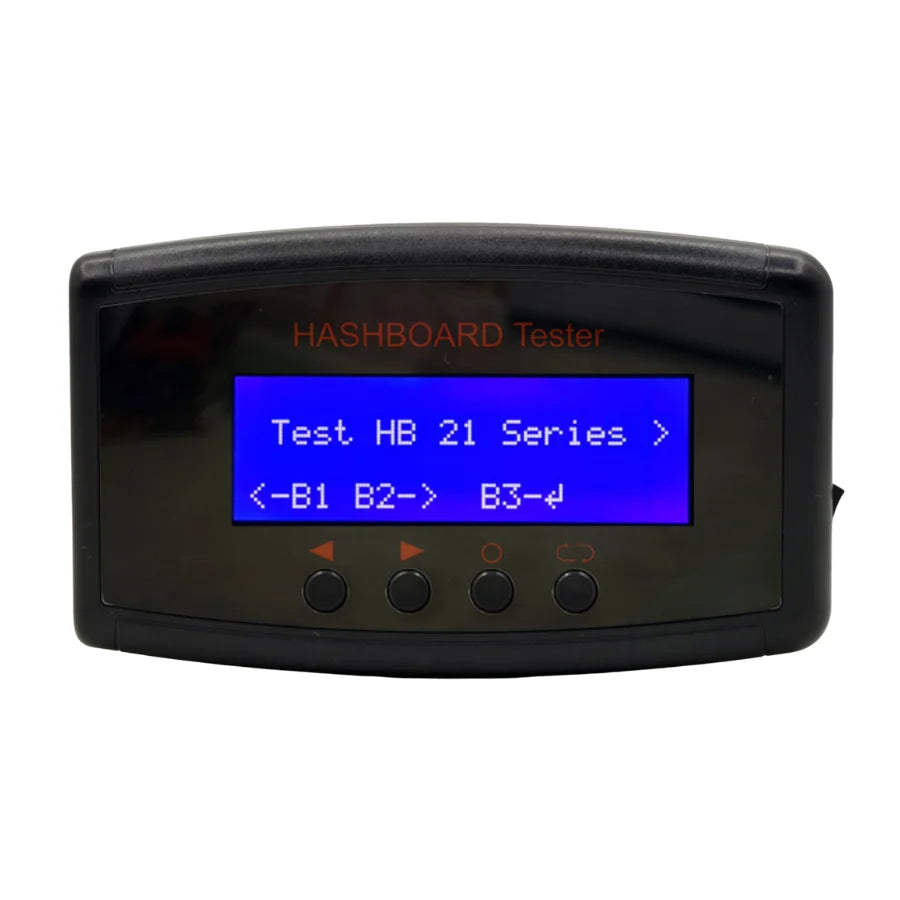
We stock the full range of immersion and hydro cooling parts: fan simulators for Antminer, Whatsminer, and Avalon platforms, immersion-ready control boards, replacement components, and diagnostic tools for converted hardware — with factory-direct pricing from Shenzhen and DDP shipping to the USA.
→ Browse Immersion & Hydro Cooling Equipment
Planning a conversion and not sure exactly which parts you need for your specific hardware mix? Our technical team can walk you through the requirements for each model. Reach us at contact@lys-sz.com or via WhatsApp.