Your weekly roundup of what's moving in Bitcoin mining — hardware, hashrate, and the business of running miners. Every Friday from the LYS Technical Team in Shenzhen.
1. May 1 Difficulty Adjustment Came in at -2.3% — Less Aggressive Than Projected, but Hashprice Climbs to $37.52/PH/s
The May 1 difficulty adjustment landed slightly milder than last week's models suggested. Network difficulty dropped 2.3% to 132.47T, versus the ~3% drop to 131.43T that CoinWarz projections had been pointing to. The smaller cut still extended the streak — six difficulty reductions so far in 2026 — and it kept the door open for operators who returned dormant fleet to the rack at the right time.
Hashprice has continued to climb past the figures we tracked last week. Daily revenue per petahash crossed from $34.39/PH/s to $37.52/PH/s over the past several days. That's the highest reading of 2026 to date and roughly $14 above the Q1 lows that pushed an estimated 20% of the global fleet into negative-margin territory.
Network hashrate has slipped back below 1 ZH/s after briefly touching the threshold in Q1. Daily samples on May 3 ranged from 899 EH/s to 958 EH/s, with average block times running at 10 minutes 28 seconds — slightly slower than the 10-minute target. That slowdown is why the May 1 cut happened at all, and it's a real-time signal that some operators are still mothballing hardware faster than new fleet is being energized.
The next difficulty adjustment is expected on or around May 15. Current CoinWarz estimates have it edging back up to roughly 133.36T — a small +0.7% increase. If that holds, hashprice gets a marginal headwind heading into the third week of May, but nothing close to undoing the recent recovery.
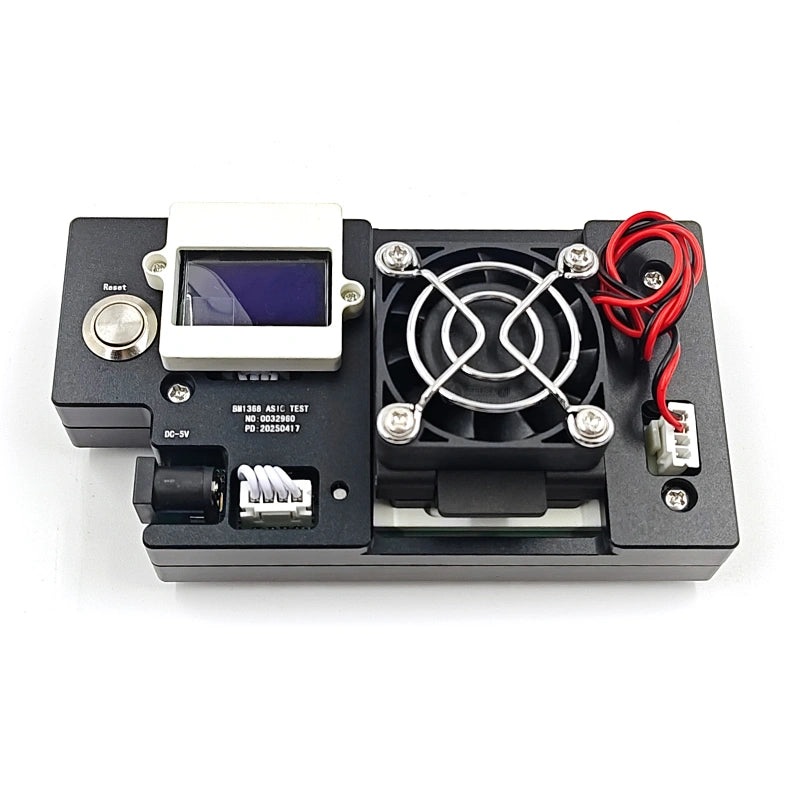
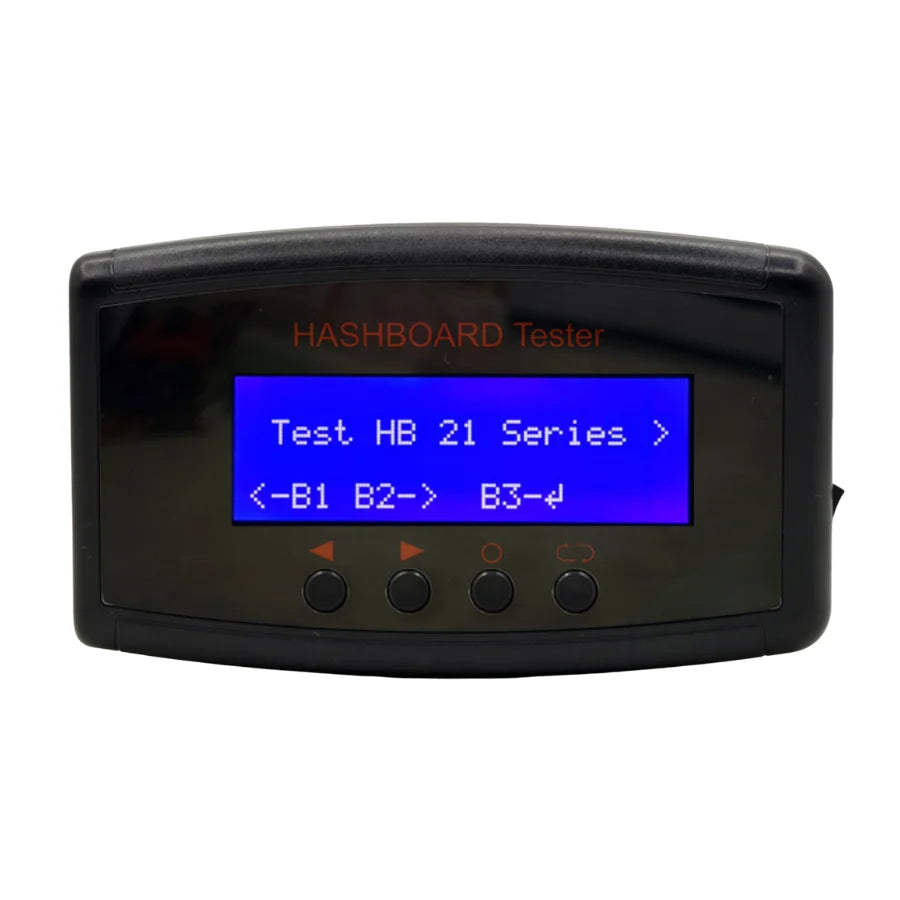
What it means for operators: The window is still open but it's narrowing. A $37.52/PH/s daily hashprice with the current difficulty level is the friendliest combination operators have seen all year, but the May 15 adjustment looks like the inflection point. If you have hashboards waiting on a chip swap or a fan replacement, the math is unambiguous — get them tested, repaired, and back online before mid-May. Hashboard test fixtures remain the fastest path from "broken board on the shelf" to "earning daily revenue."
2. White House Doubles Down on Strategic Reserve at Consensus Miami — Federal Holdings Now Disclosed at ~328,372 BTC
White House crypto adviser Patrick Witt repeated last week's Bitcoin 2026 Las Vegas tease at Consensus Miami on Tuesday, May 6 — and this time he attached a number to it. Federal Bitcoin holdings, drawn primarily from criminal and civil forfeiture cases, currently sit at approximately 328,372 BTC. At a BTC price hovering in the $76,000–$80,000 range, that's roughly $25 billion, or about 1.56% of Bitcoin's circulating supply. The United States is now the largest known sovereign holder of Bitcoin.
Witt declined to disclose final structure but reiterated that the Strategic Bitcoin Reserve update is coming "in the next few weeks." His framing was operational: federal departments needed to "get our own house in order" — meaning consolidate the BTC across agencies into a single custody structure — before any public reveal. That cataloguing process appears to be substantially complete.
Codification through legislation remains the second leg. The bill formerly known as the BITCOIN Act (Sen. Cynthia Lummis) is now ARMA — the American Reserves Modernization Act — and Rep. Nick Begich is running a parallel effort in the House. Lawmakers are reportedly targeting the late 2026 National Defense Authorization Act markup as the realistic codification vehicle. Without legislation, the reserve exists by executive order and could be unwound by a future administration.
BTC price reflected the policy chatter without any sustained reaction: a brief move toward $80,000 followed by a return to the $76,700–$78,500 range. Polymarket continues to price formal establishment of the reserve before 2027 at roughly 23%.
What it means for operators: The 328K BTC disclosure is the first time the federal position has been quantified in public. A statutory reserve, if codified, would create a long-term demand floor for newly mined BTC — which is structurally pro-miner over multi-year horizons. The near-term takeaway is unchanged from last week: federal policy continues to lean pro-mining, but tariff math (story 5) is undoing some of that with the other hand. Focus on what you control — fleet uptime and repair economics. Antminer parts and Whatsminer parts are both stocked.
3. JPMorgan Resets Miner Coverage: Upgrades Cipher and CleanSpark, Trims MARA and Riot Targets
JPMorgan released a miner-coverage reset this week that captures the bifurcation we've been flagging in this roundup for the past month. Cipher Mining and CleanSpark were upgraded, while target prices for MARA Holdings and Riot Platforms were trimmed.
The thesis is straightforward: the analysts are rewarding operators that have either pivoted credibly toward AI/HPC infrastructure (Cipher) or maintained pure-play discipline at low fleet efficiency (CleanSpark). Cipher recently announced a $200 million credit line to scale AI and HPC footprint and has executed a 15-year lease for its third large AI data center campus with an investment-grade hyperscale tenant. The Q1 2026 number was $35 million in revenue. CleanSpark, by contrast, has resisted the AI pivot and reported 658 BTC produced in March 2026 — selling 405 BTC through spot and another 500 BTC through call option exercises.
MARA and Riot got trimmed for what JPMorgan reads as slower AI conversion despite credible pure-play scale. Both companies stocked tariff-insulated inventory ahead of the April 6 Section 232 effective date, but the bank's read is that revenue diversification is now the dominant scoring factor. Riot sold 3,778 BTC in Q1 2026 for ~$289.5M in proceeds, ending the quarter with 15,680 BTC on the balance sheet.
The aggregate Q1 sell-off across public miners — MARA, CleanSpark, Riot, Cango, Core Scientific, Bitdeer — totaled roughly 32,000 BTC, more than the full-year 2025 volume from the same group. The capital is funding the AI buildout (story 4) or, in some cases, simply offsetting tariff-inflated capex.
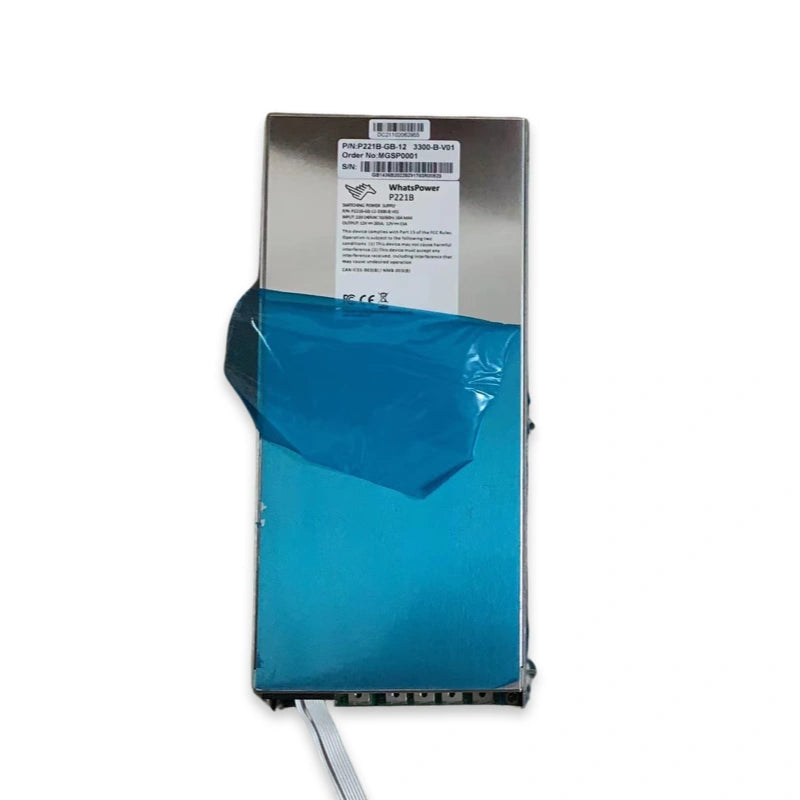
What it means for operators: Institutional capital is now actively splitting miner equity into two buckets: AI converters and disciplined pure-plays. Anyone caught in the middle — pure-play miners without efficiency leadership and without a credible HPC story — is being repriced down. For independent operators sourcing parts and used hardware, this matters because the AI-converting sites are the ones decommissioning Bitcoin mining capacity. Used Antminer S19/S19j Pro and Whatsminer M30S/M30S+ inventory hitting secondary markets in coming quarters will be increasingly the result of these conversions, not natural attrition. Repair economics on those units stay attractive at $37/PH hashprice. ASIC chips and components remain the cheapest path to bring secondary-market units back online.
4. $70B+ AI/HPC Deal Wave Reshapes the Miner Landscape
The number that frames the rest of mining in 2026: more than $70 billion in aggregate AI and HPC contract value has now been signed by former pure-play Bitcoin miners. Some operators are projected to derive up to 70% of revenue from AI by year-end.
The landmark deals on the table:
| Operator | Counterparty | Contract Value | Term |
|---|---|---|---|
| Hut 8 | Google-backed AI infrastructure | ~$7B | 15-year lease |
| IREN Limited | Microsoft | ~$1.94B/year (~$9.7B) | 5-year |
| Core Scientific / CoreWeave | CoreWeave (expanded) | $10.2B | 12-year |
| TeraWulf | HPC contracted revenue | ~$12.8B | Multi-year |
| Cipher Mining | Investment-grade hyperscale tenant | 3rd AI campus | 15-year |
The structural read: every site that converts to HPC is, by definition, a site that is winding down or repurposing Bitcoin mining capacity. The ASICs come off the racks. Some are sold off, some are warehoused, some are partially redeployed at lower-cost sites operated by smaller players. The 32,000-BTC Q1 sell-off (story 3) is in part funding this conversion — but the cheaper, more durable consequence for the global fleet is the secondary-market hardware coming loose.
For independent operators without the capital to chase AI deals, the practical effect is favorable: more used Antminer S19/S19j Pro/S19 XP and Whatsminer M30S/M50S inventory entering secondary channels at prices that often justify the cost of repair to bring them back online. The operators positioned to benefit most are the ones with cheap power and an in-house or partnered repair workflow.
What it means for operators: If you have access to power below $0.05/kWh and the workflow to refurbish dormant ASICs at $40–$80 per board, the next 6–12 months will deliver a steady supply of acquisition opportunities at attractive prices. The rate-limiting factor will be repair bench capacity, not hardware availability. Stock test fixtures and consumables ahead of the wave.
5. The Tariff Workaround Map — Bitmain Expands US Factory, Mined in America Act Pending, Hashrate Migrates
The tariff math hasn't moved in operators' favor. Section 232 duties (50% on steel/aluminum/copper, 25% on derivative products) have been in effect since April 6, layered on top of the existing 21.6% reciprocal duty on ASIC miners from Southeast Asia. The combined burden on a flagship Antminer S21 XP remains roughly 47% before any other import fees.
Three responses are now visible across the supply chain.
First, manufacturer reshoring. Bitmain has confirmed expansion of its US production line, which first opened in December 2024. The strategic objective is straightforward — units assembled in the US dodge the Section 232 metals duties on the chassis, ventilation hardware, and copper wiring. Reports indicate that initial US-assembled SKUs have prioritized the Antminer S23 Hyd 3U (1.16 PH/s, 9.5 J/TH), the only model currently in the most efficient performance tier. MicroBT and Canaan have publicly signaled US production plans but no firm timeline yet on volume.
Second, legislative response. Senators Cassidy and Lummis introduced the Mined in America Act in late March 2026, proposing federal subsidies and tax incentives for domestic mining. No vote date has been scheduled, and inclusion in the late 2026 NDAA cycle is one of the realistic paths forward — alongside ARMA (story 2).
Third, geographic migration. Analyst commentary continues to flag hashrate flowing toward Russia, Ethiopia, and the UAE — jurisdictions where hardware acquisition is not tariff-burdened and where power costs are competitive. Ethiopia in particular, with hydro power at $0.048–$0.053/kWh, is emerging as the most attractive new destination among non-tariffed jurisdictions.
What it means for operators: If you're operating in the US, the structural cost disadvantage on new hardware is real and is unlikely to ease before late 2026 at the earliest. The lever you have is the same as last week: extend the life of the fleet you already own. A $40 chip replacement, a $30 fan swap, or a $50 PSU repair on a unit already on US soil avoids the entire 47% tariff stack. If you're operating outside the US, the math is different — you can deploy new hardware without the tariff drag, and your competitive position is improving with every quarter the duties remain in place. Either way, repair throughput is the constraint to optimize against. Browse the full LYS catalog for parts and consumables stocked in Shenzhen.
The LYS Technical Team is based in Shenzhen, China, where we operate a dedicated ASIC mining hardware repair workshop and parts supply operation. We ship spare parts, repair components, and diagnostic tooling to mining operators in over 40 countries. Every article we publish is written and reviewed by working repair technicians who service Antminer, Whatsminer, and Avalon hardware daily.
Keep Your Fleet Running
Hashprice at a 2026 high of $37.52/PH/s. May 15 difficulty adjustment likely to nudge difficulty back up. Tariff math unchanged. Secondary-market hardware loosening up as AI conversions accelerate. The operators who win the next 60 days are the ones with the fastest repair throughput.
→ Test Fixtures & Diagnostic Tools
For bulk parts pricing or fleet-specific repair kits, contact us at contact@lys-sz.com or via WhatsApp. Worldwide shipping from our Shenzhen warehouse.