The 2026 Dilemma Every Mining Operator Faces
If you're running a fleet of Antminer S19 XPs purchased in 2022 or 2023, you're probably asking the same question thousands of other operators are asking in 2026: is it still worth repairing these machines, or should we migrate to the Antminer S21 series?
The honest answer is: it depends on your electricity price, the condition of your fleet, and your time horizon. This article gives you the verified numbers, the real breakeven math, and the scenarios where each decision is the right one. No hype, no "the S21 XP is always better." Just the data.
The Specs, Side by Side
Let's start with the verified specifications that drive every subsequent calculation.
| Model | Hashrate | Power | Efficiency | Chip Family |
|---|---|---|---|---|
| Antminer S19 XP | 140 TH/s | 3,010 W | 21.5 J/TH | BM1366 |
| Antminer S21 | 200 TH/s | 3,500 W | 17.5 J/TH | BM1368 |
| Antminer S21 Pro | 234 TH/s | 3,510 W | 15.0 J/TH | BM1368 |
| Antminer S21 XP | 270 TH/s | 3,645 W | 13.5 J/TH | BM1368 |
The headline: the S21 XP is roughly 37% more efficient than the S19 XP and produces nearly twice the hashrate in the same physical form factor. That gap is the largest generation-over-generation improvement Bitmain has shipped in the post-halving era.
The Efficiency Gap, Translated into Dollars
Efficiency numbers only matter when you turn them into daily profit. Here's the translation for April 2026 network conditions, at $0.07/kWh electricity, the current benchmark for low-cost mining regions.
| Model | Power cost / day | Net profit / day | Breakeven kWh |
|---|---|---|---|
| S19 XP | $5.06 | -$0.24 (loss) | ~$0.067 |
| S21 | $5.88 | +$1.01 | ~$0.082 |
| S21 Pro | $5.90 | +$2.15 | ~$0.096 |
| S21 XP | $6.12 | +$3.17 | ~$0.106 |
Net profit figures derived from April 10, 2026 profitability data published by Mining Now for the Antminer S21 ($1.01/day at $0.07/kWh), extrapolated proportionally to other models based on verified TH/s ratios.
The picture this paints is uncomfortable: at $0.07/kWh electricity under April 2026 network difficulty, the S19 XP is already running at a marginal loss. It only becomes profitable below roughly $0.067/kWh. That narrow window is the first thing to check before you decide anything about your fleet.
Meanwhile, the S21 XP can tolerate electricity prices up to $0.106/kWh — 58% higher than the S19 XP's ceiling — and still turn a profit. That's the real meaning of the "37% more efficient" headline.
Repair Economics: What It Actually Costs to Fix Each Model
The decision between repair and replace isn't just about operating profit. It's about how much it costs to keep each machine alive in the first place.
S19 XP Repair Economics (BM1366 platform)
The S19 XP uses the BM1366 chip family, which is now a mature platform. That maturity is good news for repair:
- BM1366BS and BM1366BP replacement chips are widely available and have come down in price as supply stabilized
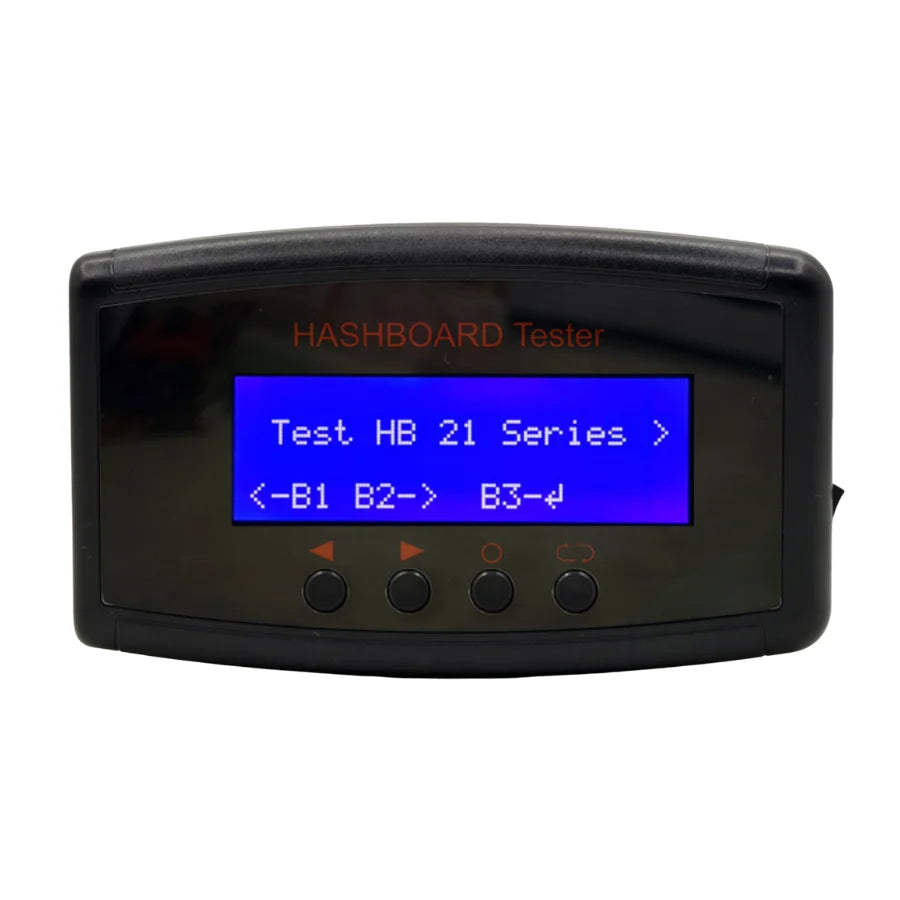
- Test fixtures and diagnostic tooling are well-developed — any serious repair shop can turn around an S19 XP hashboard diagnosis in minutes
- Common failure modes are well-documented, and the board architecture is familiar to technicians
Typical repair cost per S19 XP hashboard, assuming one to three dead chips and standard rework, sits in the $80–$180 range depending on damage extent. Power supply replacements, fan swaps, and control board fixes are similarly affordable. A complete rehab of an S19 XP — three hashboards repaired, PSU replaced, fans swapped, thermal paste refreshed — typically lands between $400 and $700 per unit.
S21 Repair Economics (BM1368 platform)
The S21 series uses the newer BM1368 chip family (BM1368PA, BM1368PB, BM1368AA, BM1368PV variants). This is a newer platform, which means:
- BM1368 chips are available but currently priced higher than mature BM1366 chips
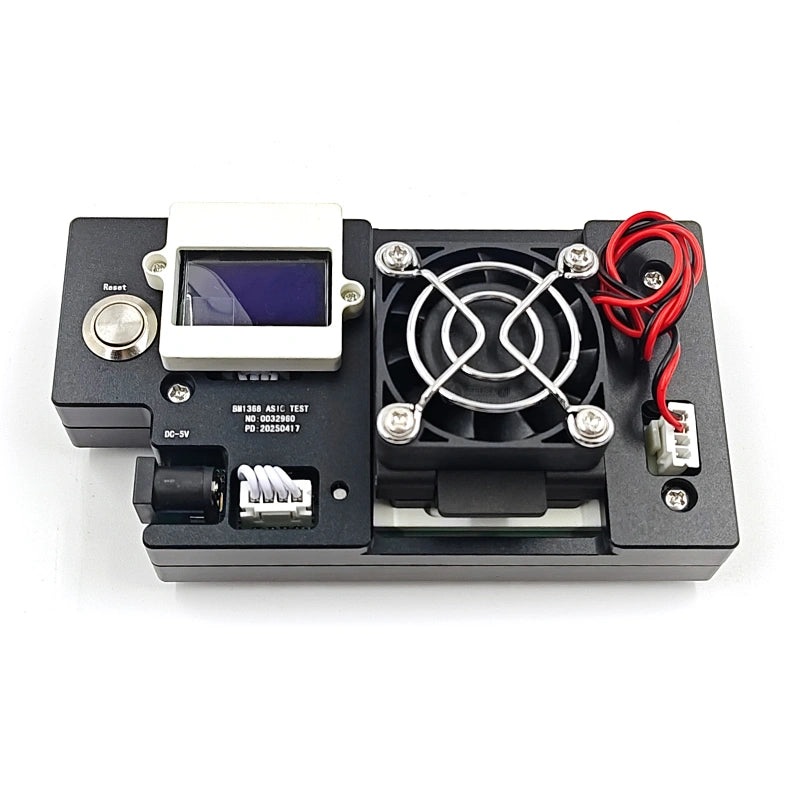
- Dedicated test fixtures for the BM1368 platform are already shipping, and repair workflows are well-established
- Board architecture differs from the S19 generation — specifically in power delivery and communication paths — so technicians need to be trained on the new platform
Typical repair cost per S21 hashboard today runs $120–$250 per board. A full rehab runs roughly $600 to $1,000 per S21 unit.
The Break-Even Calculation
Here's the framework we use when operators ask us to model their decision:
Keep your S19 XP fleet running if all three of these are true:
- Your electricity price is at or below $0.06/kWh — giving you a small but stable profit margin even under current difficulty
- Your repair cost per machine per year is below $300 — meaning the fleet is not deteriorating faster than maintenance can handle
- You can recover your repair investment in under 18 months of remaining useful life
Migrate to the S21 series if any of these are true:
- Your electricity is above $0.075/kWh — the S19 XP becomes a permanent loss maker
- Your S19 XP failure rate is climbing year over year, indicating fleet-wide component fatigue
- You're expanding capacity and need the space efficiency (one S21 XP replaces roughly two S19 XPs in the same rack slot)
The Hybrid Path Most Operators Miss
There's a third option we rarely see discussed in comparison articles: running the fleets in parallel, strategically. Many of the operators we work with keep their S19 XPs running in their cheapest-power facilities (Iran, Paraguay, Venezuela, certain regions of Texas and Kazakhstan) where the breakeven math still works, while deploying new S21 series hardware into facilities with higher power costs.
This hybrid approach lets you amortize the capex on the S19 XP fleet without leaving money on the table in your higher-cost facilities. It requires more operational complexity — two parts inventories, two training tracks for technicians, two firmware baselines — but it's the profit-maximizing path for operators with diverse facility portfolios.
What This Means for Your Spare Parts Inventory
If you're keeping an S19 XP fleet running, your priority spare parts list looks like this: BM1366BS and BM1366BP replacement chips, a BM1366 chip test fixture, thermal paste, fans, and APW12-series PSU spares.
If you're building an S21 fleet, your priority list shifts to: BM1368 chip variants (PA/PB/AA/PV), a BM1368 chip test fixture, the S21/T21-specific control board, APW17-series PSUs, and the new 18V boost modules that differ from the S19 architecture. We maintain a full S21 hashboard repair components list for operators building out their spare parts shelves.
For operators running both fleets, a professional diagnostic tool like the K9 multifunctional ASIC tester covers both platforms in a single device — saving bench space and speeding up diagnosis across generations.
The Bottom Line
The S21 XP is objectively the most efficient air-cooled Bitcoin miner Bitmain has ever shipped. But "most efficient" and "right for your operation" are not the same question. The right answer depends on your electricity price, your facility portfolio, your fleet condition, and your time horizon.
Our advice to the operators we work with every day: run the math for your actual situation using the breakeven framework above. If the numbers tell you to repair, repair well — and use a real spare parts supplier, not eBay. If the numbers tell you to replace, plan the transition carefully and don't liquidate your S19 XP fleet at the bottom of the secondary market. There's almost always a buyer in a lower-power-cost region who wants what you're retiring.
Frequently Asked Questions
Is the Antminer S19 XP still profitable in 2026?
The S19 XP is profitable in 2026 only if your electricity cost is below roughly $0.067/kWh. Above that threshold, the machine operates at a loss under current network difficulty and Bitcoin price levels.
How much more efficient is the S21 XP compared to the S19 XP?
The S21 XP operates at 13.5 J/TH compared to the S19 XP's 21.5 J/TH, making it approximately 37% more efficient. This lets the S21 XP remain profitable at electricity prices up to $0.106/kWh, versus $0.067/kWh for the S19 XP.
What chip family does the Antminer S21 use?
The Antminer S21 series uses the BM1368 chip family, which includes BM1368PA, BM1368PB, BM1368AA, and BM1368PV variants. This is a different platform than the BM1366 chips used in the S19 XP and S19K Pro.
How much does it cost to repair an Antminer S19 XP hashboard?
Typical repair cost for an S19 XP hashboard runs $80–$180 per board, depending on the number of dead chips and the type of damage. A full unit rehab (three hashboards, PSU, fans, thermal paste) typically runs $400–$700.
Should I upgrade from S19 XP to S21 in 2026?
Upgrade if your electricity cost is above $0.075/kWh, your fleet failure rate is increasing, or you need to maximize rack-space efficiency. Keep your S19 XP fleet running if your electricity is below $0.06/kWh and annual repair costs stay under $300 per machine.
The LYS Technical Team is based in Shenzhen, China, where we operate a dedicated ASIC mining hardware repair workshop. With over a decade of hands-on experience repairing Antminer, Whatsminer, and Avalon mining equipment, our team supplies spare parts and repair services to mining operators in over 40 countries. Every article we publish is written and reviewed by working repair technicians.
Need Help Making the Right Call?
Whether you're extending the life of an S19 XP fleet or scaling up a new S21 deployment, LYS Shenzhen stocks the complete spare parts inventory for both platforms — tested before shipping, with worldwide DDP delivery. Browse our full Antminer replacement parts catalog, or contact our team directly at contact@lys-sz.com or via WhatsApp for bulk pricing, repair service quotes, and custom sourcing on hard-to-find components.