24MHz Crystal Oscillator for Whatsminer M21S Hashboard
Couldn't load pickup availability
Have questions about this product? Our team is here to help — just reach out on WhatsApp.
💬 Contact Us on WhatsAppAbout the Product
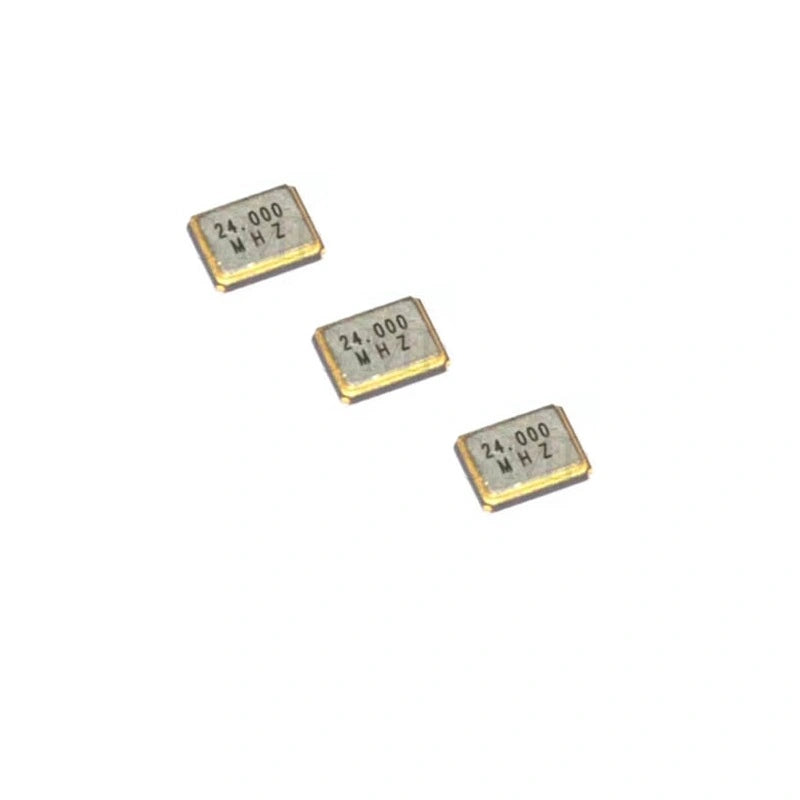
24MHz Crystal Oscillator | High-Quality Frequency Reference for Whatsminer M21S Hashboard
The 24.000 MHz crystal oscillator is the precision frequency reference used on the Whatsminer M21S hashboard to drive the master clock for the on-board ASIC chips. Crystal oscillators are the single most important timing source on a hashboard: every PLL multiplication that generates the multi-GHz hash core clocks starts from this 24MHz reference, and when the crystal drifts out of spec or fails entirely, the symptoms cascade through the chain — chip-detection failures, mismatched hash rates, or complete hashboard boot failure.
The crystal is specified for the Whatsminer M21S hashboard with a frequency tolerance of ±10ppm at 25°C and a load capacitance configurable as 10pF, 12pF, or 15pF (or as specified by the original silkscreen). The drive level is 10µW typical (100µW max), and the operating temperature range of -10°C to +60°C covers normal mining-deployment ambients with margin. The same 24.000 MHz part is also used to repair damaged crystal oscillators on the Whatsminer M20S, M21S, M30S, M31S, and M32 hashboards — confirm the original silkscreen frequency before ordering.
When to Replace the 24MHz Crystal
- M21S hashboard fails to detect chips on the chain — controller reports zero chips found.
- Hash rate drops to zero on a specific hashboard while voltage and current draw look normal.
- Frequency counter measurement shows the 24MHz output drifting or absent on the crystal's output pad.
- Visible damage — cracked package, burnt silk mark.
- Intermittent hashboard failures after thermal cycling — micro-crack in the crystal package from repeated warm-up / cool-down.
Specs and Technical Features
- 24.000 MHz nominal frequency — direct match for Whatsminer M21S hashboard clock spec.
- Frequency range family 12-54MHz — same crystal package available in alternate frequencies for other Whatsminer hashboards.
- Load capacitance 10pF, 12pF, or 15pF (or as specified by original silkscreen).
- Frequency tolerance ±10ppm at 25°C — tight enough for ASIC PLL multiplication.
- Drive level 10µW typical (100µW max) — well-matched to standard ASIC clock input drive.
- Operating temperature -10°C to +60°C — covers mining-deployment ambient envelope.
- Storage temperature -40°C to +90°C.
- Stable working frequency — prevents equipment instability and frequency-related issues.
24MHz Crystal Oscillator Specifications
| Feature | Specification |
|---|---|
| Frequency | 24.000 MHz |
| Frequency Range (Family) | 12-54MHz |
| Load Capacitance (CL) | 10pF, 12pF, or 15pF |
| Frequency Tolerance (at 25°C) | ±10ppm |
| Drive Level | 10µW (100µW max) |
| Operating Temperature | -10°C to +60°C |
| Storage Temperature | -40°C to +90°C |
| Application | Whatsminer M20S / M21S / M30S / M31S / M32 hashboard ASIC frequency reference |
FAQ — 24MHz Crystal Oscillator
Q: How do I test the crystal before replacing it?
A: Use a 100MHz oscilloscope with a x10 probe on the crystal's output pad with the hashboard powered up. You should see a clean 24MHz sinusoid or square wave. No output or distorted output (low amplitude, jitter, drift) indicates failed crystal. Note that scope probing the crystal pads can sometimes pull the oscillator off-frequency — use a high-impedance probe.
Q: Can the same crystal work on M20S or M30S hashboards?
A: The 12-54MHz family covers multiple Whatsminer hashboards but the specific frequency varies by model. Match the frequency printed on the original silkscreen of your failed crystal — common values for Whatsminer are 24, 25, and 26 MHz depending on the hashboard generation.
Q: Load capacitance 10pF vs 12pF vs 15pF — which one?
A: Match the original part's CL spec from the hashboard schematic or original silkscreen. Wrong CL causes frequency offset (typically 10-50ppm per pF mismatch), which can push the crystal outside the ASIC's accepted clock window.
Q: Rework profile?
A: Small SMD crystals — hot-air at 320°C with controlled airflow. Apply flux, preheat the hashboard to 100°C, lift with tweezers, place fresh crystal with correct orientation, reflow. The crystal package is sensitive to thermal shock — don't over-heat.
Q: Bulk pricing for repair shops?
A: Yes — email contact@lys-sz.com for tray-quantity pricing.
Related products
- 26MHz Crystal Oscillator (Bitmain S19 Pro)
- SJK25 25MHz Crystal Oscillator (Whatsminer M30S)
- 813RN A0231 25MHz Crystal Oscillator (Avalon 1166pro)
- H5TQ2G63GFR DDR3 Memory Chip (Whatsminer CB2 V8)
Whatsminer M21S repair benches stocking 24MHz crystal oscillators in volume? Email contact@lys-sz.com for bulk pricing and matched hashboard repair-kit options. Worldwide shipping from our Shenzhen warehouse.

Buying in bulk for a mining farm or repair shop?
Get dedicated B2B pricing on this part and across our full catalog — quote response within 24 hours, payment by T/T USD bank wire, and DDP delivery available for US & EU customers (and other lanes on request).