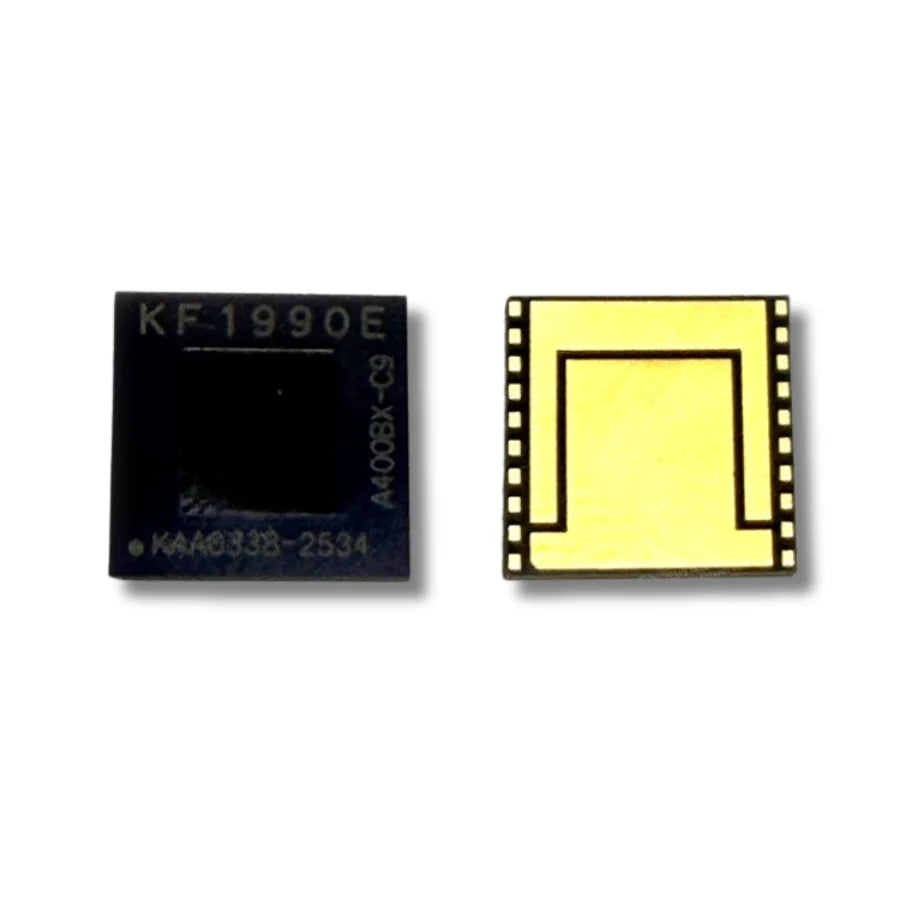
Whatsminer KF1990E ASIC Chip – MicroBT SHA-256 for M73S Hashboard
Couldn't load pickup availability
Have questions about this product? Our team is here to help — just reach out on WhatsApp.
💬 Contact Us on WhatsAppAbout the Product
Whatsminer KF1990E ASIC Chip – New-Generation MicroBT SHA-256 Bitcoin Chip for M73S Hash Board Repair
The KF1990E is a new-generation dedicated ASIC hashing chip from MicroBT, purpose-designed for the Whatsminer M73S SHA-256 Bitcoin miner. It matches the M73S hashboard footprint exactly and is the standard replacement part for mining-farm bench work on burned-out chips, hash-rate-decay faults or otherwise malfunctioning chips on the board. Installed at the failed positions reported by the kernel scan or test fixture, the KF1990E restores the M73S to its target hash rate and eliminates the downtime losses of running a partially-degraded board.
KF1990E on the Whatsminer M73S Hashboard
M73S hashboards run a chain of KF1990E chips wired in series across the per-domain buck converters — the standard architecture for Whatsminer SHA-256 boards. A single dead chip breaks the chain and takes out the whole voltage domain in the kernel log; multiple dead chips across different domains usually indicate a thermal event or a power-rail fault rather than chip-level failure. The standard repair flow: read the failed chip positions from the kernel log, isolate the board, re-tin the suspect pads, hot-air the failed chip off, place a new KF1990E, re-flow, and re-verify on the M73S test fixture before reinstalling the hashboard in the miner.
When to Replace the KF1990E
Three fault families on the M73S point at chip-level rather than power or cooling problems: (1) burned-out chip — visible damage, kernel scan reports the position as dead; (2) hash-rate decay — the miner is stable but the per-board hash rate has drifted downward over weeks or months; (3) malfunctioning chip — intermittent errors, offline events on a single board while the rest of the miner runs clean. In all three, swapping the failed KF1990E at the position(s) flagged by the kernel scan typically restores normal operation — and avoids the cost of writing off the entire hashboard.
Replacement Procedure
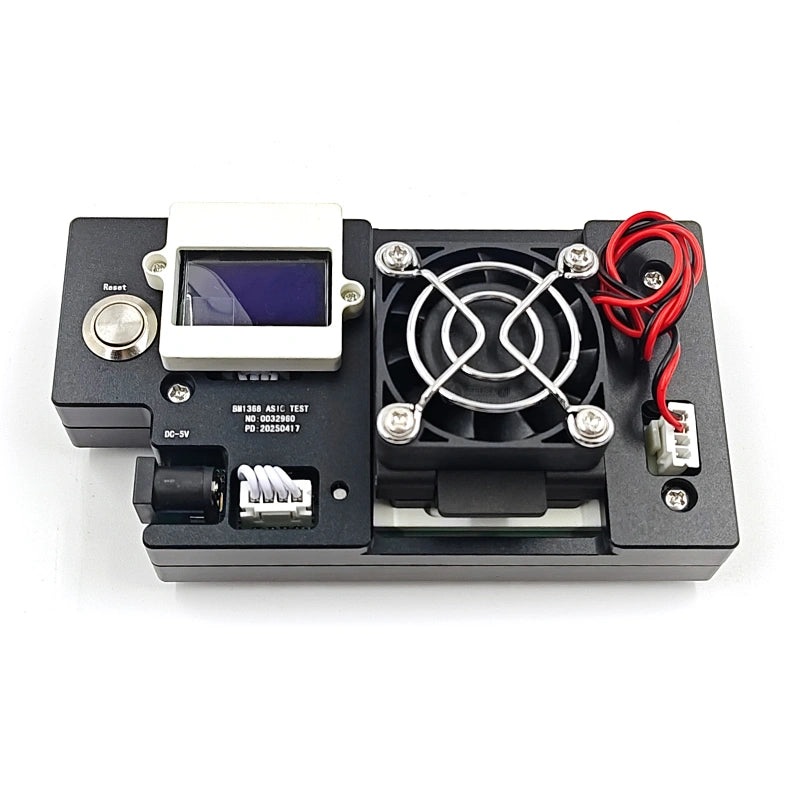
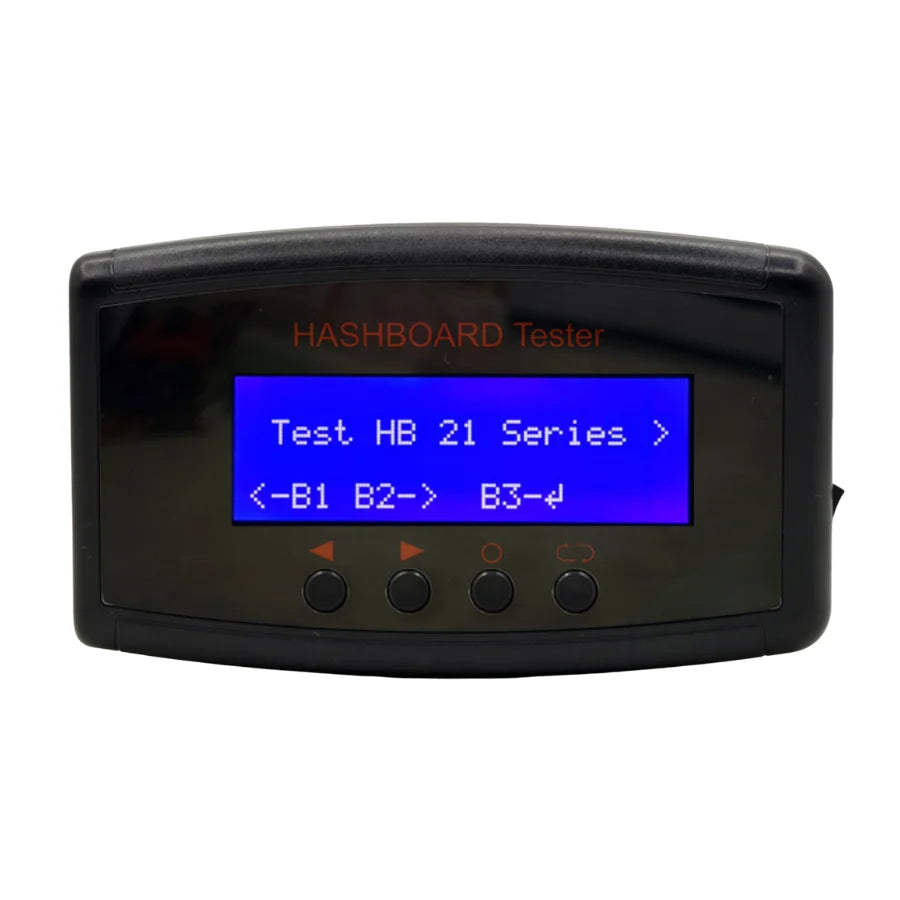
Pre-heat the M73S hashboard to 130–150 °C with an IR pre-heater so the PCB is brought up evenly before chip removal. Use a hot-air rework station at 340–360 °C with a small nozzle to lift the failed KF1990E — the package is small and surrounded by tightly-spaced passives, so protect adjacent components with kapton tape. Clean the pads with flux and solder braid, lay down fresh paste matching the board's process (leaded or lead-free), place the new KF1990E with vacuum tweezers respecting the orientation mark, then re-flow. Verify on the KF1990-series test fixture before reinstalling the hashboard in the miner.
Why Chip-Level Repair Pays Off on M73S Boards
M73S hashboards are expensive replacement units, and chip-level repair is the right economic call whenever the failure is isolated to one or two positions. A clean KF1990E swap restores the board to its original hash rate, eliminates the hash-rate attenuation and downtime that come with degraded chips, and keeps the miner generating revenue instead of waiting for a full board replacement to ship. Across a fleet, the cumulative savings on board-replacement cost and downtime are the difference between repairing a site profitably and being forced to scrap usable hardware.
Whatsminer KF1990E ASIC Chip Specifications
| Parameter | Value |
|---|---|
| Part Number | KF1990E |
| Manufacturer | MicroBT (Whatsminer) |
| Generation | New-generation dedicated ASIC hashing chip |
| Algorithm | SHA-256 (Bitcoin) |
| Compatibility | Whatsminer M73S hashboard |
| Configuration | Series-wired chain across voltage domains |
| Common Faults Addressed | Burned-out chip, hash-rate decay, chip malfunction |
| Soldering | Hot-air re-flow, ~340–360 °C with 130–150 °C hashboard pre-heat |
| Test Fixture | KF1990-series test fixture |
| Use Case | Hashboard chip replacement to restore normal hash rate |
| Origin | Original MicroBT silicon |
| Condition | Brand new |
Related Whatsminer / MicroBT Hashboard Repair Parts
- KF1980E ASIC Chip – Whatsminer M60 / M60S / M61 (Predecessor Generation)
- Whatsminer KF1978E Stencil & Tin Fixture – Sister KF-Series Reballing Tool
- DOWSIL TC-3080 8W/mK Blue Thermal Gel 1kg – Hashboard TIM
- Whatsminer M60 / M50 / M30 Hashboard Test Fixture – General Whatsminer Bench Tool
Repairing M73S hashboards in volume or stocking a workshop ahead of fleet rollout? Contact us at contact@lys-sz.com for tray-quantity KF1990E pricing. Worldwide shipping from our Shenzhen warehouse.
Buying in bulk for a mining farm or repair shop?
Get dedicated B2B pricing on this part and across our full catalog — quote response within 24 hours, payment by T/T USD bank wire, and DDP delivery available for US & EU customers (and other lanes on request).