When a hashboard comes across your bench, the first question is always: which chip is on it? The answer determines your repair strategy — the tools you need, the sub-variants you can substitute, the voltage domains you're troubleshooting, and whether it's worth repairing at all given the miner's efficiency class.
Bitmain has shipped six major chip generations across the Antminer S17 through S21 XP lineup. Each generation brought meaningful efficiency improvements, but also introduced new repair challenges — tighter thermal margins, smaller packages, more sub-variants to track, and increasingly sensitive power delivery requirements.
This guide maps every chip you'll encounter on current-fleet Antminer hashboards, with the specs and repair context that actually matter on the bench.
The Full Chip Lineup at a Glance
| Chip | Process | Per-Chip Hashrate | Efficiency (J/TH) | Primary Miners | Year Introduced |
|---|---|---|---|---|---|
| BM1397 | 7nm (TSMC) | ~50-80 GH/s | ~30 J/TH | S17, S17 Pro, S17+, T17 | 2019 |
| BM1398 | 7nm (Samsung) | ~80-90 GH/s | ~29-34 J/TH | S19, S19 Pro, T19 | 2020 |
| BM1362 | 7nm | ~80-97 GH/s | ~27-29 J/TH | S19j, S19j Pro, S19j Pro+ | 2021 |
| BM1366 | 5nm | ~400-500 GH/s | ~21 J/TH | S19 XP, S19 XP Hyd, S19K Pro | 2022 |
| BM1368 | 5nm | ~625-775 GH/s | ~17.5 J/TH | S21, S21 Hyd, T21 | 2024 |
| BM1370 | 3nm | ~1,200 GH/s | ~12-15 J/TH | S21 Pro, S21 XP, S21 XP Hyd | 2025 |
The trend line is clear: each generation roughly doubles per-chip hashrate while cutting energy consumption by 20-40%. From BM1397 to BM1370, Bitmain achieved a 13x improvement in mining efficiency — from 30 J/TH down to under 15 J/TH — across just six years of silicon development.
BM1397 & BM1398 — The 7nm Foundation (S17/S19 Era)
BM1397 — The Starting Point
The BM1397 was Bitmain's first 7nm chip, fabricated on TSMC's 7nm FinFET process with over one billion transistors. It debuted in the Antminer S17 series in 2019 and delivered roughly a 28.6% efficiency improvement over its predecessor, the BM1391.
At the system level, S17-class miners using BM1397 achieve approximately 30 J/TH — ancient by today's standards, but the S17 series is still encountered in repair shops because these machines run at low electricity costs in certain regions.
Repair notes: The BM1397 is the most documented Bitmain chip thanks to the open-source Bitaxe project (which uses BM1397 for the Bitaxe Max solo miner). Board-level documentation is more accessible than any other Bitmain chip. The universal tin fixture covers BM1387 through BM1398 — one tool for the entire 7nm family.
BM1398 — The S19 Workhorse
The BM1398 moved to Samsung's 7nm process and became the foundation of the S19 generation — the single most widely deployed Antminer family in Bitcoin mining history. The S19 Pro uses 114 BM1398 chips per hashboard to deliver 110 TH/s at approximately 29.5 J/TH.
The key distinction between S19 and S19 Pro is chip binning: both use BM1398, but the Pro receives higher-quality dies that hit target hashrate at lower voltage. The base S19 uses the remaining bin, delivering 95 TH/s at ~34.5 J/TH.
Sub-variants: BM1398BB and BM1398AC are the most common. They are not always interchangeable — confirm the original chip marking before ordering replacements.
Repair notes: The BM1398 is the chip you'll see most often on the bench today. S19 Pro boards are still the bread-and-butter repair job at most mining workshops. Chip replacement is straightforward with the right reball stencil and hot-air station. These boards are robust — the BM1398's thermal margins are relatively generous compared to later generations.
BM1362 — The S19j Refinement
The BM1362 is a 7nm die used in the S19j and S19j Pro series. Each S19j Pro hashboard contains 126 BM1362 chips arranged in series, delivering up to 122 TH/s at 3,355W for the S19j Pro+ variant.
The BM1362 represents an incremental refinement of the 7nm platform — not a generational leap, but an optimization of the BM1398 architecture with improved yield and slightly better efficiency in the 27-29 J/TH range.
Sub-variants: The BM1362 has the most sub-variants of any Bitmain chip: BM1362AA, BM1362AK, BM1362AC, BM1362AI, BM1362AJ, and BM1362BD. This creates a real procurement challenge — you need to match the exact sub-variant to the original board. The BM1362AC is the most commonly replaced variant (and the most widely stocked).
Repair notes: The BM1362 is a common cause of zero-hash issues on S19j boards. When an S19j Pro shows zero hashrate on one domain, a failed BM1362 chip is the first suspect. The chip is physically similar to the BM1398 but uses a different pinout — do not attempt to substitute one for the other.
BM1366 — The 5nm Leap (S19 XP)
The BM1366 represents Bitmain's jump to 5nm — a genuine generational shift. Per-chip hashrate jumps from ~80-97 GH/s (7nm era) to 400-500 GH/s, with system-level efficiency dropping to approximately 21 J/TH.
The S19 XP hashboard uses 110 BM1366 chips divided into 11 voltage domains of 10 chips each. At the chip level, Bitmain specifies 0.021 J/GH — a 30% efficiency improvement over the best 7nm silicon.
Sub-variants: BM1366AL and BM1366AG are used in the S19 XP air-cooled and S19 XP Hyd respectively. The BM1366BS and BM1366BP are used in the S19K Pro. BM1366AH is another variant. Again, sub-variant matching is critical.
Repair notes: The BM1366 runs at lower voltage per domain, has tighter thermal margins, and demands cleaner power delivery than the BM1398. This makes it more sensitive to solder joint quality, thermal paste application, and power supply ripple. If you're transitioning from S19 Pro repair to S19 XP repair, expect tighter tolerances and less room for error. A dedicated BM1366 chip tester is essential — you can't rely on the miner itself to tell you which specific chip has failed.
BM1368 — The S21 Standard (5nm Refined)
The BM1368 powers the Antminer S21 — the current mainstream production miner. Built on a refined 5nm process with improved heat dissipation architecture, each chip delivers 625-775 GH/s, pushing the S21 to 200 TH/s at 17.5 J/TH (3,500W).
Each S21 integrates three hashboards with 108 BM1368 chips per board — 324 chips total per machine. The chip architecture uses advanced parallel processing and an innovative heat dissipation structure designed for the higher per-chip power density.
Sub-variants: BM1368PB, BM1368PA, BM1368PM, BM1368PV, and BM1368AA. These are not universal — each is binned for specific performance targets. The BM1368PB and BM1368PA are the most commonly sourced replacement chips. Always confirm the original marking on the failed chip before ordering.
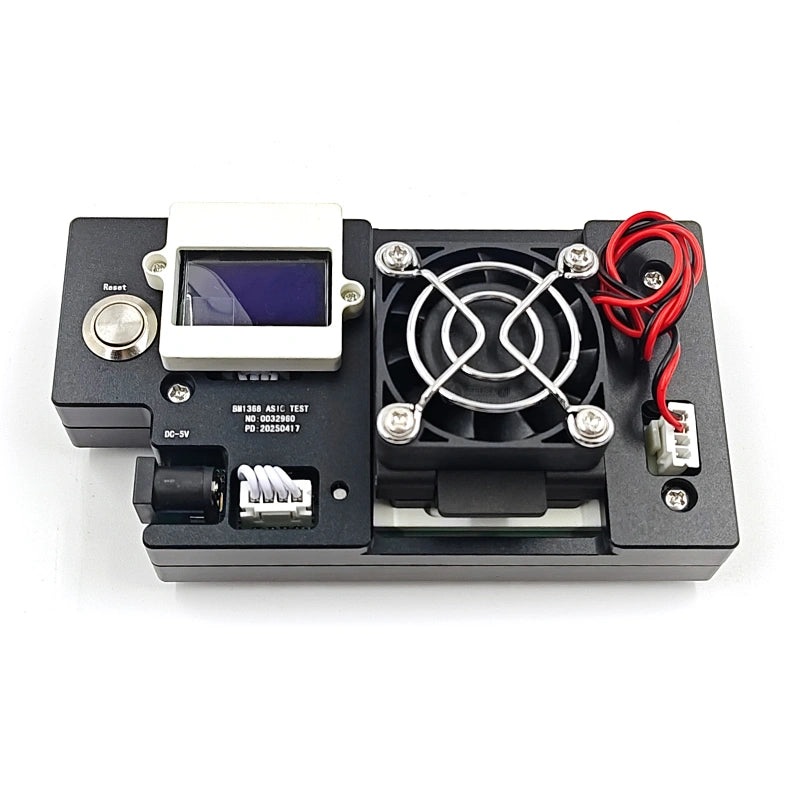
Repair notes: The S21 hashboard is a more complex repair than the S19 Pro. The BM1368's improved heat dissipation structure means the chip-to-heatsink thermal interface is more critical — poor re-paste jobs that were "fine" on S19 Pro boards can cause thermal throttling or chip failure on S21 boards. Use the BM1368 chip tester to identify failed chips before desoldering. The BM1368PB tin tool is purpose-built for reballing these chips accurately.
BM1370 — The 3nm Frontier (S21 Pro/XP)
The BM1370 is Bitmain's current flagship chip, built on a 3nm process node. Each die delivers approximately 1.2 TH/s — more than double the BM1368 and a 24x improvement over the BM1397 from just six years earlier.
The BM1370 powers the most efficient Antminer lineup to date:
| Miner | Chip Variant | Chips | Hashrate | Efficiency |
|---|---|---|---|---|
| S21 Pro | BM1370BC | 3 × 10⁸ | 234 TH/s | 15 J/TH |
| S21 XP | BM1370AA | 3 × 10⁸ | 270 TH/s | 13.5 J/TH |
| S21 XP Hyd | BM1370AA | 3 × 10⁸ | 473 TH/s | 12 J/TH |
The sub-variant suffix matters here more than ever: the BM1370AA is the highest-binned die, reserved for the flagship S21 XP. The BM1370BC goes into the S21 Pro at a slightly lower performance target. Other variants include BM1370BB, BM1370PA, BM1370PB, and BM1370PF.
Repair notes: The BM1370 is the newest chip on the market and the most demanding to work with. The 3nm die is physically smaller, the solder balls are finer, and the thermal margins are the tightest in Bitmain's history. Board-level repair requires high-precision rework equipment (hot-air with nozzle control, high-magnification inspection). The BM1370 chip tester is essential for diagnostics. Chip replacement costs are higher than any previous generation — a single BM1370 die carries significantly more hashrate value than a BM1398, so the repair-vs-scrap calculation strongly favors repair.
Chip Selection: What to Stock for Your Fleet
If you're running a repair operation or managing a mixed fleet, here's the practical stocking guide:
| If Your Fleet Includes | Stock These Chips | Plus These Tools |
|---|---|---|
| S19 / S19 Pro / T19 | BM1398BB, BM1398AC | Universal tin fixture (BM1387–BM1398) |
| S19j / S19j Pro | BM1362AC (+ confirm sub-variant) | BM1362 tin tool |
| S19 XP / S19K Pro | BM1366AG or BM1366AL (XP), BM1366BS/BP (K Pro) | BM1366 chip tester |
| S21 / T21 | BM1368PB, BM1368PA | BM1368 chip tester + BM1368 tin tool |
| S21 Pro / S21 XP | BM1370BC (Pro), BM1370AA (XP) | BM1370 chip tester |
The golden rule: always read the chip marking on the board before ordering. A "BM1366" search will return multiple sub-variants — and the wrong one won't work. Take a photo of the failed chip under magnification, match the full part number (e.g., BM1366AG, not just "BM1366"), and order accordingly.
Cross-Generation Repair Complexity
The practical difficulty of chip-level repair has increased with each generation:
| Factor | 7nm Era (BM1397/98/62) | 5nm Era (BM1366/68) | 3nm Era (BM1370) |
|---|---|---|---|
| Thermal margin | Generous | Tight | Very tight |
| Solder ball pitch | Standard | Fine | Very fine |
| Power delivery sensitivity | Moderate | High | Very high |
| Chip tester required? | Helpful | Essential | Essential |
| Repair skill level | Intermediate | Advanced | Expert |
| Repair economics | Always worth it | Almost always worth it | Strongly favors repair (high chip value) |
The paradox of newer chips: they're harder to repair, but the economic case for repair is stronger. A single BM1370 die recovers ~1.2 TH/s — that's meaningful hashrate value restored for the cost of one chip and a few hours of bench time.
The LYS Technical Team is based in Shenzhen, China, where we operate a dedicated ASIC mining hardware repair workshop and parts supply operation. We ship spare parts, repair components, and diagnostic tooling to mining operators in over 40 countries. Every article we publish is written and reviewed by working repair technicians who service Antminer, Whatsminer, and Avalon hardware daily.
Frequently Asked Questions
Can I replace a BM1398 chip with a BM1362 on an S19 Pro board?
No. Although both are 7nm chips used in S19-generation miners, the BM1398 and BM1362 have different pinouts and electrical characteristics. The BM1398 is used on S19/S19 Pro/T19 boards; the BM1362 is used on S19j/S19j Pro boards. They are not interchangeable. Always match the exact chip family to the hashboard model.
Why do Bitmain chips have so many sub-variants (AA, AC, PB, etc.)?
The letter suffixes indicate binning — the performance grade assigned during manufacturing. Chips from the same wafer are tested and sorted by how well they meet efficiency, voltage, and hashrate targets. Higher-bin chips (like BM1370AA for the S21 XP) run at tighter specs; lower-bin chips go into less demanding models. For repair, you must match the sub-variant because the miner's firmware and voltage tables are tuned for that specific bin.
Is it worth repairing an S19 Pro (BM1398) board in 2026?
It depends on your electricity cost. The S19 Pro runs at ~29.5 J/TH, which is profitable below approximately $0.06/kWh at current difficulty and Bitcoin prices. If you have access to cheap power and the repair cost is under $100 per board, the math works. Above $0.08/kWh, the S19 Pro is approaching its efficiency retirement threshold and repair dollars may be better invested in newer hardware.
Do I need a different chip tester for each generation?
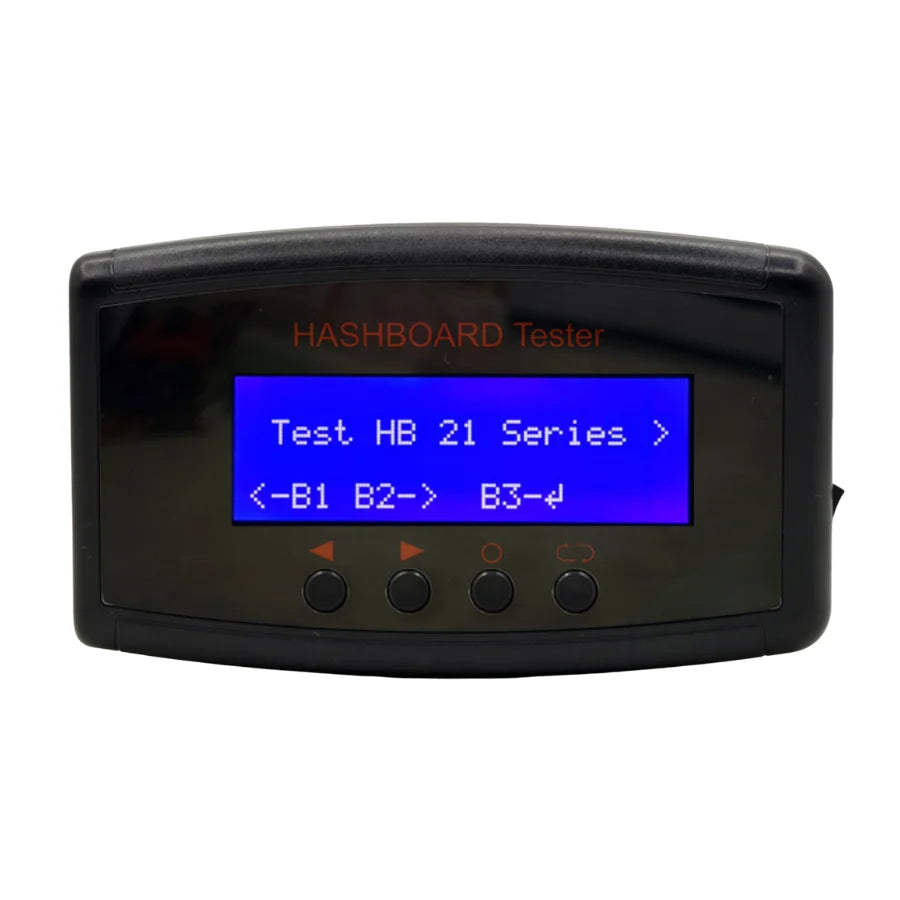
Yes. Each chip generation has a dedicated tester designed for its specific electrical characteristics. The BM1366, BM1368, and BM1370 each have their own tester. Older 7nm chips (BM1397/1398) can sometimes be tested with universal fixtures, but the 5nm and 3nm chips require generation-specific testers for accurate diagnosis. This is a worthwhile investment if you're servicing more than a handful of boards per month.
What's the biggest repair difference between 5nm and 3nm chips?
Solder ball pitch and thermal margin. The BM1370 (3nm) has finer solder balls and requires more precise rework temperatures and timing during desoldering and reballing. The thermal budget is tighter — overheating during rework can damage the die or adjacent components. If you're comfortable with BM1368 (5nm) rework, the BM1370 is the same process but with less room for error. Invest in a precision hot-air station with nozzle control and practice on scrap boards before working on production units.
ASIC Chips, Testers & Repair Tools
We stock replacement chips for every Bitmain generation from BM1362 through BM1370, plus the dedicated chip testers and tin tools for each platform. All chips are tested before shipping.
→ Test Fixtures & Diagnostic Tools
→ Universal Tin Fixture (BM1387–BM1398)
For bulk chip orders, fleet-specific repair kits, or help identifying the right sub-variant for your boards, contact us at contact@lys-sz.com or via WhatsApp.