The Hidden Variable: Why Spare Parts and Repair Cost Decide Real Mining ROI in 2026
Every Bitcoin mining ROI calculator on the internet uses the same three inputs. Hash price. Electricity rate. Machine efficiency. Punch in your S21 XP, type a kWh number, read the answer. The output looks precise, the spreadsheet feels finished, and the math is right — as far as it goes. The problem is that the math stops where the real cost of running miners actually begins.
Spend a year operating a fleet and the picture changes. A hashboard fails in week 7 and a chip replacement order takes two weeks to arrive because the bin code was out of stock. A PSU sags in week 19 and the replacement freight bill alone eats a month of margin on the affected unit. A summer dust accumulation event raises chip junction temperatures across the room and four boards quietly start degrading two months before they show on the dashboard. None of this appears in a standard ROI calculator, but all of it shows up in the bank account.
This article is for the operator who has been around long enough to suspect that the published ROI numbers are not their ROI numbers. We will work through the five variables that the standard calculator is missing, model three real operator profiles at April 2026 hash price, and finish with the parts-stock and preventive maintenance practices that move the curve back toward the published numbers.
The standard calculator and what it misses
The reference numbers in mid-2026 sit roughly here. Network hash rate around 778 EH/s, network difficulty around 138.96 T with a downward retrace pencilled in for the June 2026 adjustment, hash price around $33 per PH per day, BTC price oscillating in the mid-sixties of thousands of dollars. An Antminer S21 XP at 17.5 J/TH and 270 TH/s pulls roughly 4.7 kW from the wall. Plug those numbers into any calculator and the answer is a per-day net at any electricity rate you choose.
The calculator's blind spots are five. First, downtime — the hours or days a miner is off the rack between when a chain drops and when the repair is done. Second, parts cost — the actual dollars spent on chips, regulators, capacitors, stencils, and the freight to get them to where the miner is. Third, preventive maintenance cost — fans, thermal grease, dust cleaning, PSU input filter refreshes. Fourth, cascading failure cost — when one fan dies and accelerates degradation of the unit next to it. Fifth, opportunity cost on capital tied up in waiting — the per-day margin lost while a board sits in a queue for an RMA or a shop's turnaround.
None of these are large in any single instance. All of them are large in aggregate, and the aggregate is what determines whether a fleet pays for itself across its useful life.
A realistic failure baseline by generation
The number to start from is the annualised hashboard failure rate per miner. At moderate ambient temperature, stable power, and stock firmware, a reasonable working assumption for the S19 family is one hashboard repair per ten miners per year. The S21 family runs slightly lower because the silicon is newer and the LDO tree has been hardened against the failure modes that surfaced on the older generations — call it one repair per twelve miners per year on the S21, with the caveat that S21 XP and S21 Hydro data is still maturing.
These numbers shift quickly with three variables. Ambient temperature and humidity — fleets in tropical climates without active cooling will see repair rates two to three times higher than the baseline. Power quality — locations with frequent brownouts or voltage spikes will see PSU failure rates climb sharply, and PSU failures cascade into board failures because of the voltage transients they push downstream. Firmware — aggressive custom firmware that pushes chips above stock voltage shortens the chip life measurably, and a fleet running underclocked stock firmware in a climate-controlled room will see roughly half the baseline failure rate.
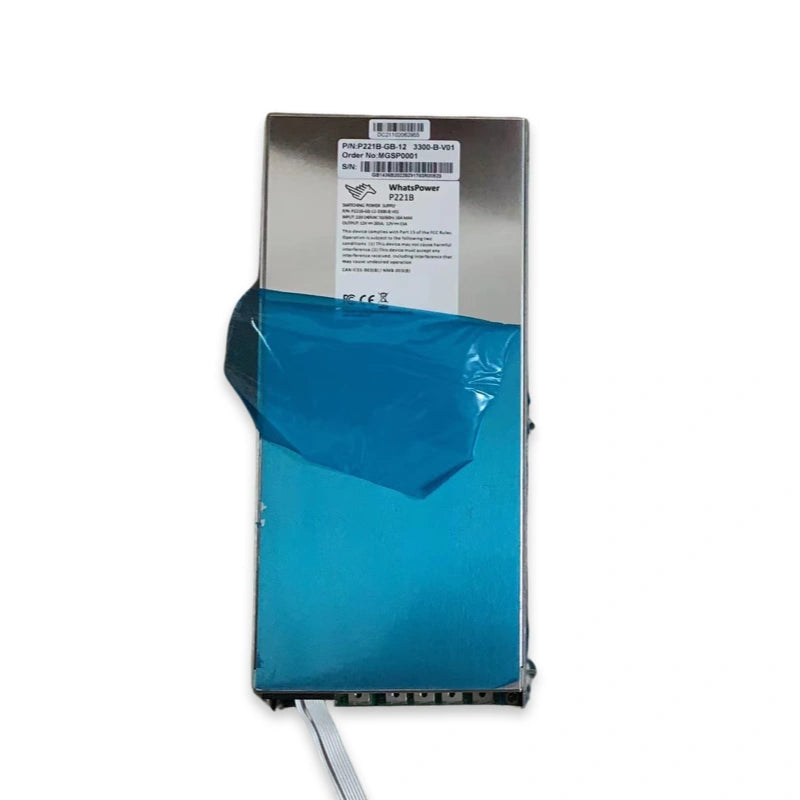
On the PSU side, the Bitmain APW12 family — the workhorse for S19 / T19 / S19 Pro — accounts for a substantial share of all PSU-related downtime in the field. The newer APW17 on the S21 / T21 has different failure modes but a similar annualised rate. PSUs do not announce their failures politely : the typical sequence is a few weeks of marginal output drift, followed by a hard fault during a thermal cycling event.
Fans are the most common single-component failure on every Antminer generation and the only failure mode explicitly excluded from the standard warranty. Fan failure does not stop the miner immediately ; it raises the temperature of the unit it is on, accelerates dust accumulation, and shortens the life of the silicon. Fans are also among the cheapest components on the machine, which makes proactive fan replacement on a fleet-wide cycle one of the highest-ROI maintenance decisions an operator can make.
Three operator profiles and what the math says
The same machine produces very different real margins in three real-world deployment profiles. The reason is not the headline ROI math ; it is the share of the headline that gets lost to parts, downtime, and preventive maintenance.
Profile A : Home operator, 2 × S19j Pro, residential electricity
Two S19j Pro units, 104 TH/s each, 29.5 J/TH, on a US residential rate of around $0.12/kWh. The standard calculator shows a thin positive day at current hash price — sometimes positive, sometimes negative depending on the week's network difficulty.
What the calculator misses for this profile is the unit-economics fragility. A single hashboard repair on one of the two units kills the margin on that unit for three to six months. A PSU failure that requires a replacement unit shipped to a US residential address with no DDP option absorbs the next six months of margin. The operator is essentially betting that nothing fails inside the window where the math works. The right framing for this profile is not "what is my ROI" but "can I extend the useful life of this hardware long enough to recover the initial capital cost". Preventive maintenance — fan replacement, dust management, thermal grease refresh — is the single decision that determines the answer.
Profile B : Small operation, 20 × S21, mixed-source electricity
Twenty Antminer S21 units, 200 TH/s each, 17.5 J/TH, on a mixed-source rate of around $0.07/kWh. The standard calculator shows a comfortable positive day per unit at current hash price. This is the profile where the parts-cost variable starts to dominate the ROI conversation, not because the dollars are large per repair but because the frequency is large enough to be a budget line.
At a baseline of one hashboard repair per twelve miners per year, this fleet expects roughly two hashboard repairs per year. Add one PSU repair every other year, fan replacements on a quarterly cycle, thermal grease refreshes on the same cadence, and a dust-cleaning operation every six months. The total parts-and-maintenance line for the year, sourced directly, lands in a range that is meaningful relative to the fleet's annual gross but absolutely manageable if it is planned for.
The mistake at this profile is treating parts as an exception rather than a budget line. Operators who put parts and preventive maintenance into the annual budget at the start of the year keep their fleet running at close to the published ROI numbers. Operators who treat each repair as an unexpected event lose money to freight surcharges, urgent shipping, and the per-day margin they sacrifice while a unit sits on the bench waiting for a part.
Profile C : Mid-size operation, 200 × S21 XP, dedicated power contract
Two hundred Antminer S21 XP units, 270 TH/s each, 13.5 J/TH, on a dedicated power contract at $0.055/kWh. The standard calculator shows a strong positive day per unit. This is where in-house repair economics start to compete with third-party repair as the right operational model.
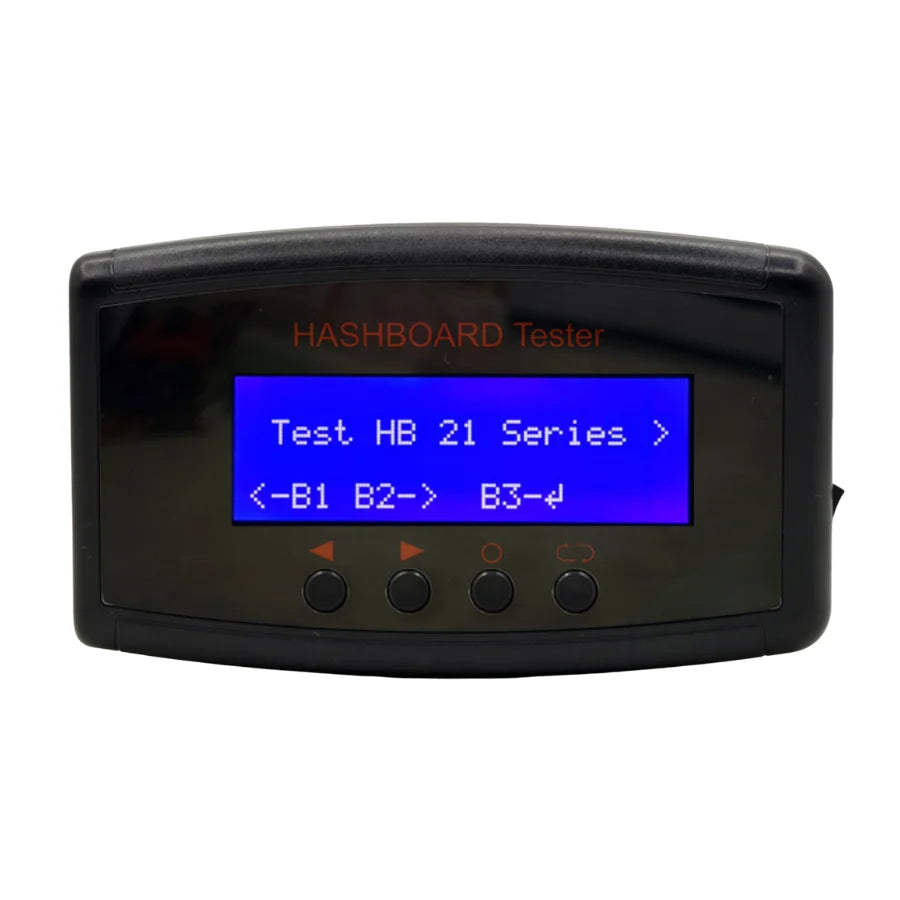
At baseline, this fleet expects roughly sixteen hashboard repairs per year. The capital cost of a properly equipped repair bench — BGA rework station, oscilloscope, multimeter, test fixtures matched to the fleet generation, PICkit3 with the relevant HEX files, antistatic workstation, replacement chip and discrete component stock — amortises across three years of operation at a level that is competitive with paying a shop per repair. The added benefit is the time advantage : an in-house bench can have a board back in the rack in days rather than the weeks an RMA window or an international shipping round trip would consume.
The catch is skill. A repair bench without a skilled technician is an expensive paperweight. The decision at this profile is less about the parts budget and more about the labour decision : hire and train a technician, or contract a regional repair shop on a service-level basis. Both are legitimate answers. The wrong answer is to keep paying full retail for every repair on a fleet this size while pretending downtime is not a cost.
The downtime cost most operators ignore
A standard calculator treats a miner as either on or off. A board out of the rack does not produce hash, so its margin for that period is zero. What this framing misses is the time-distribution of the downtime — not the total hours, but how they are distributed.
A board sent to a Bitmain RMA process typically returns in four to ten weeks including transit, per published manufacturer documentation on warranty repair turnaround. A board sent to a regional repair shop returns in roughly one to two weeks. A board repaired on an in-house bench returns in a few days. The same fleet, the same failure rate, distributed across three different repair channels, produces three very different annual revenue numbers because the downtime per failure event is different in each case.
The maths becomes more dramatic when you factor in compounding. A unit that is out of the rack for five weeks during a difficulty drop has missed the most profitable window of its quarter. A unit out for a few days catches most of the difficulty drop. The expected hash price across the downtime window matters as much as the downtime hours themselves.
This is the variable that pushes serious fleet operators toward holding parts stock and processing repairs in-house or via a fast regional shop. It is not the per-repair cost. It is the opportunity cost of being slow.
The cost of waiting for the wrong part
Even within fast repair channels, the right part has to be on the bench. The single most common mistake on a repair queue is ordering parts after the board is on the bench rather than before. A board that arrives at the bench on Monday, gets diagnosed Monday afternoon, and triggers a parts order that ships Tuesday and arrives Friday has lost five days of production before the chip even reaches the technician.
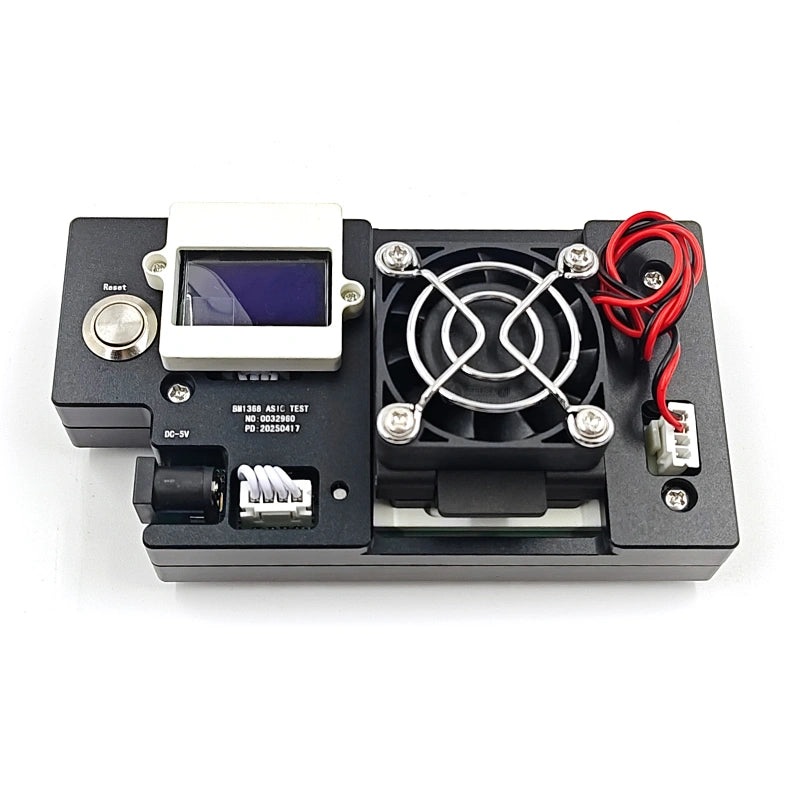
The solution is a small standing stock of the highest-failure-rate components for the fleet's generation. For an S19 fleet, that means a tray of BM1398 chips, a stock of input filter capacitors, and a set of S19 thermal grease stencils. For an S21 fleet, a tray of BM1368 chips, a reel of MP2019 boost ICs, and a set of generation-matched stencils. For a mixed fleet, both. The total capital tied up in standing stock at a fleet size of 20-plus miners is small relative to the per-day margin recovered when a board can be diagnosed Monday morning and back in the rack Tuesday afternoon.
One piece of practical advice that is rarely discussed : freight from China to the fleet's destination country is itself a variable. Express freight on a small parts order is typically a few business days from Shenzhen to most major markets. Sea freight is weeks. The right answer is to buy small-volume air freight for ongoing maintenance and to consolidate larger orders for bulk preventive stock — fans, thermal grease, PSU spares — into sea freight where the destination supports it.
The preventive maintenance line that pays for itself
Three preventive operations consistently pay for themselves at a margin that is hard to beat anywhere else in fleet operations.
Quarterly dust and grease cycle. Pull each unit, blow out the heatsinks with compressed air, refresh the thermal grease on any board that has been running for a year or more, and inspect the fans for bearing noise. Cost per unit is dollars in parts and an hour of bench time. The return is a measurable reduction in chip junction temperatures, which translates directly into a longer chip life and a lower probability of the failure cascade that leads to a multi-chip board replacement.
Annual fan replacement on high-runtime units. Antminer fans are inexpensive and they degrade silently for months before they fail. A fleet that replaces fans on a calendar cycle rather than a failure cycle removes the single most common cause of thermal degradation. The cost per unit is small. The return is a meaningful reduction in hashboard failure rate.
PSU output voltage audit at the same cadence. A multimeter check at the hashboard input takes a minute per unit. PSUs that have started to sag are caught before they fail under load, and the marginal PSU can be rotated out for a spare or refreshed before it takes a hashboard down with it.
None of these operations is glamorous. All of them are the difference between a fleet that operates near its published ROI and a fleet that quietly bleeds margin to preventable downtime.
What this means for the ROI conversation
The headline ROI numbers published in mid-2026 are real, in the sense that the math is correct for a miner that never fails. They are not real for any actual deployed fleet. The gap between the two is the parts budget, the maintenance cadence, the repair channel selection, and the freight strategy. Operators who treat those four variables as line items in an annual budget run close to the published numbers. Operators who treat them as exceptions run noticeably below.
For home operators, the practical implication is that preventive maintenance is the single decision that determines whether the rig pays itself back. For small operations, it is the budget line for parts and the discipline of holding a small standing stock. For mid-size operations, it is the bench-versus-shop decision, plus the discipline of consolidating preventive stock and processing repairs on a known cadence rather than as one-off events.
The deeper point is that the operators who quietly outperform their published ROI in any given year are the ones who have already done this work. They know which parts fail on their fleet, they keep stock against those failures, they process repairs on a regular cadence, and they treat the freight choices as a planning problem rather than an emergency. The math is the same as everyone else's. The execution is what makes it pay.
Related reading
For the parts-level companion piece — what to actually order when a hashboard fails — see our Antminer hashboard repair spare parts sourcing guide. For the upstream component most operators underweight, the PSU diagnostic flow is covered in how to diagnose a failing Antminer PSU. For the preventive cadence on the highest-impact bench operation, see our S21 series thermal paste and stencil application guide. For the side-by-side question on which generation is worth keeping in the rack, see Antminer S21 vs S19 XP : which one is worth repairing.
Order parts or request a fleet maintenance quote
Tell us your fleet size, the generations you operate, and the symptoms you have been seeing. We will quote a parts package and a preventive maintenance bundle that fits your cadence.
Email : contact@lys-sz.com
Direct from our warehouses in Shenzhen. Worldwide shipping. DDP available for buyers in the US and the EU. Latam, SE Asia, Middle East and CIS quoted case by case.