Kazakhstan Resolution 638: Why the State Now Requires On-Site Repair Facilities for Strategic Bitcoin Miners
Most national mining rules are about electricity, tax or licensing. Kazakhstan's Resolution No. 638 adds something rarer: a requirement that a miner running at the top tier must have a repair service centre on the premises of its data centre. The rules took effect on 1 August 2026. For anyone who services ASIC hardware, or buys parts to do so, the clause is worth reading closely.
This article sets out what the resolution says, using the official text and two press reports that cite it, what it implies for hardware and repair capability, and what we do not know yet. We separate the text of the rules from our own reading of them throughout.
What Resolution 638 is
The Government of Kazakhstan adopted Resolution No. 638 on 18 July 2026, approving the Rules for Strategic Digital Mining. Cointelegraph reported on 23 July that the rules would apply from 1 August. In short, a miner that qualifies as "strategic" can obtain electricity quotas at regulated tariffs in exchange for transferring part of the digital assets it mines to a state-linked reserve mechanism run through Astana Hub.
Regular mining is not banned by this resolution. A strategic miner opens a separate wallet for the strategically mined assets and can continue regular mining alongside.
What a miner must have to qualify
Clause 4 of the rules lists the conditions. In plain terms, the applicant must have:
- an owned digital mining data centre of at least 150 MW;
- a grid connection from a substation of 35 kV or higher, with a permitted capacity of at least 1 MW;
- mining hardware where each unit has a hashrate of at least 150 TH/s;
- no arrears on taxes, fees or social and pension contributions;
- no encumbrances on its property, such as pledges or seizures;
- at least two contracts with telecom operators for internet access;
- a repair service centre for the mining hardware, located on the premises of the data centre, and documents proving the qualification of its staff.
An application goes to the authorised body, then to a special commission that decides on eligibility and on whether electricity quota is available. After a positive decision the miner has five business days to sign agreements with the Astana Hub fund and a power generation company.
What the state takes in return
Clause 13 sets the transfer at 10 percent of the digital assets mined, calculated after subtracting the cost of the electricity consumed and the cost of its delivery, both converted into digital-asset equivalents. The calculation period is one calendar month. Press reports in July described the share as unspecified or unverified, so we rely on the official text here rather than on those reports.
The repair clause, read carefully
The text requires a service centre for repairing the mining hardware and software complex, located on the territory of the mining data centre, plus proof of staff qualification. The wording does not, as far as we can see in the text we read, specify the size of the centre, the number of technicians or the equipment it must hold. Those details will be set by how the commission applies the rule, and we have not seen published guidance on that.
Our reading is that the state is using the repair requirement as a proxy for operational seriousness: a site that can fix its own machines is less likely to be a shell. That is an interpretation, not something the rules say.
What the 150 TH/s unit threshold means for hardware
The per-unit threshold is a hard filter on fleet composition. Using rated figures:
| Model | Rated hashrate | Meets 150 TH/s per unit? |
|---|---|---|
| Antminer S19j Pro | 92 TH/s | No |
| Antminer S21 | 200 TH/s | Yes |
| Antminer S21 XP | 270 TH/s | Yes |
The rules do not say how a mixed fleet is treated, for example whether every unit on site must pass or only the units used for strategic mining. We do not know, and an operator planning an application should ask the authorised body rather than assume.
What an on-site repair centre actually needs
Whatever the commission ends up asking for, a bench that repairs modern hashboards and power supplies needs the same core elements everywhere:
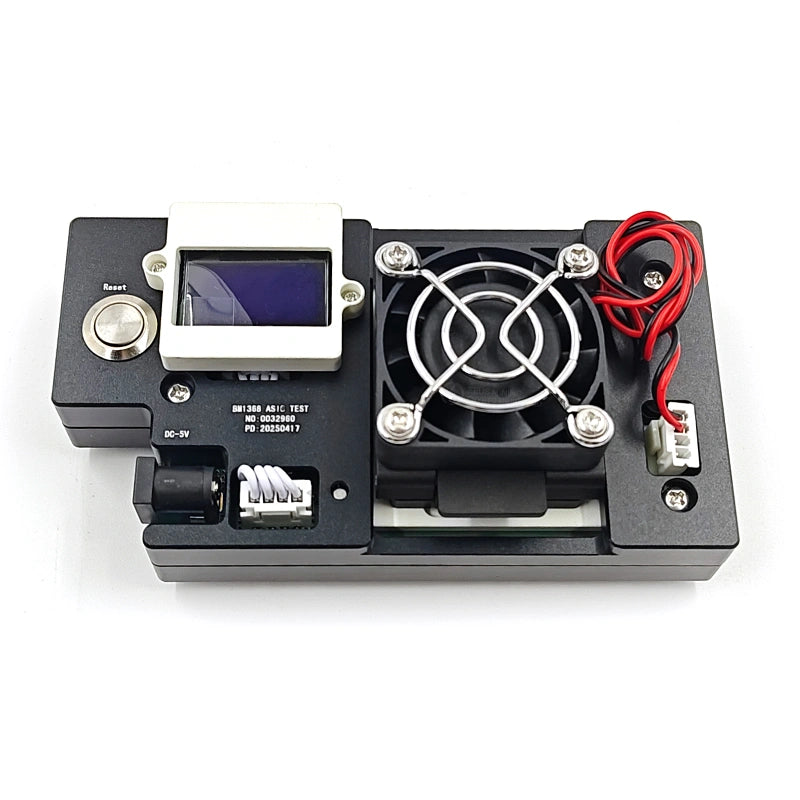
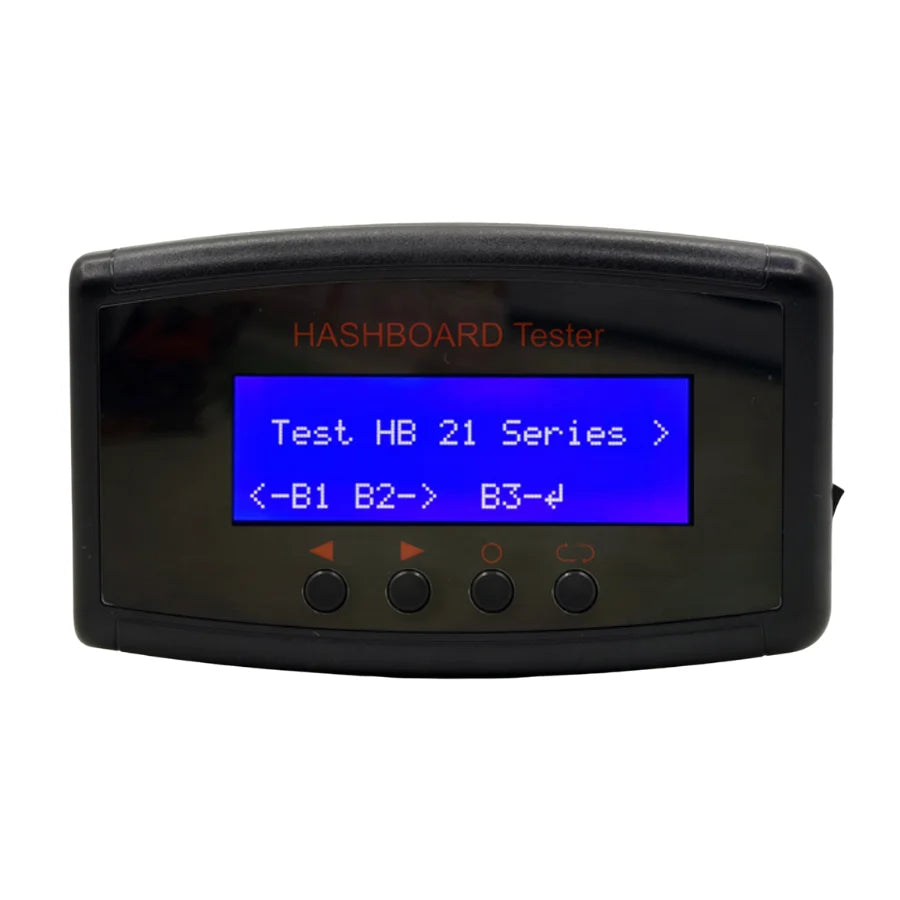
- Test fixtures to isolate which hashboard fails and where on the chain. Browse our hashboard test fixtures.
- Repair components such as ICs, MOSFETs and chips for common board-level faults, in our repair components collection.
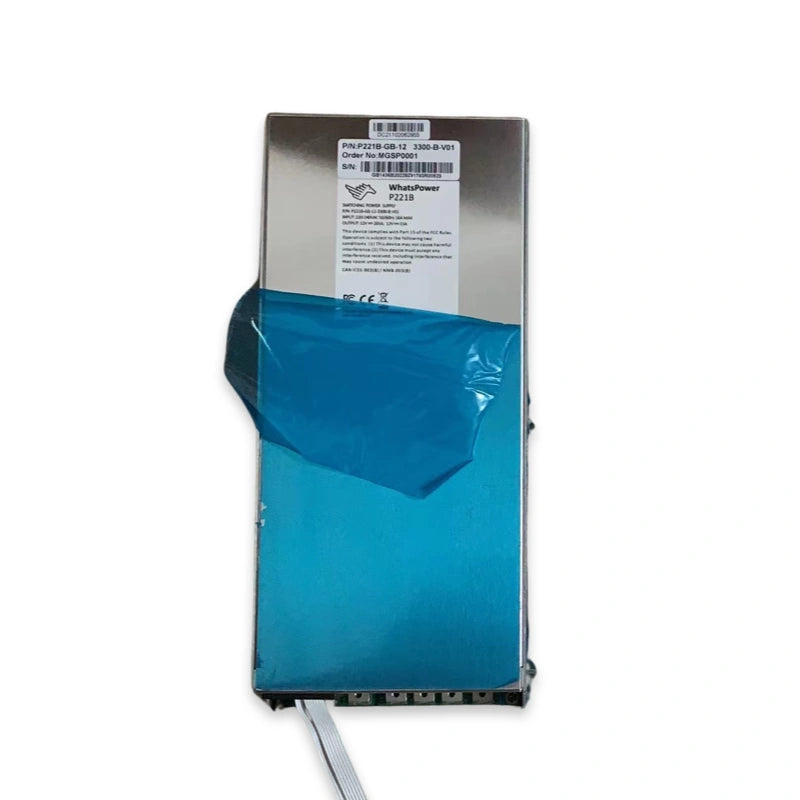
- Control boards and power supplies as swap-in units, because replacing a failed control board is faster than repairing it on site. See control boards and power supply units.
- Fans and consumables, which fail most often and are cheapest to hold.
For quantities, the logic in our 12-month standing stock budget template applies at any scale: size spares to your fleet and your failure pattern, not to a generic checklist.
What we do not know
- How many operators meet the 150 MW and 150 TH/s thresholds. We have seen no count.
- How strictly the commission will test the service-centre requirement.
- How the rules interact with other Kazakh energy or tax measures. This article covers Resolution 638 only.
If you operate in the region, read the official text yourself. Our cost comparison of mining regions is in Beyond the Power Bill.
If you are building a service centre: where to start
The rules ask for proof of staff qualification, so document it from the first day. Keep training records, supplier or manufacturer training certificates where they exist, and a log of repairs performed. Then build the bench in layers: first diagnosis (test fixtures, a multimeter and a thermal camera or probe), then board-level repair (rework tools, tin tools and solder materials), then swap stock for the units that are quicker to replace than repair. A centre that can show a diagnosed fault, a repair record and a tested output for each unit will look far more credible than one that only lists equipment.
FAQ
Does Resolution 638 ban normal mining in Kazakhstan?
No. It creates a "strategic" status with regulated electricity quotas. A strategic miner can continue regular mining alongside using a separate wallet for strategic output.
Is the repair centre requirement the same as having an outsourced repair contract?
The text we read requires a service centre on the territory of the data centre. A contract with an off-site provider does not appear to satisfy that wording, but the commission's practice will decide.
Do older machines still run?
Nothing in the rules stops a miner running older machines outside the strategic programme. The 150 TH/s threshold applies to qualification for strategic status.
Equip a repair bench
If you are planning a repair bench for a farm of any size, tell us your models and fleet size and we will help you build a parts and tooling list. Browse the repair tools and instruments collection, or contact us directly.
Email: contact@lys-sz.com
WhatsApp: +86 182 1872 0821
Direct from our warehouses in Shenzhen. Worldwide shipping. DDP available for buyers in the US and the EU. Latam, SE Asia, Middle East, CIS, Africa quoted case by case.
Sources: Government of the Republic of Kazakhstan, Resolution No. 638 of 18 July 2026 (Rules for Strategic Digital Mining, official text published by the Prime Minister's office); Cointelegraph, 23 July 2026; KuCoin News republication of Incrypted, 24 July 2026. Rated hashrates from manufacturer and industry specifications used in our earlier articles. Interpretation is ours.