The Right Question Isn't "Which Miner Is Better"
Most Whatsminer-vs-Antminer comparisons focus on hashrate, efficiency, and sticker price. Those matter at purchase time. But for anyone running a fleet of 50 or 500 units, the question that actually drives total cost of ownership is different: which platform is cheaper to keep running over three to five years?
That means spare parts availability, repair labor per unit, test tooling requirements, and whether you can actually get the components you need when a hashboard goes down in the middle of a bull run. This article compares both ecosystems from the perspective of a repair workshop — ours — that services Antminer and Whatsminer hardware every day in Shenzhen.
Installed Base: Why Antminer Parts Are Easier to Find
Bitmain's Antminer line has dominated the Bitcoin mining market by unit volume for over a decade. The S9, S17, S19, and S21 generations collectively represent the largest installed base of any ASIC mining platform. That installed base drives a deep, competitive third-party parts market. Control boards, fans, PSUs, ASIC chips, heatsinks, cables — for any Antminer model from the S9 forward, multiple suppliers worldwide stock replacement parts.
Whatsminer's installed base is smaller. MicroBT has gained meaningful market share since the M20 and M30 series, particularly in North America and the Middle East, but the third-party parts ecosystem is still catching up. Fewer suppliers carry Whatsminer components, lead times tend to be longer on niche parts, and pricing on items like the KF1968 chip for the M50 series can be higher per unit than comparable Antminer chips simply because of lower production volumes in the aftermarket.
This doesn't mean Whatsminer parts are unavailable — we stock a full Whatsminer repair parts catalog alongside our Antminer parts catalog — but it does mean that operators running Whatsminer fleets need to be more intentional about inventory planning. You can't always count on next-day availability from three different vendors the way you can with Antminer S19 components.
Design Repairability: Whatsminer's Hidden Advantage
This is where the comparison flips. From a hardware design standpoint, Whatsminer boards are meaningfully easier to work on for board-level repair.
The biggest difference is heatsink attachment. On Whatsminer hashboards, the heatsinks are attached with screws. You can remove them with a standard driver, access the chips underneath, perform a replacement, and reassemble without any soldering work on the heatsink side. On Antminer hashboards — particularly the S19 and older generations — the rear heatsinks are individually soldered onto the board. Removing them requires desoldering, which adds time, risk, and a requirement for specific rework tooling. This single design choice can add 15–30 minutes per board to a chip replacement job.
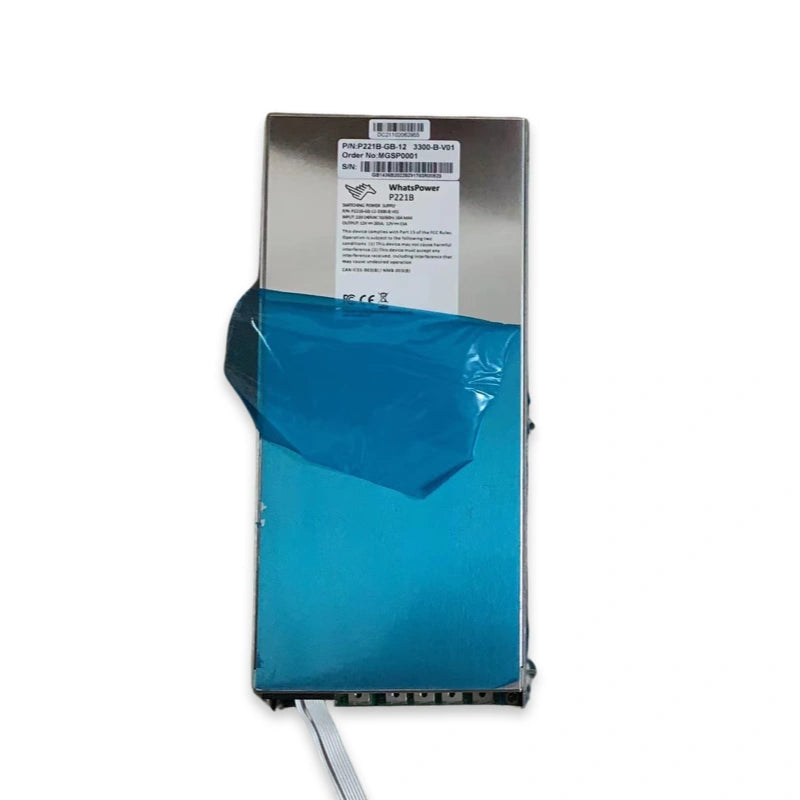
Whatsminer's control board architecture is also somewhat more modular. The M30 and M50 series use replaceable adapter boards (riser cards) between the control board and the hashboards, which means certain communication failures can be resolved by swapping a $15 adapter board rather than replacing the entire control board. Antminer's architecture connects the control board directly to the hashboards through a backplane, so a communication fault between the two more often requires a full control board replacement.
A third design advantage: Whatsminer firmware allows the miner to continue operating with one fan down, provided the remaining fans can maintain safe temperatures. Antminer firmware treats a single fan failure as a hard fault and shuts the unit down. In a farm environment, this means a Whatsminer with a dead fan continues hashing at reduced performance until you can schedule the replacement, while an Antminer with the same failure stops earning immediately.
Chip Families and Replacement Complexity
Both manufacturers have iterated through multiple ASIC chip generations, and the repair implications are different for each.
Antminer Chip Generations
| Chip | Models | Parts Availability |
|---|---|---|
| BM1397 | S17, S19, S19 Pro | Widely available, mature aftermarket |
| BM1366 | S19 XP, S19k Pro | Available, moderate pricing |
| BM1368 | S21, S21 Pro, S21 XP | Available but newer; higher price per chip |
The BM1397 is the most widely stocked ASIC chip in the mining repair market, with years of aftermarket production behind it. The BM1366 and BM1368 are newer but already carried by most serious parts suppliers. Chip replacement on Antminer boards requires desoldering the old chip and reflowing the new one — standard BGA rework, but complicated by the soldered heatsinks mentioned above.
Whatsminer Chip Generations
| Chip | Models | Parts Availability |
|---|---|---|
| KF1921 | M20, M21 | Available, older generation |
| KF1950 | M30, M30S | Available, moderate supply |
| KF1968 / KF1968E | M50, M50S, M30S++ | Available; fewer suppliers than BM1397 |
| KF1973 | M60, M60S | Newest generation; limited aftermarket |
The KF1968 and KF1968E are the workhorses of current Whatsminer repair — they cover the M50 series and the late-model M30S++, which together represent the bulk of the active Whatsminer fleet. Chip replacement itself is actually faster on Whatsminer boards because the screw-on heatsinks let you access the chip site directly. The chip reflow process is the same BGA rework procedure used for Antminer, but the board prep time is significantly lower.
Test Tooling: What You Need for Each Ecosystem
A repair workshop that services both brands needs dedicated test fixtures for each, because the hashboard connectors, communication protocols, and test sequences are incompatible.
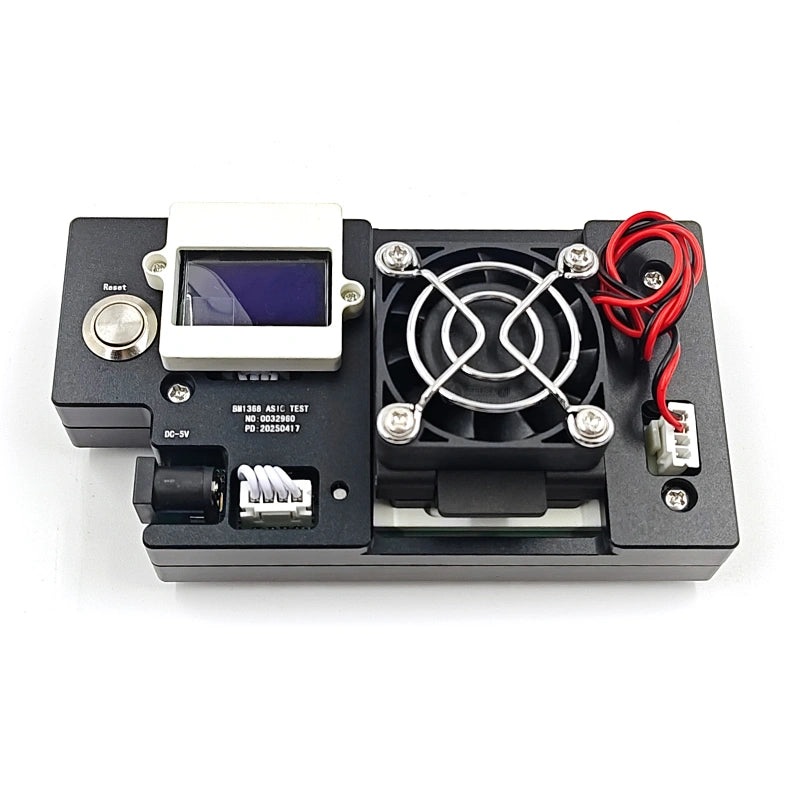
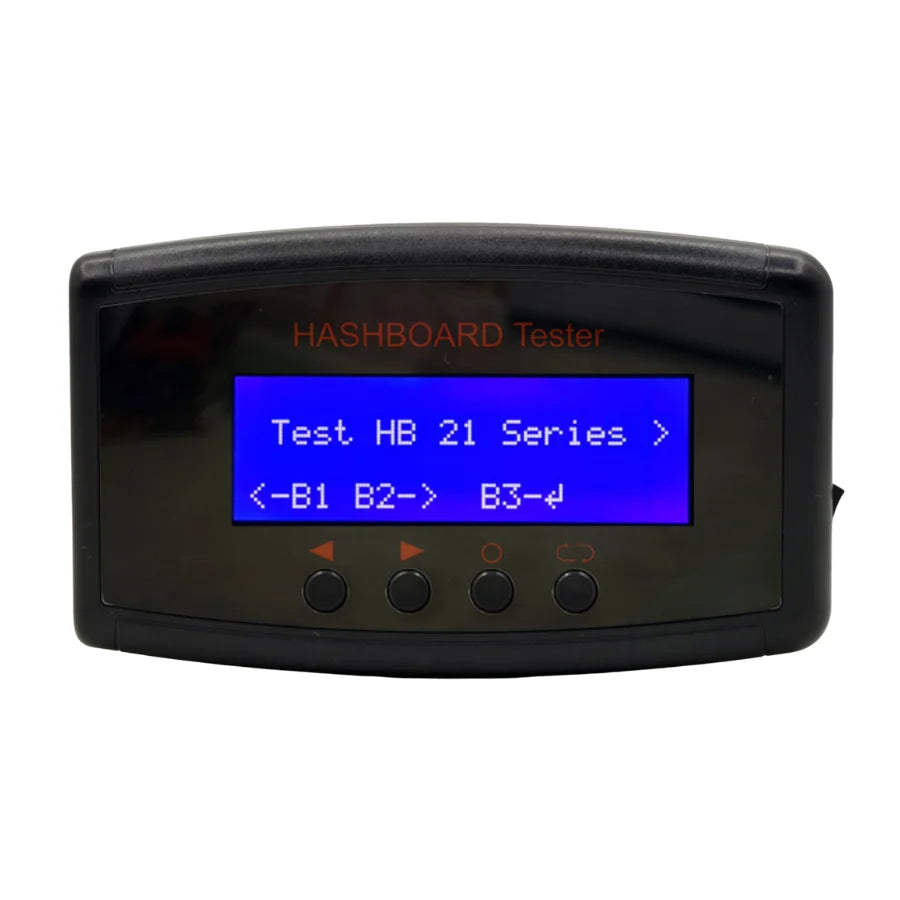
For Antminer, the K8 and K9 universal testers cover most models from the S9 through the S21. These are mature products with well-documented procedures and wide community support.
For Whatsminer, dedicated M30/M50 series test fixtures and separate M60 fixtures are required. The tooling is available but the ecosystem is younger — fewer tutorials, fewer community-shared test profiles, and less documentation in English. If you're building a multi-brand repair operation, budget for Whatsminer-specific fixtures alongside your Antminer tooling. Browse our full test fixture catalog to see what's available for both platforms.
Beyond hashboard testing, both ecosystems require platform-specific control boards for bench testing and fan simulators for immersion-cooled or modified units. These are not interchangeable between brands.
Failure Rates: Whatsminer's Reliability Edge
Industry data from large-scale deployments (7,000+ unit operations) consistently shows that Whatsminer units exhibit a lower failure rate than comparable Antminer models, with some studies reporting 37% fewer failures in harsh operating environments. This is attributed to a combination of MicroBT's more conservative thermal design, the screw-mounted heatsink construction (which avoids solder fatigue from thermal cycling), and firmware that handles partial cooling failures more gracefully.
The implication for repair economics is important: even though the per-repair cost for Whatsminer is slightly higher (due to parts pricing and fewer supplier options), the total maintenance cost over the life of the unit can be lower because you're repairing fewer units per thousand. An operator running 500 Whatsminers might budget for 30–40 hashboard repairs per year, while a comparable Antminer fleet might see 50–65. The math depends on your specific operating conditions, but the trend is consistent across most published data.
The Cost Comparison at a Glance
| Factor | Antminer | Whatsminer |
|---|---|---|
| Parts availability | Advantage. Larger aftermarket, more suppliers, faster lead times | Growing but still catching up; plan inventory ahead |
| Parts pricing | Lower per-unit on mature chips (BM1397) | Slightly higher; fewer competing suppliers |
| Board-level repair time | Longer — soldered heatsinks add 15–30 min/board | Advantage. Screw-on heatsinks, faster chip access |
| Test tooling ecosystem | Advantage. More mature, better documented | Functional but younger; less English-language support |
| Failure rate | Higher in harsh environments | Advantage. ~37% lower reported failure rate |
| Firmware fault tolerance | Hard shutdown on single fan failure | Advantage. Continues hashing with 1 fan down |
| Total maintenance cost | Higher repair volume, lower per-repair cost | Lower repair volume, slightly higher per-repair cost |
What This Means for Mixed Fleets
Most large mining operations today run mixed fleets — a mix of Antminer and Whatsminer units acquired across multiple procurement cycles. This is a pragmatic approach, and the repair economics support it. You get the benefit of Whatsminer's lower failure rates on part of your fleet while maintaining access to Antminer's deeper parts ecosystem for the rest.
The key to making a mixed fleet work from a maintenance perspective is having a parts supplier that stocks both ecosystems at depth. That's why we maintain a full parallel inventory: Antminer parts from the S17 through the S21, and Whatsminer parts from the M20 through the M60. Same warehouse, same shipping, same QC process. If you're sourcing ASIC chips — whether BM1368 or KF1968 — you shouldn't need two different suppliers to keep your fleet running.
The LYS Technical Team is based in Shenzhen, China, where we operate a dedicated ASIC mining hardware repair workshop. With over a decade of hands-on experience repairing Antminer, Whatsminer, and Avalon mining equipment, our team supplies spare parts and repair services to mining operators in over 40 countries. Every article we publish is written and reviewed by working repair technicians.
Source Parts for Your Fleet
Whether you're running Antminer, Whatsminer, or both, we stock the chips, boards, PSUs, fans, and test tooling you need — all bench-tested before shipping.
→ Browse Antminer Parts | Browse Whatsminer Parts
For bulk pricing, cross-platform sourcing, or help identifying the right chip family for your fleet, contact us at contact@lys-sz.com or via WhatsApp.