Antminer S19j Pro+ Hashboard Repair Guide & Components List
The Antminer S19j Pro+ is Bitmain's higher-binned variant of the S19j Pro platform — pushing the same BM1362 ASIC family to roughly 120 TH/s per unit through tighter chip binning and a refined hashboard build. Two years after its August 2024 service entry, the S19j Pro+ fleet is large enough that hashboard-level repair is a routine workshop task. This guide covers the BM1362BD chip variant used on the Pro+ board, the differences in BOM versus the standard S19j Pro, and the full components list with direct sourcing links for every part.
Why S19j Pro+ Hashboards Are Worth Repairing in 2026
S19j Pro+ units occupy a sweet spot in the secondary market: efficient enough to remain profitable post-halving, deployed widely enough that parts are available, and built on the same BM1362 chip family as the regular S19j Pro — meaning many repair tools and components carry over. Chip-level and component-level repair restores a Pro+ board to full 40 TH/s+ output for a fraction of board-replacement cost, and the parts inventory needed is small enough to keep on a single bench.
Antminer S19j Pro+ Hashboard Architecture at a Glance
The S19j Pro+ hashboard uses the BM1362BD ASIC chip — the higher-binned silicon revision within the BM1362 family, dedicated to the Pro+ platform. While the Pro+ shares the same BM1362 chip family with the regular S19j Pro (which ships with BM1362AA / AC / AI / AJ / AK), the BD variant is binned for the higher target hashrate and is not directly interchangeable with the standard S19j Pro chips.
S19j Pro+ hashboards are commonly identified by the BHB42611 board model number. Each BHB42611 carries 120 BM1362BD chips organised as 40 domains of 3 chips in series — a configuration that delivers higher per-chip binning relative to the 126-chip / 42-domain layout used on the standard S19j Pro. The chips operate at a nominal domain voltage of approximately 0.3V (~0.32V measured), and each complete S19j Pro+ miner uses 3 hashboards driven by the APW121417b PSU (Bitmain APW12 series variant). The control board ecosystem matches the rest of the S19j family (AMLogic / XILINX / BeagleBone / Cvitek variants).
Compared to the standard S19j Pro hashboard, the Pro+ BOM differs at several positions: the temperature sensor is the LM75A (instead of TMP75), the 0.8V chip-core LDO is the DIO7910A08ST5 (KAD3B marking), the bulk decoupling adds a G337 tantalum capacitor, and the on-board reference is the SJK 25.000 25 MHz oscillator. Understanding these differences matters when stocking parts for mixed fleets.
BHB42611 boost circuit and rail topology
The hashboard runs a two-tier power topology. A boost converter at position U283 steps the input 15V rail up to approximately 19–20V (measurable at capacitor C29). The 7 highest domains — domains 34 through 40 — are powered from this 19V boosted rail through their local LDOs, which then output 1.2V (PLL supply) and 0.8V (chip core) for each chip group. The remaining 33 domains (0 through 33) run their LDOs directly off the 15V input. A failed boost stage typically presents as 0 chips detected, with the boost output at C29 reading well below 19V.
BHB42611 signal directions — critical for chain-fault diagnosis
Understanding the signal flow on the BHB42611 makes single-chip fault isolation dramatically faster:
- CLK (XIN): generated by the Y1 25 MHz crystal oscillator (the SJK 25.000), flows forward from chip 01 to chip 120.
- RST: enters at pin 3 of the IO interface, flows forward from chip 01 to chip 120.
- CI: enters at pin 7 of the IO interface, flows forward from chip 01 to chip 120.
- BO (BI): flows forward from chip 01 to chip 120.
- RX (RI): reverse direction — flows from chip 120 back to chip 01. This is the key signal for fault isolation by binary search using a probe shorted to the local 1.2V rail.
Most Common S19j Pro+ Hashboard Failure Modes
- Missing chips at boot scan — the chain reports fewer chips than expected, usually a dead BM1362BD ASIC or a failed level translator upstream of the missing string segment.
- Cold spots on thermal imaging — one or more chip positions stay cool while neighbours run hot, indicating a non-hashing chip or a localised power-delivery failure.
- Hashboard not detected at all — usually a corrupted FM24C02B EEPROM, a dead supporting IC, or a missing rail at the connector.
- Hashrate drop with implausible temperature data — frequently a failing LM75A temperature sensor producing false readings that trigger thermal throttling.
- Hard short on a rail — a shorted LDO, boost converter (MP1517DR), or supporting power IC presents as a hard short across its output stage.
- Loss of timing reference — a failed SJK 25.000 oscillator prevents chain initialisation and produces a hashboard that fails to enumerate cleanly.
- Random reboots under load — usually a degraded bulk capacitor (G337 tantalum or 47µF 50V SMD) no longer holding rail voltage under transient current draw.
Critical Components — Function & Failure Behaviour
ASIC Hash Engine (BM1362BD)
The BM1362BD is the dedicated S19j Pro+ silicon revision within the BM1362 family. Functionally identical to the rest of the family but binned for the higher Pro+ target hashrate, the BD variant should not be substituted with BM1362AA, AC, AI, AJ, or AK chips on a Pro+ board — binning mismatch produces inconsistent hashrate and chain instability. ESD damage during handling remains the most common cause of failure, followed by sustained thermal stress.
Voltage Regulators (LDOs)
The S19j Pro+ uses a slightly different LDO selection than the standard S19j Pro. DIO7910A08ST5 (KAD3B) handles the 0.8V chip-core rail, VGML AAH6 (AW37030D120STR) handles the 1.2V rail, MP2019 handles the 1.8V rail, and LM317MBSTT3G provides a 500 mA adjustable output. A failed LDO typically takes an entire local string of chips offline.
Boost Converter & Switching Stage
The MP1517DR switching regulator provides an adjustable 3.3V supply for supporting logic. A failed boost converter typically presents as a chain that fails to start under load.
Level Translator & Signalling
The SN74AUP1T34DCKR (U2E) level translator bridges control board signalling and the BM1362BD chip logic. A failed translator typically causes a block of downstream chips to drop offline simultaneously.
EEPROM & Identification
The FM24C02B EEPROM stores calibration and chain identification data. A corrupted EEPROM usually presents as a hashboard that the control board does not enumerate at boot, even when chips themselves are healthy.
Temperature Sensor
The LM75A digital temperature sensor reports hashboard temperature back to the control board. A failed sensor produces false-high readings (triggering thermal throttling and apparent hashrate loss) or false-low readings (allowing the chain to run unsafely hot). Note that the LM75A is the S19j Pro+ choice — the regular S19j Pro hashboard uses TMP75.
Oscillator & Timing
The SJK 25.000 oscillator provides the 25 MHz reference clock for chain timing. A failed oscillator prevents chain initialisation entirely — the chips will not enumerate without a working clock.
Diodes & Protection
The DSK24 (2A / 40V Schottky) and B0540W SF (500 mA SOD-123) diodes handle on-board freewheeling, ESD clamping, and reverse-polarity protection.
Passive Components
The G337 2V tantalum capacitor and the 47µF 50V SMD capacitor handle bulk decoupling, while the 10µH HPC1050 inductors handle the energy storage on the power-delivery stage.
Antminer S19j Pro+ Hashboard Repair Components List
The table below lists every component LYS Shenzhen stocks for S19j Pro+ hashboard repair. Each entry links directly to the corresponding part page — contact us at contact@lys-sz.com for bulk pricing or for BM1362BD chip sourcing.
| Part Number | Component Type | Typical Position / Role |
|---|---|---|
| BM1362BD | ASIC hash engine | S19j Pro+ SHA-256 chip — contact us for stock check |
| FM24C02B | EEPROM | Calibration / chain ID storage |
| MP1517DR | Boost / switching regulator | Adjustable 3.3V supply for supporting logic |
| LM75A | Temperature sensor | Hashboard digital temperature monitoring |
| MP2019 | LDO regulator | 1.8V rail supply |
| DIO7910A08ST5 (KAD3B) | LDO regulator | 0.8V chip core rail |
| VGML AAH6 (AW37030D120STR) | LDO regulator | 1.2V rail supply |
| LM317MBSTT3G | Positive regulator | 500 mA adjustable output |
| DSK24 | Schottky diode | 2A / 40V freewheeling diode |
| Inductor 100 (10µH) | Inductor | HPC1050 SMD power inductor |
| B0540W SF | Schottky diode | 40V / 500 mA SOD-123 small signal |
| G337 2V | Tantalum capacitor | Bulk decoupling on power stage |
| SJK 25.000 | Crystal oscillator | 25 MHz chain timing reference |
| SN74AUP1T34DCKR U2E | Voltage level translator | Control-to-chip signalling bridge |
| 47µF 50V SMD | Capacitor | Local rail bulk capacitor |
Required Repair Tools & Consumables
A properly equipped S19j Pro+ repair bench should carry the following tools and materials:
- BM1362BD tin tool fixture — dedicated tinning fixture for the BM1362BD chip footprint (contact contact@lys-sz.com for current stock).
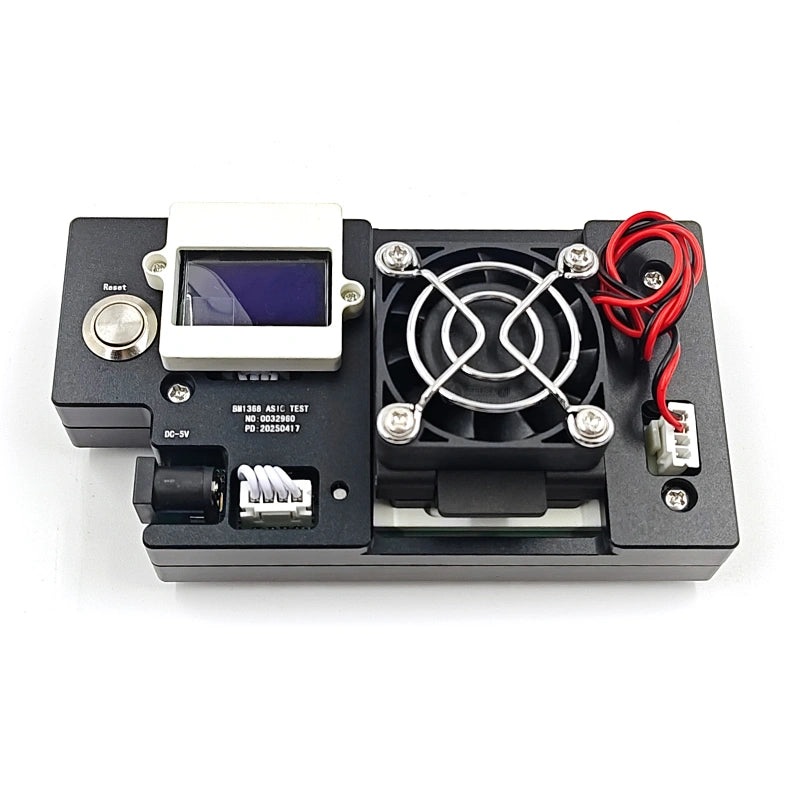
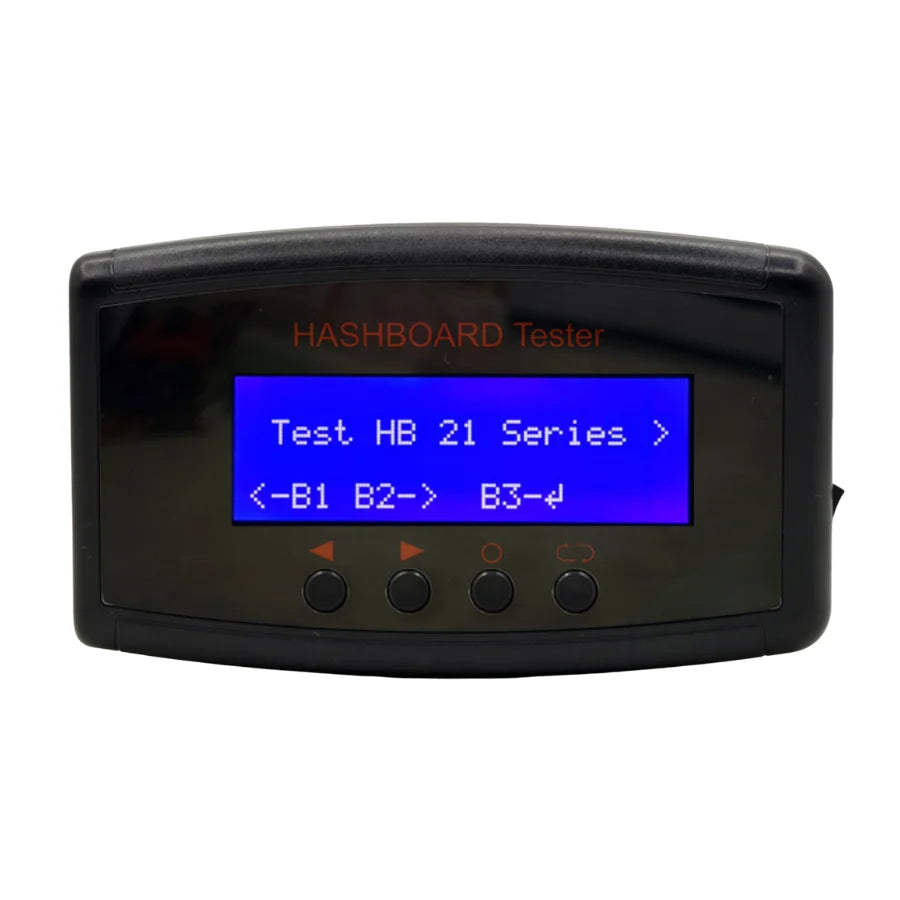
- Universal hashboard test fixture with LCD — runs a full chain scan on a removed hashboard, identifies missing chips by position. The S19j Pro+ uses the V2.1 or V2.3 control board test fixture (typically referenced as ZJ0001000001).
- Constant-temperature soldering iron set to 350–380°C with a pointed tip for small-package work.
- Hot-air rework station rated 350–400°C for BGA / QFN / LGA chip removal and placement.
- Solder paste M705 grade, no-clean flux, board washing fluid with anhydrous alcohol.
- Tin balls 0.4 mm diameter for chip ball reattach work.
- Multimeter (Fluke or equivalent), oscilloscope, network cable for fixture testing.
- Thermal compound rated 5W/mK or higher — required for 24/7 mining loads.
- Common spare 0402 resistors (0R, 33R, 51R, 10K, 4.7K) and 0402 capacitors (0.1µF, 1µF).
- Isopropyl alcohol 99% and lint-free wipes for pad and heatsink cleaning before re-paste.
Heatsink removal note — BSM process on BHB42611
The BM1362BD chip on the BHB42611 uses a BSM (bare-surface-mount) process with copper plating, which means the heat sink is soldered directly to the chip with tin rather than seated on thermal paste alone. To remove the heat sink during repair, set the hot-air gun to 400°C, position the nozzle approximately 0.5 cm above the heat sink, and heat for ~15 seconds before lifting. Apply the same procedure to the rear heatsink before chip-level work. Trying to pry the heat sink off without re-flowing the tin will lift pads and damage the chip.
Diagnostic and Repair Workflow
- Power off and remove the suspect hashboard from the miner — never work on a powered board.
- Visual inspection — look for scorched components, lifted pads, PCB deformation, or physical damage from handling. Any visible defects must be addressed before powering the board.
- Impedance / short-circuit check on every voltage domain before powering the board. Each domain should rest at approximately 0.32V; a short anywhere on the rail must be cleared before applying power, or you risk burning healthy chips.
- Power-on with the test fixture using the correct sequence: connect the negative copper supply lead first, then the positive copper lead, and finally plug in the signal cable. Reverse the sequence to disconnect. Powering up out of order is the most common cause of damaged U1 / U2 chips on the BHB42611.
- Bench-test on the hashboard test fixture — confirm the missing-chip pattern reported by the miner and identify the exact chip positions involved. PT1 (chip detect) first, then PT2 (functional pattern test).
- Boost stage verification — measure C29 for the 19–20V boost output if 0 chips are detected. Without the boost rail, domains 34-40 will not power up.
- Voltage rail check per domain — confirm 1.2V (PLL) and 0.8V (chip core) at each domain's LDO output. A localised dropout maps directly to the affected 3-chip group.
- Binary-search fault isolation — for incomplete chip detection, short the 1.2V rail to the RX test point between candidate chip boundaries and re-run the chip-find program. Each successful short tells you the chain is healthy up to that boundary; advancing the short progressively narrows the fault to a single chip.
- Component replacement with hot air at 350–400°C, following the chip reflow profile. Pre-tin the new chip pins with M705 solder paste before placing on the PCBA.
- Re-test on the fixture twice — let the board cool to ambient between runs. A board only passes when two independent PT1/PT2 cycles complete cleanly.
- Re-paste the heatsink with 5W/mK or higher thermal compound before reassembly. For the chip-side small heat sink, follow the BSM removal/reattach procedure above.
- Reinstall and monitor for 24 hours — confirms the board holds full hashrate without temperature anomalies.
Operating temperature constraints
The BHB42611 monitoring system trips when PCB temperature exceeds 90°C — above that threshold the firmware will alarm and stop the miner. During bench repair, keep ambient between 20°C and 30°C; above 35°C the test fixture will refuse to run pattern tests. Note that the BHB42611 only carries two temperature sensors (one inlet, one outlet zone), so a single failed sensor can mask a real thermal problem on the other side of the board.
S19j Pro+ vs S19j Pro — Key Repair Differences
Operators carrying mixed S19j Pro and S19j Pro+ fleets should note the BOM differences that matter for repair stocking:
- ASIC chip: S19j Pro uses BM1362AA / AC / AI / AJ / AK variants ; S19j Pro+ uses BM1362BD — not interchangeable.
- Temperature sensor: S19j Pro uses TMP75 ; S19j Pro+ uses LM75A.
- 0.8V LDO: S19j Pro uses BA1U / BA2H ; S19j Pro+ uses DIO7910A08ST5 (KAD3B).
- Oscillator: S19j Pro uses the 813RN package ; S19j Pro+ uses SJK 25.000.
- Hashboard part number: S19j Pro uses BHB426xx family (01/03/21/31/51) ; S19j Pro+ uses BHB42611.
Several components remain common across both platforms — the FM24C02B EEPROM, MP1517DR switching regulator, MP2019 LDO, VGML AAH6 LDO, LM317MBSTT3G regulator, DSK24/B0540W diodes, SN74AUP1T34DCKR level translator, and the 10µH inductor and 47µF SMD capacitor are direct carry-overs.
Sourcing S19j Pro+ Hashboard Parts
LYS Shenzhen stocks most components listed above for the Antminer S19j Pro+ hashboard. For the BM1362BD ASIC chip and the matching tin tool, for bulk farm-scale orders, or for sourcing of items not currently in our public catalogue, contact our team at contact@lys-sz.com — we operate an on-demand sourcing channel for repair components across the full Antminer line.
Worldwide shipping from our Shenzhen warehouse via DHL, FedEx, UPS, and sea freight. DDP shipping available for US and EU customers; case-by-case for other lanes — request a quote with your shipping country for confirmation.