Iceriver KS5L Hashboard Repair Guide & Components List (2026 Update)
The Iceriver KS5L is one of the most-deployed Kaspa (KAS) miners in operation today — built around Iceriver's proprietary 1004LV100 ASIC chip running the kHeavyHash algorithm. The KS5L shares its hashboard architecture and many repair components with the KS5M, KS3M, and KS3L models, meaning a single bench inventory covers a significant share of Iceriver's KAS mining fleet. This guide covers the 14 most vulnerable components on the KS5L hashboard, the Iceriver-specific diagnostic workflow (very different from Bitmain SHA-256 miners), and the full repair playbook with direct sourcing links — opening the Iceriver / KAS mining repair coverage on the LYS catalogue.
Why Iceriver KS5L Hashboard Repair Matters in 2026
The KS5L sits in the upper-middle of the Iceriver KS lineup — efficient enough to remain profitable in low-cost-power environments, deployed in volume across the KAS mining community, and built on the same 1004LV100 ASIC family that powers the KS5M, KS3M, and KS3L hashboards. With Kaspa's continued growth and the KS5L still active across many farms, component-level repair is the most economical way to keep these miners producing. Full hashboard replacements are constrained in supply for some KS variants, which makes a small bench inventory of the components below the right operational choice for any KS-fleet operator.
Iceriver KS5L vs Bitmain / Whatsminer — What's Different
The Iceriver platform departs from the Bitmain Antminer and MicroBT Whatsminer architecture in several key ways that matter for repair-bench setup:
- Algorithm: Iceriver KS series mines Kaspa (KAS) via kHeavyHash, not Bitcoin SHA-256. The chip topology and rail design are optimised for a different workload.
- Chip naming: Iceriver uses its own proprietary chip nomenclature (e.g., 1004LV100) rather than Bitmain's BM- prefix or MicroBT's KF- prefix.
- Hashboard data interface: Iceriver KS series uses a dedicated 18-pin rectangular PCB socket — distinct from Antminer signal ribbons and from the Whatsminer 18-pin dual-in-line connector. Test fixtures and signal-path tools must match the Iceriver pinout.
- Dedicated test fixture: KS5L diagnostic requires the Iceriver KS3M / KS3L / KS5L test fixture (compatible across these three models). Antminer / Whatsminer test fixtures will not work on KS hashboards.
The 1004LV100 ASIC family is shared across the KS5L, KS5M, KS3M, and KS3L hashboards — same chip, same stencil tooling, same repair-bench inventory. This is the largest cross-platform commonality in the current Iceriver lineup.
Most Common KS5L Hashboard Failure Modes
- 0 ASIC chips detected on the test fixture — walk the power chain: PSU output to the hashboard input → LDO outputs → ASIC chip signal voltages. The fault is in the first section of the chain that shows out-of-spec voltage. Replace the failed component to restore the chain.
- Specific chip count detected on the test fixture (e.g., 9, 26, 52) — the chain reports a partial chip count. The fault is at the boundary between the last detected position and the next position. Troubleshoot the signal voltage at that boundary chip — abnormal signals point to the failed chip, which can be replaced to restore the full chain.
- High or low temperature fault reported by the miner — failed TMP75 temperature sensor producing implausible readings that trigger thermal throttling (apparent low hashrate) or fail to trigger when the board genuinely overheats. Check the sensor IC and the 3.3V supply.
- Hashboard not detected at all — usually a corrupted AT24C02C-XHM-T (02CMPH) EEPROM at U6 or a failed clock from the T250 gold crystal oscillator.
- Boost stage failure / 0 chips with bad rail voltage — failed MP1517DR boost converter drops the elevated rail that feeds the LDOs.
- Single-domain dropout — failed LDO (SGM2036-ADJ (SQ7JK) for the 0.8V chip core rail or SI9183DT-AD-T1 (A9jMU) for the 1.8V rail) takes its local chip group offline.
- Signal-path level translation failure — failed SN74AUP1T34DCKR (U2E) level translator causes a block of downstream chips to drop offline simultaneously.
- Protection diode failure on the power-input stage — failed LMBR140T1G (S7) Schottky produces a short or open that disrupts the input rail.
Critical Components — Function & Failure Behaviour
1004LV100 ASIC Hash Engine
The 1004LV100 is Iceriver's proprietary kHeavyHash ASIC chip — the hash engine on the KS5L, KS5M, KS3M, and KS3L hashboards (the four models share this chip family). ESD damage during handling and sustained thermal stress from dried thermal compound are the most common failure causes. As the chip is shared across multiple hashboards, a small stock of 1004LV100 chips covers repair needs across the entire KS5/KS3 family.
EEPROM (AT24C02C-XHM-T)
The AT24C02C-XHM-T (02CMPH marking) EEPROM stores calibration and chain identification. A corrupted EEPROM prevents the control board from enumerating the hashboard. The same EEPROM variant is also used on some Antminer S21 Hydro hashboards — common stock simplifies multi-brand repair inventory.
Boost Converter (MP1517DR)
The MP1517DR QFN-16 adjustable positive switching regulator generates the elevated rail that feeds the per-domain LDOs. A failed MP1517DR drops the boost output and presents as 0 chips detected.
Voltage Regulators (LDOs)
The KS5L uses SGM2036-ADJ (SQ7JK) for the 0.8V chip core rail and SI9183DT-AD-T1 (A9jMU) for the 1.8V supply. A failed LDO takes its local chip group offline.
Level Translator (SN74AUP1T34DCKR)
The SN74AUP1T34DCKR (U2E) level shifter bridges the control board signalling and the chip-side logic. A failed translator typically causes a block of downstream chips to drop offline at once — a useful diagnostic signature when scanning with the test fixture.
Temperature Sensor (TMP75)
The TMP75 digital temperature sensor monitors hashboard temperature. A failed sensor produces missing or implausible readings — false-high triggers thermal throttling and apparent hashrate loss, false-low can allow the chain to run unsafely hot.
Crystal Oscillator (T250 Gold)
The T250 Gold Crystal Oscillator provides the timing reference for the 1004LV100 chain. A failed oscillator prevents chain initialisation entirely — chips will not enumerate without a working clock. The same T250 oscillator is also used on Antminer T17 / S19 / S17 Pro / T15 / T17e hashboards, simplifying multi-brand repair stock.
Protection & Inductor
The LMBR140T1G (S7) Schottky diode handles freewheeling and reverse-polarity protection. The 10µH HPC1050 inductor handles boost-stage energy storage.
Passive Components
The 330µF 35V SMD (10×10.5mm) capacitor and the 47µF 63V SMD (8×10.5mm) aluminium electrolytic capacitors handle bulk decoupling on the power-delivery stage. The 0R and 1R 2512 SMD resistors serve as current-sense / shunt elements.
Iceriver KS5L Hashboard Repair Components List
The table below lists every component LYS Shenzhen stocks for KS5L hashboard repair. Each entry links directly to the corresponding part page — contact us at contact@lys-sz.com for the 1004LV100 ASIC chip, the 330µF 35V capacitor, 0R / 1R 2512 resistors, or for bulk farm-scale orders.
| Part Number | Component Type | Typical Position / Role |
|---|---|---|
| 1004LV100 | ASIC hash engine | Iceriver proprietary kHeavyHash chip — contact us for stock check |
| SN74AUP1T34DCKR U2E | Voltage level translator | Control-to-chip signalling bridge |
| 330µF 35V SMD (10×10.5mm) | Electrolytic capacitor | Bulk filtering on power stage — contact us for stock check |
| 47µF 63V SMD (8×10.5mm) | Electrolytic capacitor | Local rail decoupling |
| MP1517DR | Boost converter IC | Adjustable QFN-16 positive switcher |
| Inductor 100 (10µH) | Inductor | HPC1050 SMD boost-stage energy storage |
| LMBR140T1G (S7) | Schottky diode | Power-input freewheeling and protection |
| TMP75 | Temperature sensor | Digital hashboard temperature monitoring |
| T250 Crystal Oscillator (Gold) | Crystal oscillator | Chain timing reference |
| SGM2036-ADJ (SQ7JK) | LDO regulator | 0.8V chip core rail |
| SI9183DT-AD-T1 (A9jMU) | LDO regulator | 1.8V rail supply |
| 0R Resistor 2512 | Resistor | Jumper / shunt — contact us for stock check |
| 1R Resistor 2512 | Resistor | Current-sense / shunt — contact us for stock check |
| AT24C02C-XHM-T (02CMPH) | EEPROM | U6 — calibration / chain ID storage |
Required Repair Tools & Consumables
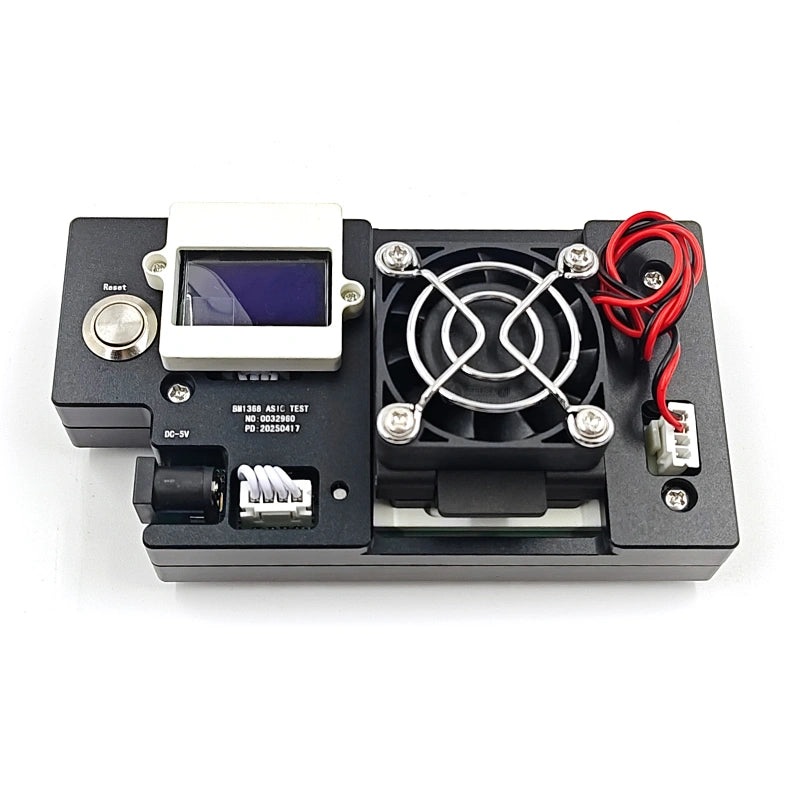
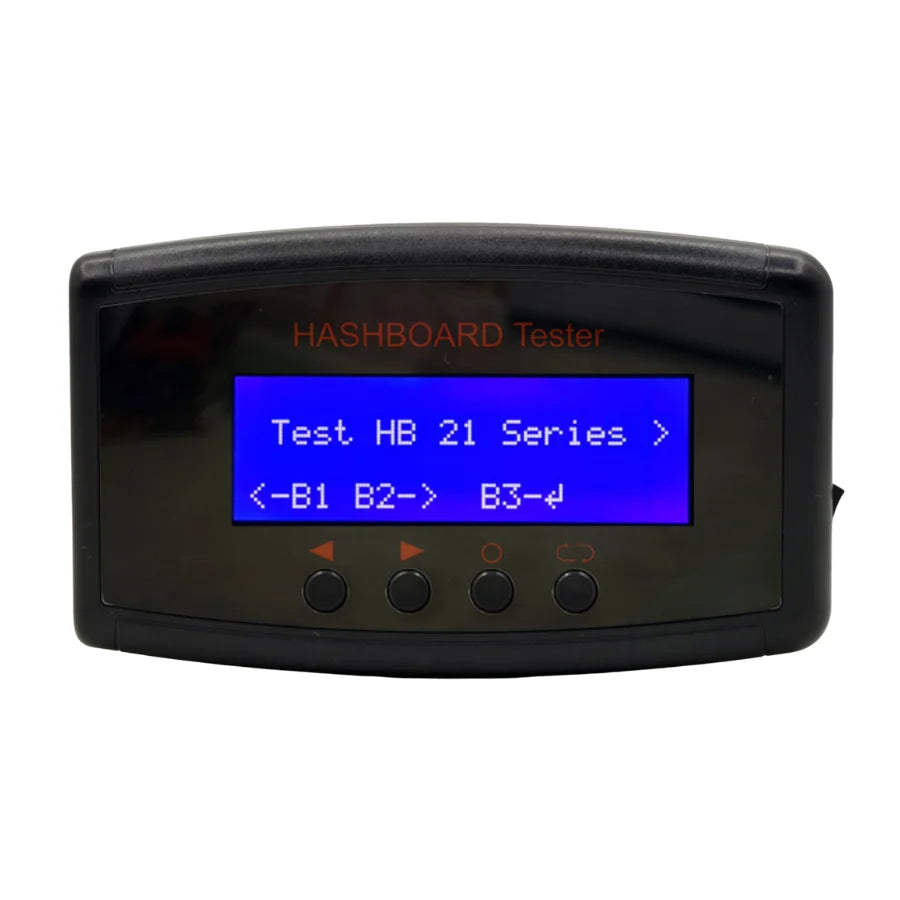
- Iceriver KS3M / KS3L / KS5L hashboard test fixture — dedicated diagnostic tool for the KS3/KS5 family. Antminer / Whatsminer test fixtures are not compatible with Iceriver hashboards. Required for chip-level fault isolation.
- Iceriver KS3M / KS3L tin tool (P2SG48 stencil) — dedicated reballing stencil for the 1004LV100 chip footprint. Same stencil covers the KS5L because the chip is shared.
- Iceriver 4-pin fan simulator (KS3 / KS5L) — allows the miner control board to start without the physical fans during bench testing.
- Regulated bench PSU capable of delivering the hashboard input voltage range.
- Constant-temperature soldering iron at 350-380°C with a pointed tip for SMT work.
- Hot-air rework station rated 350-400°C for QFN / SOIC chip removal.
- Solder paste M705 grade, no-clean flux, board washing fluid with anhydrous alcohol.
- Tin balls 0.4 mm diameter for chip ball reattach work.
- Multimeter (Fluke recommended) for voltage rail and signal verification.
- Thermal compound rated 5W/mK or higher for the heatsink interface.
- Common spare 0402 resistors (0R, 10K) and 0402 capacitors (1µF), plus 0603 resistors (33R) and 0603 capacitors (1µF / 22µF).
Diagnostic and Repair Workflow — KS5L-Specific
The Iceriver KS5L repair workflow leverages the dedicated KS3M / KS3L / KS5L test fixture for chip-level fault isolation. The fixture reports either "0 chips detected" (whole-chain failure), "specific number detected" (partial chain failure at a boundary), or "Success" (board healthy).
- Disassemble the miner and remove the suspect hashboard. Never work on a powered board.
- Visual inspection — look for scorched components, lifted pads, PCB deformation, or impact damage on both sides of the board.
- Impedance / short-circuit check on every voltage domain before powering. Any rail short must be cleared before applying power, or healthy chips will burn at startup.
- Connect the hashboard to a regulated bench PSU via the appropriate harness. Verify input voltage is within the KS5L spec range before powering up.
- Connect the KS3M / KS3L / KS5L test fixture and run the single-board test program.
- If the test reports 0 ASIC chips detected: walk the power chain in order — verify PSU output at the hashboard input, then check each LDO output (0.8V chip core, 1.8V rail), then check the boost converter output (MP1517DR), then check the ASIC chip signal voltages. The first out-of-spec voltage in this chain points to the failed component.
- If the test reports a specific number (e.g., 9, 26, 52): the chain is healthy up to that count and fails at the boundary chip. Troubleshoot signal voltages at that boundary position — abnormal signals identify the failed chip. Replace the chip to restore the full chain.
- If high or low temperature is reported: check the TMP75 temperature sensor IC, its 3.3V supply, and the surrounding passive components. Replace the sensor if readings remain implausible after the rail checks.
- If the hashboard does not enumerate at all: check the AT24C02C-XHM-T EEPROM at U6 (corrupted firmware or hardware failure) and the T250 gold crystal oscillator (no clock = no chain initialisation).
- For 1004LV100 chip replacement: use the KS3M / KS3L tin tool (P2SG48) stencil to pre-tin the chip pads with M705 paste before placing the new chip on the PCBA.
- Re-test on the fixture — when the test result displays "Success", the faulty hashboard has been restored to normal.
- Re-paste the heatsink with 5W/mK or higher thermal compound before reassembly.
- Cool down and reassemble the miner for the standard aging soak test (24 hours under load).
When Chip-Level Repair Makes More Sense Than Board Replacement
A complete KS5L hashboard replacement is often constrained in supply and prices well above the components needed for chip-level repair. For repair shops processing more than a few KS5L / KS5M / KS3M / KS3L boards a month, a small inventory of 1004LV100 chips, the MP1517DR boost converter, the SGM2036-ADJ and SI9183DT LDOs, the TMP75 sensor, the T250 oscillator, and the AT24C02C-XHM-T EEPROM covers the majority of bench-repair scenarios. The KS3M / KS3L tin tool is mandatory for clean 1004LV100 reflow.
Compatible PSU and Control Board
The Iceriver KS5L is supported by the Iceriver KS-series PSU. LYS Shenzhen stocks the Iceriver KS-series control board for KS3L / KS5L / KS5M units, plus the 4-pin fan speed simulator for bench-testing repaired hashboards without physical fans. For PSU-side repair components (MOSFETs, gate drivers, output rectifiers), see the related Iceriver PSU parts on our catalogue.
FAQ — Iceriver KS5L Hashboard Repair
What ASIC chip does the Iceriver KS5L use?
The KS5L uses Iceriver's proprietary 1004LV100 ASIC chip, optimised for the kHeavyHash algorithm used by Kaspa (KAS). The same chip is also used on the KS5M, KS3M, and KS3L hashboards, meaning a single chip inventory covers repair needs across the entire KS3/KS5 family.
Can I use Antminer or Whatsminer test fixtures on Iceriver KS5L hashboards?
No. Iceriver KS series uses a dedicated 18-pin rectangular PCB data socket distinct from Antminer signal ribbons and from Whatsminer 18-pin dual-in-line connectors. Use the dedicated KS3M / KS3L / KS5L hashboard test fixture for chip-level diagnostics — the same fixture covers all three models.
What does it mean when the test fixture reports a specific chip number like 9, 26, or 52?
The chain is healthy up to that count and fails at the boundary chip. Troubleshoot the signal voltage at the position right after the last detected chip — abnormal signals there identify the failed chip. Replace that chip to restore the full chain detection.
What does "Success" on the KS5L test fixture mean?
"Success" indicates the hashboard has passed the chip detection and signal verification routine — the faulty board has been restored to normal operation. After Success, let the board cool, reassemble the miner, and run the standard 24-hour aging soak test under load before returning to production.
What thermal compound should I use on a KS5L hashboard?
Use thermal compound rated 5W/mK or higher. The KS5L generates significant continuous heat under 24/7 mining loads, and consumer-grade pastes dry out within months. Re-paste any time chip temperature climbs without a corresponding ambient change.
Sourcing KS5L Hashboard Parts
LYS Shenzhen stocks most components listed above for the Iceriver KS5L hashboard. For the 1004LV100 ASIC chip, the 330µF 35V capacitor, the 0R / 1R 2512 resistors, the KS3M / KS3L tin tool, the test fixture, or for bulk farm-scale orders on the Iceriver KS family (KS5L, KS5M, KS3M, KS3L, KS0, KS1, KS2, KS3), contact our team at contact@lys-sz.com — we operate an on-demand sourcing channel for repair components across the full Iceriver KAS mining lineup.
Worldwide shipping from our Shenzhen warehouse via DHL, FedEx, UPS, and sea freight. DDP shipping available for US and EU customers; case-by-case for other lanes — request a quote with your shipping country for confirmation.