Antminer S19j Pro Hashboard Repair Guide & Components List (2026 Update)
The Antminer S19j Pro remains one of the most widely deployed SHA-256 miners in the world. Even after the April 2024 halving, tens of thousands of S19j Pro units continue running across hosted facilities, home operations, and repair benches — which means hashboard-level repair, not replacement, is still the most economical path to keep these miners producing. This guide covers the BM1362 chip family, the most common hashboard failure modes, and the complete components list — every part linked to the corresponding LYS Shenzhen sourcing page.
Why S19j Pro Hashboard Repair Still Matters in 2026
The S19j Pro and its variants were Bitmain's volume workhorse from 2022 to 2024 and are now the largest single fleet entering the secondary repair market. A full hashboard replacement remains expensive and is often unavailable for the older 88T and 96T variants, while a chip-level or component-level repair restores a board to full rated hashrate for a fraction of the cost. With network difficulty roughly five times higher than 2023 and tighter post-halving margins, every dead chain represents lost revenue that a properly stocked repair bench can recover in under an hour.
Antminer S19j Pro Hashboard Architecture at a Glance
The S19j Pro hashboard is built around the BM1362 ASIC chip family — Bitmain's 5nm SHA-256 hash engine. Across the family lifecycle, several silicon revisions have been deployed: BM1362AA, BM1362AC, BM1362AI, BM1362AJ, and BM1362AK. The variants differ by silicon revision and binning rather than topology, and the same hashboard repair workflow applies to all of them.
The S19j Pro itself ships in several hashrate bins — 92 TH/s, 96 TH/s, 100 TH/s, and 104 TH/s — plus earlier 88 TH/s units still operating in many farms, and the S19j Pro+ (typically 120 TH/s) and S19j Pro Hydro derivatives. Each hashboard carries 126 BM1362 ASIC chips, organised as 42 domains of 3 chips in series, alongside the associated LDOs, MOSFETs, level translators, EEPROMs, and a PIC microcontroller managing chain communication and on-board calibration data.
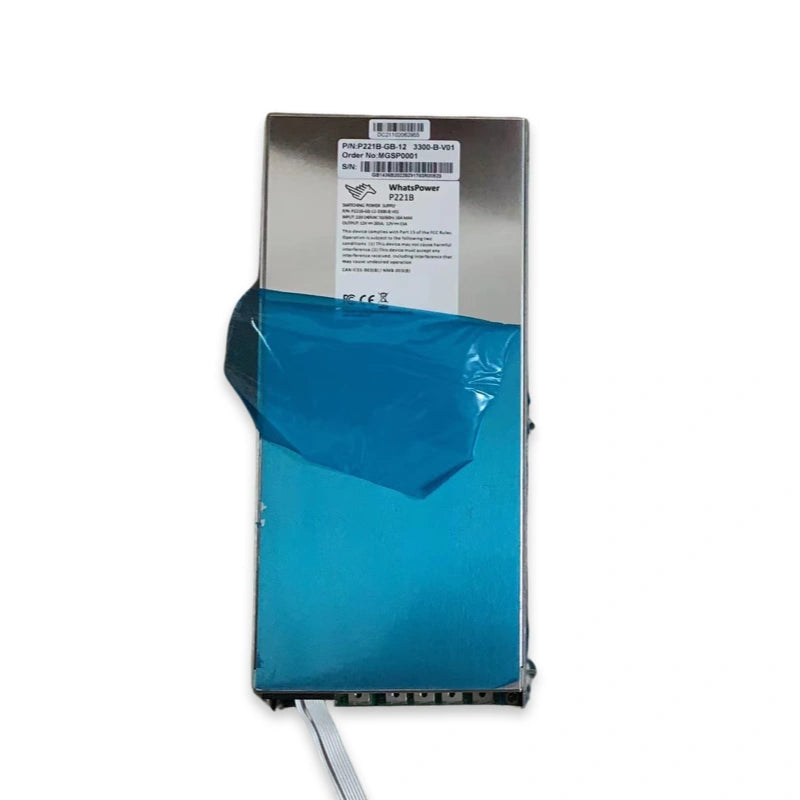
The S19j Pro was originally released in May 2021 and uses the APW12 series PSU (typically APW121215) with a 12–15 V DC output range. Control boards across the fleet appear in AMLogic, XILINX, BeagleBone, and Cvitek variants — early production units shipped predominantly with AMLogic boards, while refurbished and aftermarket units commonly carry one of the other variants. The control-board variant affects firmware flashing paths but does not change the hashboard repair workflow itself.
Most Common S19j Pro Hashboard Failure Modes
The symptoms below cover the large majority of S19j Pro hashboard issues seen on the repair bench:
- Missing chips at boot scan — the chain reports fewer chips than the rated count, almost always caused by a dead BM1362 ASIC or a failed level translator upstream of the missing string segment.
- Cold spots on thermal imaging — one or more chip positions stay cool while neighbours run hot, indicating a non-hashing chip or a localised power-delivery failure.
- Hashboard not detected at all — usually a corrupted EEPROM (FM24C02B or ATH93702DMCN1937), a dead PIC microcontroller, or a missing rail at the connector.
- Hashrate drop without missing chips — frequently a failing temperature sensor (TMP75) triggering thermal throttling, or a degraded LDO under-supplying part of the chain.
- Hard short on a rail — typically a shorted MOSFET (MDU3603, AONS32311, or TPHR9003NL) on the core voltage stage.
- Random reboots or PSU shutdowns under load — often a degraded bulk capacitor (330µF 30V SMD or 47µF 50V SMD) that no longer holds rail voltage under transient current draw.
Critical Components — Function & Failure Behaviour
ASIC Hash Engines (BM1362 family)
The BM1362 chips are the hash engine of the S19j Pro hashboard. Each board carries 126 chips wired as 42 series domains of 3 chips each — a single dead ASIC inside a domain typically takes the entire 3-chip group offline. The most common cause of a dead BM1362 is ESD damage during handling, followed by sustained thermal stress from dried thermal paste or a clogged heatsink. The replacement workflow uses a BM1362 tin tool fixture to re-tin the pads cleanly before placing the new chip.
Voltage Regulators (LDOs)
Multiple LDO chips on the board generate the various rail voltages that feed the ASIC core, the I/O ring, and the local logic supplies. The S19j Pro hashboard uses SGM2036-ADJYN5G/TR, MP2019GN, SY7304DBC VIDKB, VGML AAH6, BA1U/BA2H, LM317MBSTT3G, and TLV74318PDBVR in various positions. A failed LDO typically takes out an entire local string of chips that depend on the rail it generates.
MOSFETs (Core Voltage Switching)
MOSFETs handle the high-current switching for the ASIC core voltages. The S19j Pro hashboard uses MDU3603 (P-channel), 2N7002-7-F (small-signal N-channel), TPHR9003NL (high-current N-channel), and AONS32311 (high-current N-channel) on different stages. A shorted MOSFET typically produces a hard short across its drain-source — easily found with a multimeter — and usually correlates with a PSU that refuses to start the chain.
EEPROMs and Microcontroller
The hashboard stores its calibration and chain identification data in EEPROMs (FM24C02B, ATH93702DMCN1937). The PIC16F1704-I/SL microcontroller manages the local chain protocol. A corrupted EEPROM usually presents as a board that the control board does not enumerate at boot; a failed PIC typically prevents any communication with the chain even when chips appear powered.
Level Translators & Signalling
The SN74LVC1T45DCKR and SN74AUP1T34DCKR (U2E) level translators bridge the 3.3 V control board signalling and the lower-voltage chip logic. A failed translator usually causes a block of chips downstream to drop offline simultaneously — a useful signature when scanning with thermal imaging or a hashboard tester.
Temperature Sensors & Protection
The TMP75 digital temperature sensor reports hashboard temperature back to the control board. A failed sensor either produces false high readings (triggering thermal throttling and apparent hashrate loss) or false low readings (allowing the chain to run unsafely hot). Zener diodes and Schottky diodes (DSK24, B0540W SF, BZT52C15G, MBR230LSFT1G, NJ / 2BZX84C8V2) handle on-board ESD clamping, freewheeling, and reverse-polarity protection.
Antminer S19j Pro Hashboard Repair Components List
The table below lists every component LYS Shenzhen stocks for S19j Pro hashboard repair. Each entry links directly to the corresponding part page — contact us at contact@lys-sz.com for bulk pricing or for variants not listed here.
| Part Number | Component Type | Typical Position / Role |
|---|---|---|
| BM1362AA / BM1362AK | ASIC hash engine | Main SHA-256 chip, one per hash position |
| SGM2036-ADJYN5G/TR | LDO regulator | Local logic supply |
| MP2019GN | LDO regulator | Adjustable linear regulator |
| ATH93702DMCN1937 | EEPROM | Calibration / chain ID storage |
| SN74LVC1T45DCKR | Voltage level translator | Bidirectional signalling bridge |
| SN74AUP1T34DCKR U2E | Voltage level translator | High-performance level shifter |
| FM24C02B | EEPROM | Low-power 2-wire serial memory |
| SY7304DBC VIDKB | Boost regulator | Current-mode boost stage |
| DSK24 | Schottky diode | 2A / 40V freewheeling diode |
| VGML AAH6 | LDO regulator | 1.2V local rail |
| BA2H / BA1U | LDO regulator | 0.8V chip core rail |
| LM317MBSTT3G | Positive regulator | 500 mA adjustable output |
| TMP75 | Temperature sensor | Digital I²C hashboard temp sensor |
| B0540W SF | Schottky diode | 40V / 500 mA SOD-123 small signal |
| NJ / 2BZX84C8V2 | Zener diode | Voltage clamp / protection |
| AP2008TCER-ADJ / U1D | Transistor / boost | Boost-stage active device |
| TLV74318PDBVR | LDO regulator | Low-dropout linear regulator |
| Oscillator 813RN | Crystal oscillator | 25 MHz reference clock |
| 330µF 30V SMD | Capacitor | Bulk filtering capacitor |
| MDU3603 | P-channel MOSFET | 30V / 67A 8-pin DFN switch |
| 2N7002-7-F | N-channel MOSFET | 60V / 115 mA small-signal switch |
| MP1517DR | Switching regulator IC | Adjustable 3.3V switcher |
| TPHR9003NL | N-channel MOSFET | 30V / 220A high-current power switch |
| BZT52C15G SOD-123 | Zener diode | 15V clamp / protection |
| AONS32311 | N-channel MOSFET | High-current core voltage switch |
| PIC16F1704-I/SL | Microcontroller | 8-bit, 7KB Flash, chain control |
| MBR230LSFT1G | Schottky power rectifier | 2A / 30V high-frequency rectifier |
| 47µF 50V SMD | Capacitor | Local rail bulk capacitor |
| 330µF 6240k Tantalum | Tantalum capacitor | Low-ESR polymer (KO-CAP) |
| 10µH (Inductor 100) | Inductor | HPC1050 SMD power inductor |
Required Repair Tools & Consumables
A properly equipped S19j Pro repair bench should carry the following tools, all available from LYS Shenzhen:
- BM1362 tin tool fixture (100 mm) — pad-tinning fixture for clean BM1362 replacement.
- S19j Pro L large-chip stencil — dedicated stencil for the larger BM1362 die used on the S19j Pro L variant.
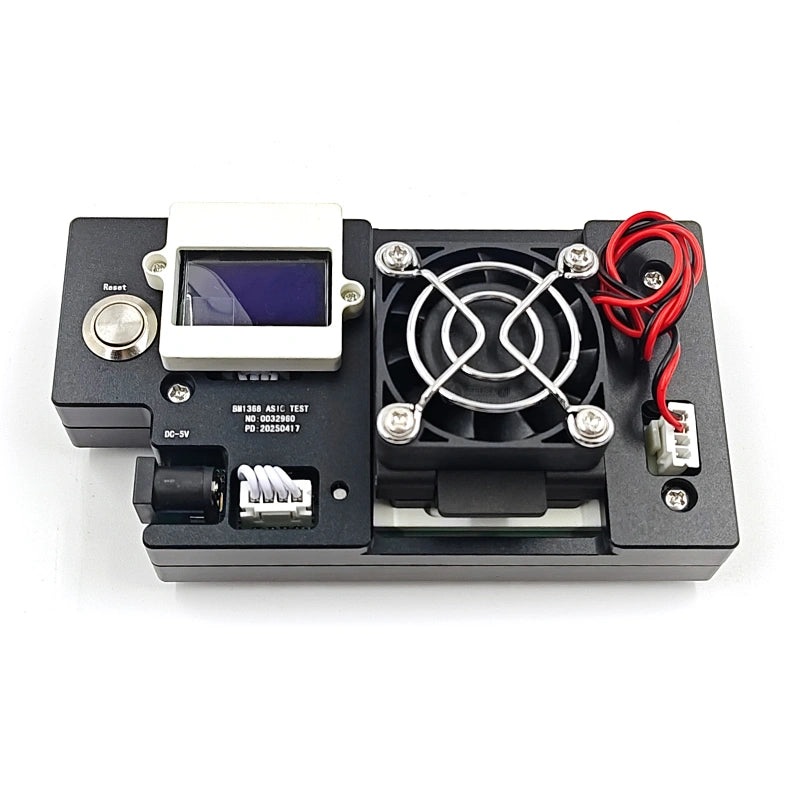
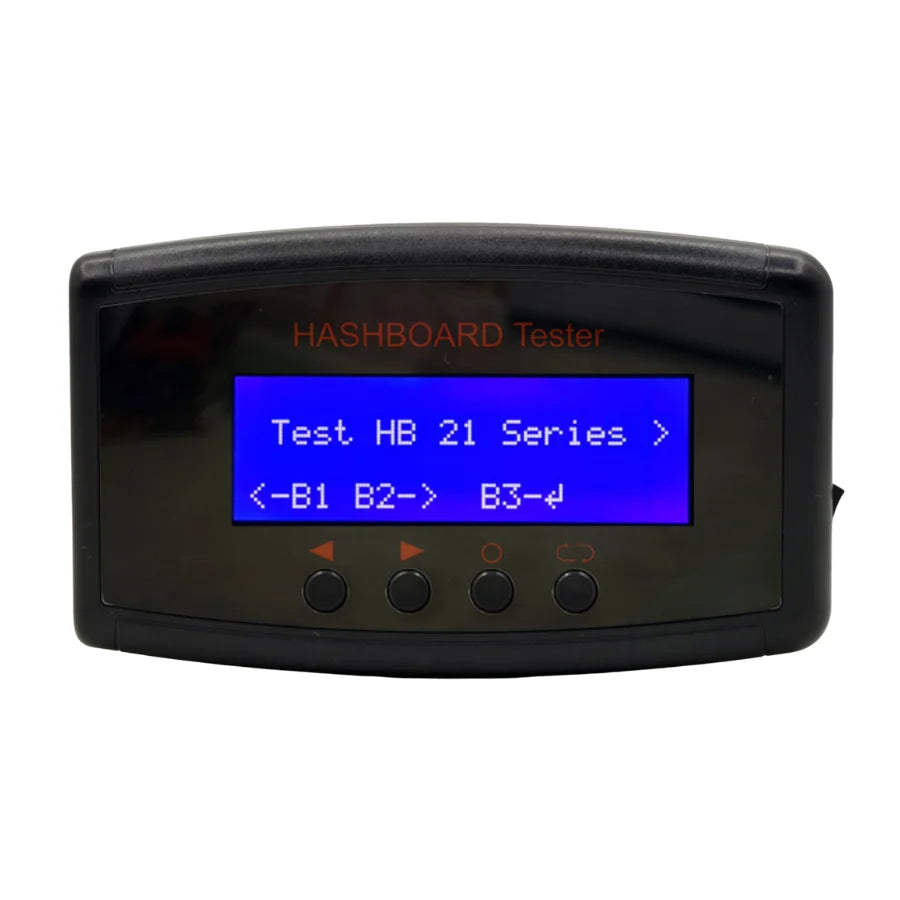
- Universal hashboard test fixture with LCD — runs a full chain scan on a removed hashboard, identifies missing chips by position.
- Thermal compound rated 5W/mK or higher — required for 24/7 mining loads on S19j Pro hashboards.
- Hot-air rework station with profile suited to BM1362 (typically 280–320°C with controlled ramp).
- Isopropyl alcohol 99% and lint-free wipes for pad and heatsink cleaning before re-paste.
Diagnostic and Repair Workflow
The typical S19j Pro hashboard repair workflow runs as follows:
- Power off and remove the suspect hashboard from the miner — never work on a powered board.
- Visual inspection — look for scorched components, lifted pads, or physical damage from handling.
- Bench-test on the hashboard test fixture — confirm the missing-chip pattern reported by the miner and identify the exact chip positions involved.
- Voltage rail check with a multimeter — confirm the LDOs and switching regulators are delivering correct rail voltages on the boundary of the failing string.
- Thermal imaging under bench load — confirms cold spots match the missing-chip positions and rules out a failed level translator producing a misleading scan result.
- Component replacement with hot air, following the chip's recommended reflow profile and using the BM1362 tin tool or component-specific stencil for clean pad re-tinning.
- Re-test on the fixture before re-installing in the miner — confirms the repair holds under chain scan.
- Re-paste the heatsink with 5W/mK or higher thermal compound before reassembly.
- Reinstall and monitor for 24 hours — confirms the board holds full hashrate without temperature anomalies.
When Chip-Level Repair Makes More Sense Than Board Replacement
A complete S19j Pro hashboard replacement, when available, typically costs an order of magnitude more than the components needed for a chip-level repair. For farm operators running more than a handful of S19j Pro units, the case for in-house repair is straightforward: a small inventory of BM1362 ASICs, the most common LDOs and MOSFETs, plus a hashboard test fixture, turns most dead boards into a one-hour bench job and avoids multi-week RMA windows. For single-unit owners, the calculus depends on the local availability of repair services and the time value of lost hashrate, but the component cost is rarely the limiting factor.
Compatible PSU and Control Board Sourcing
S19j Pro miners ship with the APW12 14V/17V power supply (Bitmain part numbers in the APW12 series, typically APW121215, 12–15 V DC dynamic output). The control board is the S19j / S19j Pro BeagleBone-based control board; AMLogic, XILINX, and Cvitek variants also appear in production and refurbished units. LYS Shenzhen stocks both as new replacement units alongside the hashboard repair parts list above.
FAQ — Antminer S19j Pro Hashboard Repair
How many ASIC chips does an S19j Pro hashboard carry?
A standard S19j Pro hashboard carries 126 BM1362 ASIC chips, organised as 42 domains of 3 chips in series. A complete S19j Pro miner uses 3 hashboards for a total of 378 chips.
Can I mix different BM1362 revisions on the same hashboard?
Not recommended. BM1362 chips are typically binned and voltage-matched at the factory by silicon revision, and mixing revisions on the same chain commonly causes inconsistent hashrate or chain instability. Replace dead chips with the same revision (AA with AA, AK with AK, etc.) wherever possible.
What thermal paste should I use on an S19j Pro hashboard?
Use thermal compound rated 5W/mK or higher. The S19j Pro hashboards generate significant continuous heat under 24/7 mining loads, and consumer-grade pastes dry out within months. Application is fastest and most consistent with a model-specific stencil tool.
How often should I re-paste an S19j Pro hashboard?
Re-paste intervals depend on operating environment. Standard hosted facilities running on the standard heatsink can typically go 12–18 months between re-paste cycles. Dusty, hot, or poorly ventilated environments tighten the interval to 6–12 months. Re-paste any time you observe chip-temperature climb without a corresponding ambient change.
Where do I find the hashboard part number on the S19j Pro?
The hashboard part number and revision are printed on a sticker on the PCB itself, typically near the connector edge or on the back of the board. S19j Pro hashboards are commonly identified by the BHB426xx family (for example BHB42601, BHB42603, BHB42621, BHB42631, BHB42651), with the S19j Pro+ using BHB42611. The board identifier tells you which hashrate bin and which BM1362 revision the board was built for.
Sourcing S19j Pro Hashboard Parts
LYS Shenzhen stocks every component listed above for the Antminer S19j Pro hashboard. For parts not currently in our public catalogue, for bulk farm-scale orders, or for sourcing of older S19j Pro variants no longer in volume production, contact our team at contact@lys-sz.com — we operate an on-demand sourcing channel for repair components across the full Antminer line, including discontinued models.
Worldwide shipping from our Shenzhen warehouse via DHL, FedEx, UPS, and sea freight. DDP shipping available for US and EU customers; case-by-case for other lanes — request a quote with your shipping country for confirmation.